
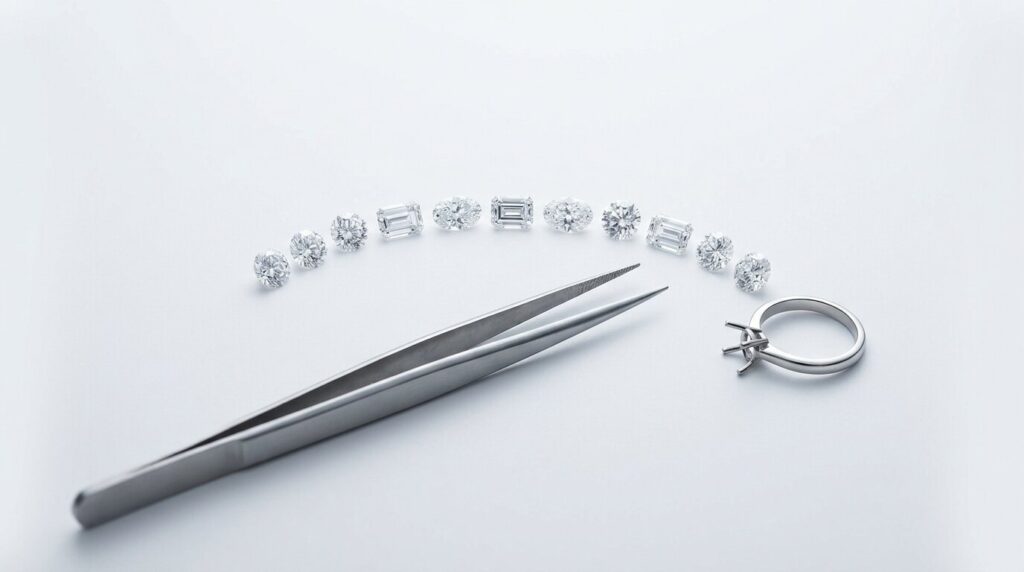
Most buying mistakes are not made at the point of choosing between two stones. They are made earlier, by optimising for the wrong thing — paying for grades nobody can see, under-spending on the setting, or skipping verification. This guide walks the whole sequence in the order the decisions actually arise.
Decide your budget and what the money should buy — size, quality, or savings. Choose a shape, then a size that suits the hand. Prioritise cut quality above colour and clarity, since cut is what visibly changes how a stone looks. Insist on an independent certificate and verify it on the laboratory’s own site. Budget properly for the setting. When the stone arrives, check the report and the laser inscription before the return window closes.
Step 1: Decide What the Budget Should Buy
A lab grown diamond costs substantially less than a mined stone of the same specification. That difference can go in three directions, and choosing deliberately prevents drift:
- More size — the most common choice.
- Better quality — keep the planned size, improve cut, colour and clarity.
- Spend less — buy what you originally planned and keep the difference.
Decide before you start browsing. Comparing stones without a rule for spending the difference is how budgets creep.
One thing to settle now: this is not an investment. Diamonds of any origin resell for a fraction of retail, so buy what you want to wear.
Step 2: Choose the Shape
Shape drives more of the final look than any other single decision, and it is largely a matter of taste rather than quality.
Practical considerations do apply. Some shapes look larger for their carat weight because they spread wider face-up. Elongated shapes tend to flatter shorter fingers. Shapes with exposed points need settings that protect them.
Useful reading: how to choose a diamond shape, which shape looks biggest, and the best shapes for everyday wear.
Step 3: Get the Size Right
Carat is weight, not size. Two stones of identical carat weight can look noticeably different depending on how the weight is distributed — a deep stone hides weight below the girdle where it does nothing visible.
This is why millimetre measurements matter more than the carat figure when you are judging how large a stone will look. Diamond measurements explained covers why, and the carat size chart by shape gives the approximate millimetre sizes.
Also consider the hand. A stone that looks generous on one finger reads differently on another, and average carat size is context, not a target.
Step 4: Set Your 4C Priorities
The four criteria do not deserve equal weight.
| Criterion | Priority | Why |
|---|---|---|
| Cut | Highest | Determines light return. The grade that most visibly changes how a stone looks. |
| Carat / measurements | High | Decides visible size. Judge by millimetres, not weight alone. |
| Colour | Medium | Differences between adjacent grades are often invisible once set, especially in yellow or rose gold. |
| Clarity | Medium | What matters is whether inclusions are visible, not the letters. Eye-clean is the practical threshold. |
The common error is paying for a colour or clarity step that nobody will ever see, and economising on cut — which everybody sees, every day.
Grades are bands, not points. Two stones with identical grades can differ visibly, which is why measurements and cut grade deserve more attention than the letters alone.
Step 5: Insist on Certification, Then Verify It
A stone without an independent report is a stone whose grades are the seller’s opinion.
Every stone in our inventory is IGI certified with the report number published. Whatever you buy and wherever you buy it:
- Get the report number before purchase.
- Verify it on the issuing laboratory’s own website, navigating there yourself rather than following a supplied link.
- Compare shape, carat, measurements, colour, clarity and origin against the online record.
- Confirm the report states laboratory-grown origin explicitly.
Detail on each step is in how to verify a certificate online, how to read an IGI certificate, and IGI vs GIA.
Step 6: Choose the Setting Properly
The setting is not the accessory to the stone. It determines how protected the diamond is, how the piece wears day to day, and whether the whole thing looks well made.
Match the setting to the life it will have. Someone who works with their hands is better served by a bezel or a lower profile than by a high cathedral setting with exposed corners.
Start with how to choose a setting, then compare specifics: prong vs bezel, hidden halo vs halo, solitaire vs three-stone, or pavé bands.
Budget for it. Under-spending here to fund a larger stone is the most reliable way to end up with a piece that does not look like what you paid.
Step 7: Get the Ring Size Right
A ring that does not fit cannot be worn, however good the stone is. Sizing is also the step most often rushed, especially when the purchase is a surprise.
Use how to measure ring size at home and the ring size conversion chart. If you are buying as a surprise, average ring sizes give a starting point, but plan for a resize.
Check before ordering whether the design can be resized at all. Full eternity bands and certain tension settings are difficult or impossible to resize, and that constraint is much easier to accommodate before the piece is made.
Step 8: Check It When It Arrives
The return window is short, and these checks belong inside it:
- Re-verify the report number on the laboratory’s site and confirm the record still matches.
- Have the laser inscription checked under magnification against the report number.
- Compare the stone’s measurements against the report.
- Inspect the setting: even prongs, clean polishing, stones sitting level, no visible gaps.
- Try the ring on at different times of day — fingers change size with temperature and activity.
- Keep the report with your insurance documents.
If anything does not match, raise it immediately rather than after the window closes.
Buyer Decision Box: The Short Version
- Decide what the price difference buys — size, quality, or savings — before browsing.
- Choose shape first; it drives the look more than anything else.
- Judge size by millimetre measurements, not carat weight alone.
- Put cut quality ahead of colour and clarity steps that are invisible in wear.
- Never buy an uncertified stone; verify the report on the laboratory’s own site.
- Budget properly for the setting and match it to daily wear.
- Confirm the design can be resized if sizing is uncertain.
- Verify the report and inscription again on arrival, before the return window closes.
Myth vs Fact
| Myth | Fact |
|---|---|
| Higher clarity always looks better. | Above the eye-clean threshold, additional clarity grades are invisible in wear and mainly add cost. |
| Carat weight tells you how big a stone looks. | Measurements do. Weight can be hidden below the girdle where it adds nothing visible. |
| The certificate is just paperwork. | It is the only independent evidence of what you are buying, and verifying it takes minutes. |
| Spend everything on the stone and economise on the setting. | The setting determines protection, wearability and whether the piece looks well made. |
| Buying online means you cannot check anything. | You can verify the report before paying, and check the stone and inscription on arrival within the return window. |
FAQ
What should I prioritise when buying a lab grown diamond?
Cut quality first, because it most visibly affects how a stone looks. Then measurements for visible size. Colour and clarity matter less once a stone is eye-clean and suits the metal it is set in.
Do I need a certificate for a lab grown diamond?
Yes. Without an independent report, the quoted grades are the seller’s own assessment. Verify the report number on the issuing laboratory’s own website.
How much should I spend on the setting?
Enough that it does not undermine the stone. There is no fixed ratio, but treating the setting as an afterthought is the most common way to be disappointed by a finished piece.
What size lab grown diamond should I buy?
The one that suits the hand and the setting. Judge by millimetre measurements rather than carat weight, and treat average sizes as context rather than a target.
Can I buy a lab grown diamond online safely?
Yes, provided the stone is certified, the report number is published before purchase, you verify it yourself on the laboratory’s site, and you check the stone on arrival within the return window.
What should I check when the ring arrives?
The report number against the laboratory record, the laser inscription against the report, the measurements, the setting quality, and the fit — all before the return window closes.
Final Buying Note
Buying well is mostly about spending attention in the right order: shape and size first, cut quality ahead of the grades nobody sees, certification verified rather than assumed, and a setting that suits how the piece will actually be worn.
Start by comparing IGI certified stones in our inventory, browse ring styles, or begin a custom design.
© VANTYRE Jewelry Guide