
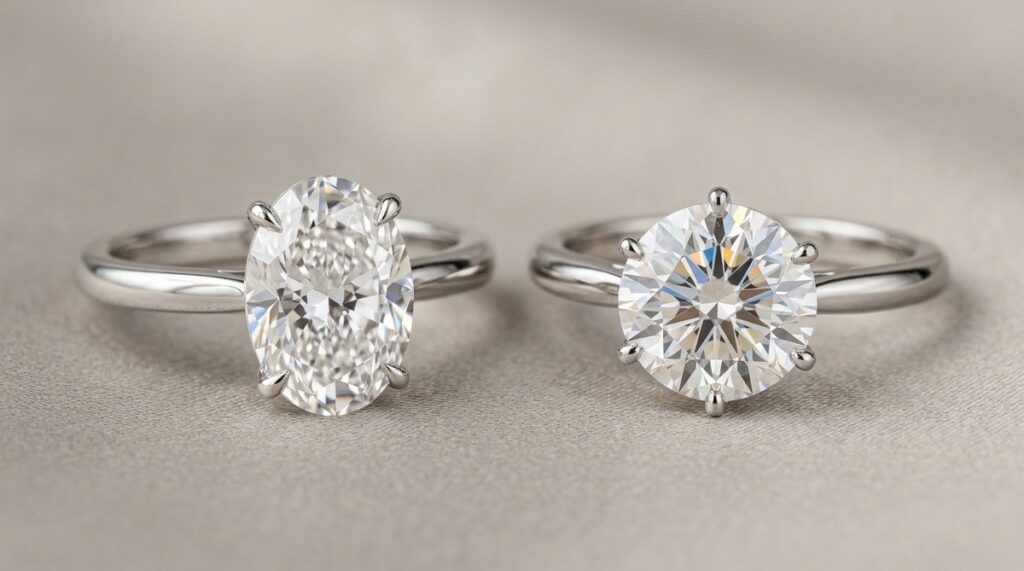
The two most popular diamond shapes in the world are round and oval. One has been the default choice for over a century. The other has risen to become the most sought-after alternative. Together, they account for the majority of engagement ring sales.
The choice between them is not about quality — both are excellent. It is about whether you want the brightest possible sparkle or a more flattering, elongated silhouette. Here is how they compare.
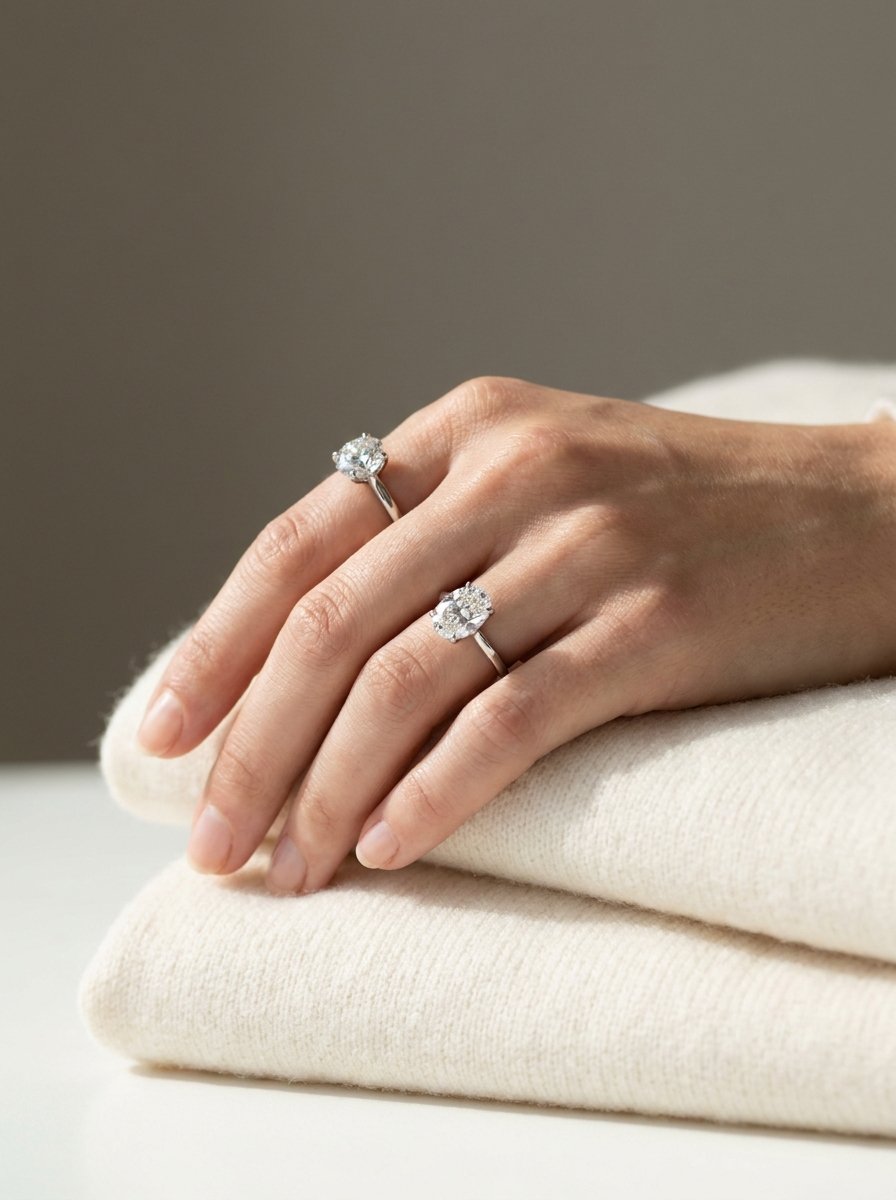
A round brilliant diamond offers the most consistent and predictable sparkle of any shape. An oval diamond offers a similar sparkle pattern but in an elongated silhouette that can make the finger appear longer. Choose round for maximum brilliance and setting compatibility. Choose oval for a flattering elongated look with similar sparkle.
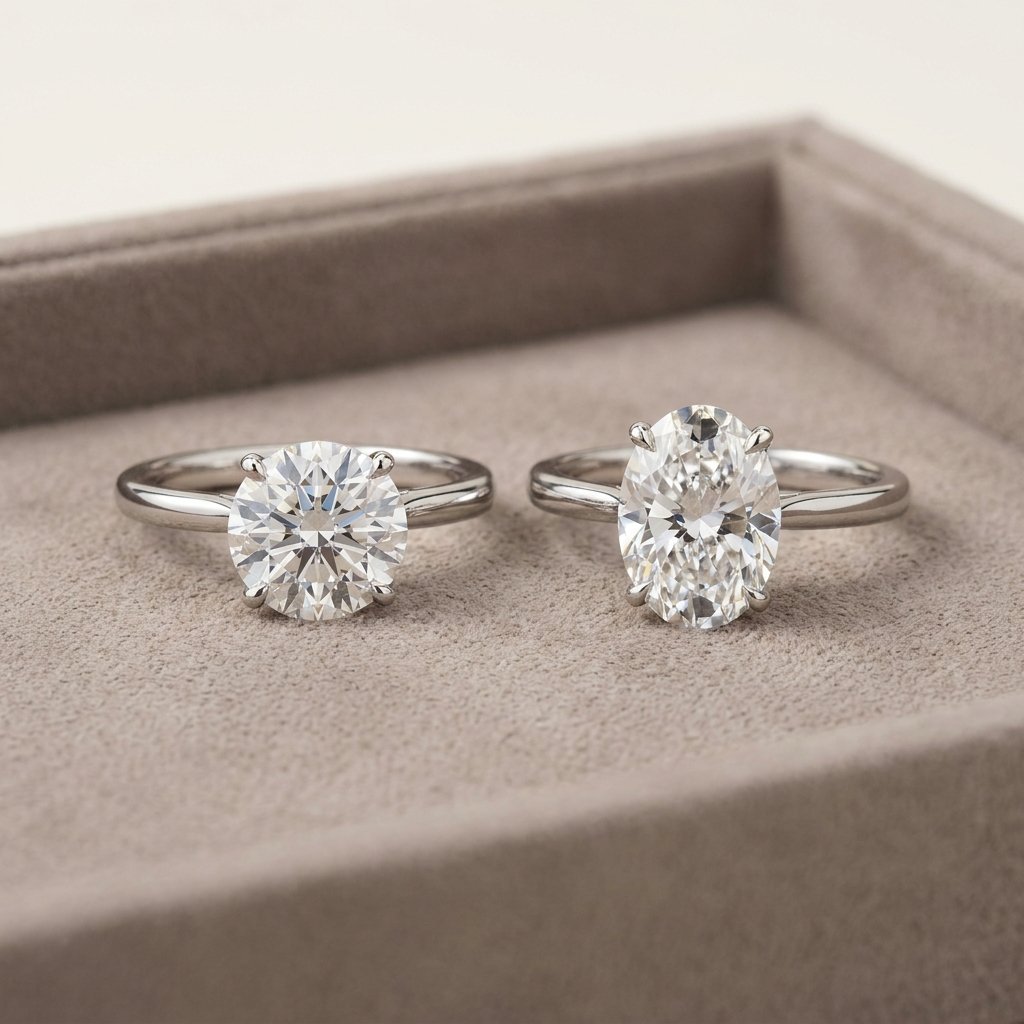
What Is a Round Brilliant Diamond?
A round brilliant diamond is the most precisely engineered diamond shape. It uses 57 or 58 facets arranged in a mathematical pattern designed to maximize light return. When cut well, a round diamond returns more light to the eye than any other shape. It is the benchmark for brilliance and the most popular engagement ring shape.
What Is an Oval Diamond?
An oval diamond is an elongated brilliant cut with the same faceting structure as a round brilliant, stretched into an oval shape. This gives it a similar sparkle pattern while creating a finger-lengthening effect. Oval diamonds can appear larger than rounds of the same carat weight because of the elongated silhouette.
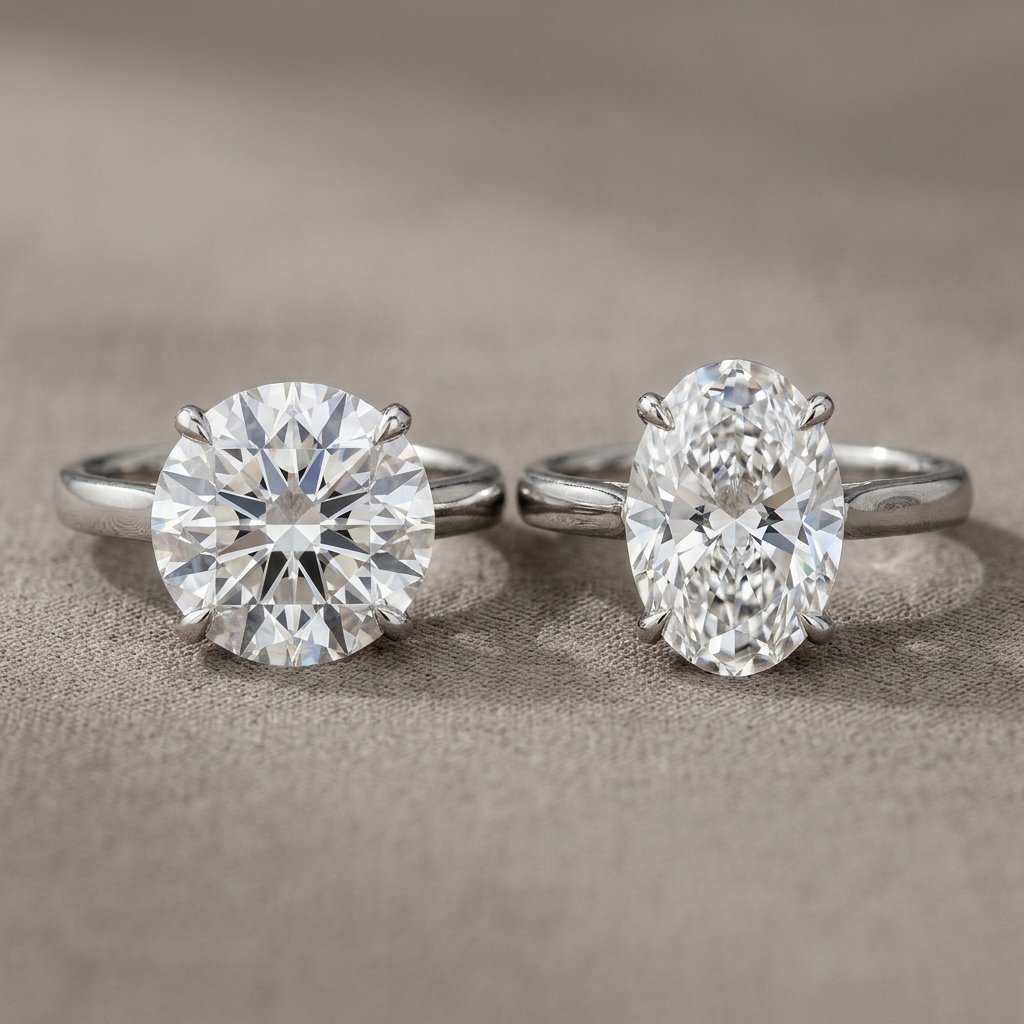
Oval vs Round Diamond Comparison
| Aspect | Round Brilliant | Oval Diamond |
|---|---|---|
| Sparkle | Maximum, consistent, predictable | Similar, slightly elongated pattern |
| Finger effect | Balanced, classic | Elongating, flattering |
| Price per carat | Highest (most demand) | Lower (15-30% less typically) |
| Face-up size | Compact | Larger per carat |
| Bow-tie risk | None | Moderate |
| Setting options | Any setting | Most settings |
Which One Sparkles More?
Round brilliant diamonds produce more consistent and predictable sparkle. Oval diamonds use the same brilliant faceting pattern, so they sparkle similarly — but the elongated shape can create subtle differences in light performance. For most buyers, the sparkle difference is minor compared to the silhouette difference. Learn about the oval bow-tie effect.
Which One Looks Bigger?
Oval diamonds typically look larger than round diamonds of the same carat weight because the elongated shape covers more finger length. A 1-carat oval can appear significantly longer than a 1-carat round. Compare which diamond shapes look biggest.
Best Settings for Oval and Round Diamonds
Round diamonds fit virtually every setting. Solitaire, halo, pavé, three-stone, bezel, tension — every style works. This versatility is one of the main reasons round remains the most popular shape.
Oval diamonds work well with solitaire, hidden halo, pavé, bezel, three-stone, and cathedral settings. Compare oval ring settings and browse our lab grown diamond ring styles.
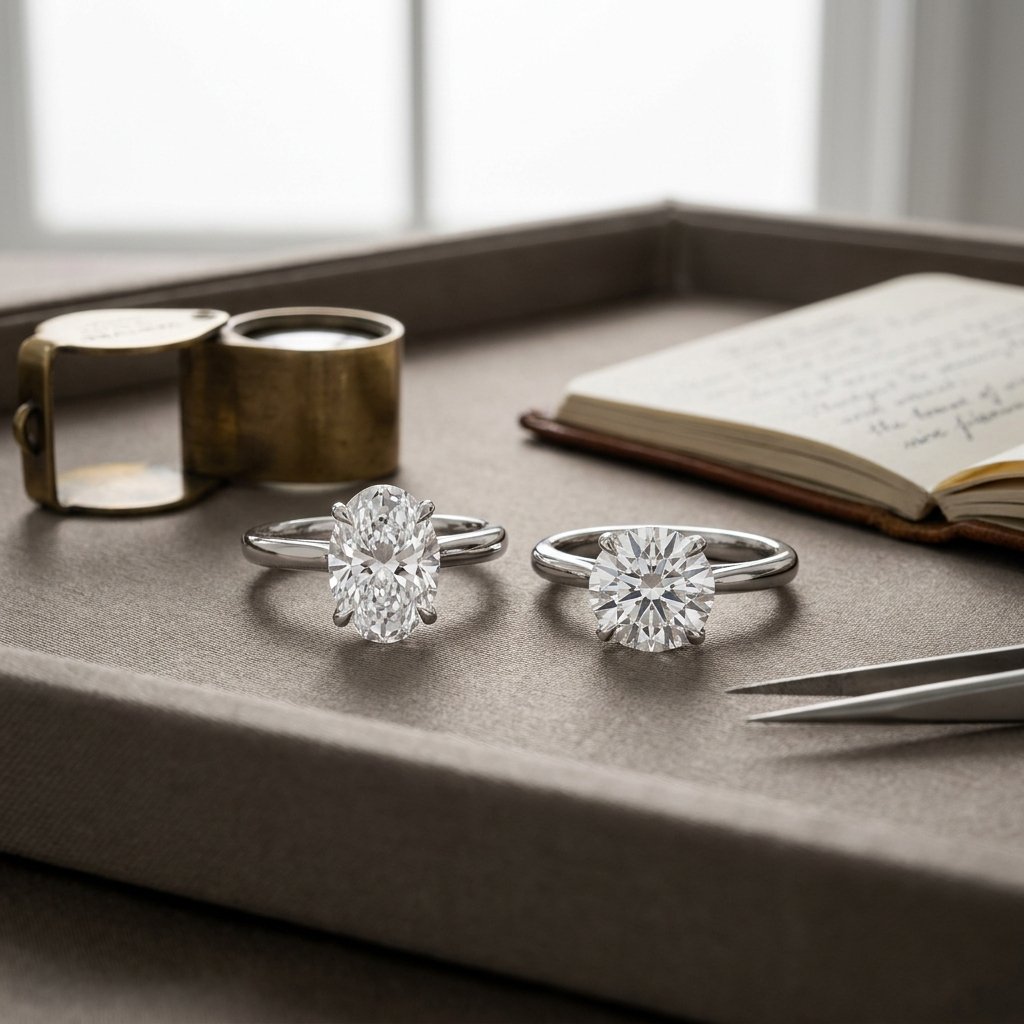
Buyer Decision Box
Choose round if: you want the brightest, most predictable sparkle. You prefer a classic, balanced look. You want maximum setting options.
Choose oval if: you want an elongated silhouette. You prefer a flattering finger-lengthening effect. You want more visual size per carat.
Common Mistakes
- Assuming oval sparkles as consistently as round — round has more predictable brilliance.
- Ignoring the bow-tie effect in oval diamonds — check each stone individually.
- Choosing round only because it is the most popular without considering the finger effect.
- Choosing oval only to save money without checking the cut quality and ratio.
Myth vs Fact
| Myth | Fact |
|---|---|
| Oval sparkles as much as round. | Oval sparkles similarly but round has more consistent, predictable brilliance. |
| Round diamonds look bigger than oval. | Oval typically looks larger because the elongated shape covers more finger length. |
| Round diamonds are always more expensive. | Round costs more per carat, but oval usually offers more visual size for the same budget. |
FAQ
Which sparkles more, oval or round?
Round diamonds have more consistent, predictable sparkle. Oval diamonds sparkle similarly but the elongated shape can create subtle differences in light return.
Which looks bigger, oval or round?
Oval diamonds typically look larger than rounds of the same carat weight because the elongated shape covers more finger length.
Which is more expensive?
Round diamonds cost 15-30% more per carat than ovals of comparable quality because round cutting wastes more rough.
Do oval diamonds have a bow-tie?
Many oval diamonds show some bow-tie effect. The severity depends on the cut quality of the individual stone.
What settings work best for oval?
Oval diamonds work with solitaire, hidden halo, pavé, bezel, three-stone, and cathedral settings. Compare oval settings.
What settings work best for round?
Round diamonds fit virtually every setting style — solitaire, halo, pavé, bezel, tension, three-stone, and cathedral.
Which is better for engagement rings?
Both are excellent. Round is the most classic choice. Oval offers a modern alternative with a flattering silhouette.
Which is better for lab grown diamonds?
Both work well. Lab grown oval offers excellent value. Lab grown round offers the highest brilliance at a lower price than natural.
Final Buying Note
Round and oval diamonds are both excellent choices. Round offers the most consistent sparkle and the widest setting selection. Oval offers a flattering elongated silhouette, more visual size per carat, and a modern alternative to the classic round. Try on both to see which shape feels more natural on your finger — the difference is hard to judge from photos alone.
Browse our lab grown diamond inventory, explore ring styles, or request a custom design.
© VANTYRE Jewelry Guide