
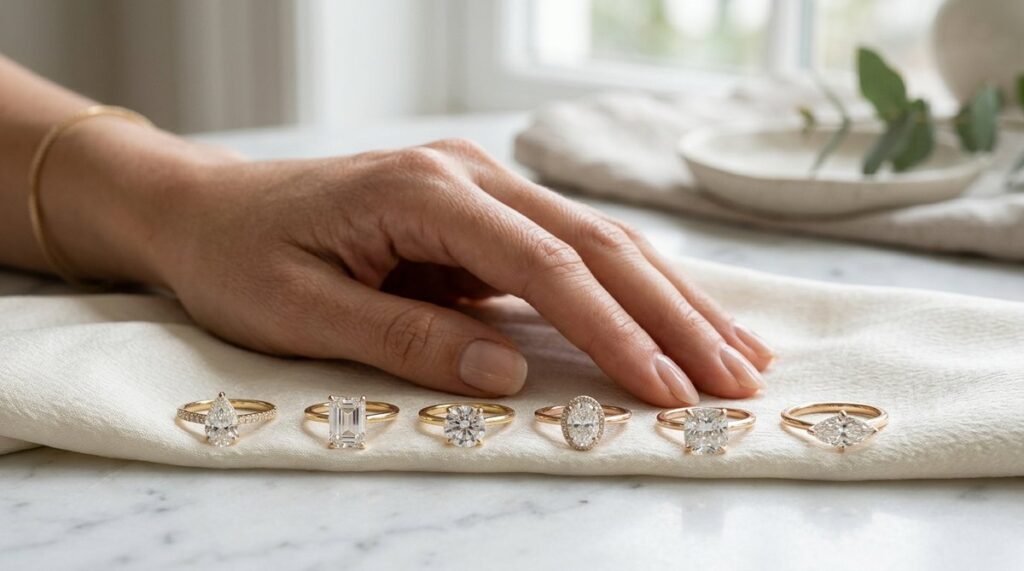
If you have small hands or petite fingers, you have probably wondered whether a diamond engagement ring will look out of proportion. The short answer is no — but the shape, size, and setting you choose can make a big difference in how balanced the ring looks on your hand.
The goal is not to make your hands look different. It is to find a diamond that feels proportional, comfortable, and true to your style. Some shapes naturally flatter smaller hands more than others, and understanding why can help you narrow down your choices quickly.
Here is a practical guide to choosing the best diamond shape for small hands.
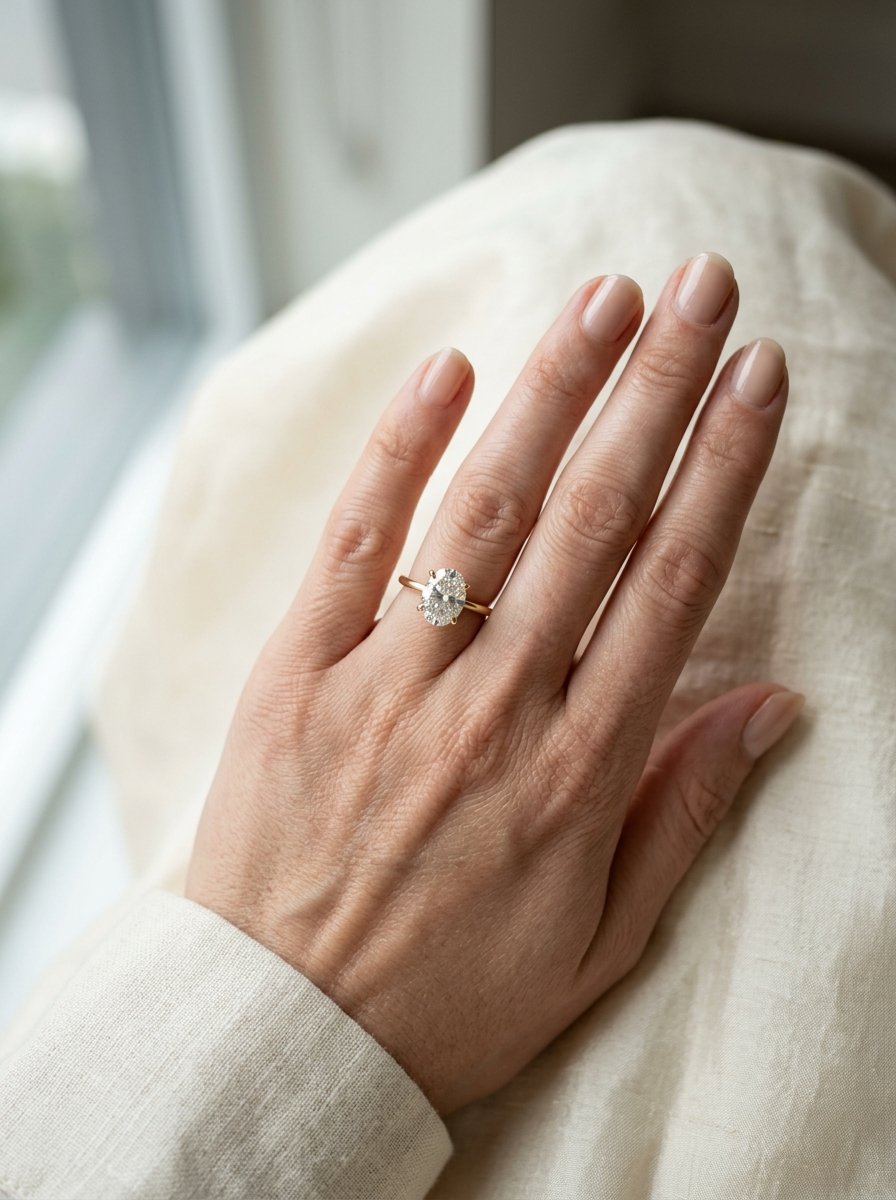
Oval, pear, and marquise diamonds are the most flattering shapes for small hands because their elongated silhouette creates a lengthening effect. Round and cushion cuts can also look balanced, especially in smaller carat weights. Emerald cuts can work if the proportions are not too wide. The best choice depends on your finger length, band width, and personal style.
What Makes a Diamond Shape Work on Small Hands?
Three factors determine how proportional a diamond looks on a small hand: vertical coverage, width, and ring height.
Vertical coverage refers to how much of the finger the diamond covers from base to tip. Shapes that add length create a more balanced look. Width is the horizontal spread — a very wide diamond may overwhelm a narrow finger. Ring height matters because a very tall setting can feel bulky on a petite hand.
Understanding diamond measurements will help you evaluate these factors for any stone you consider.
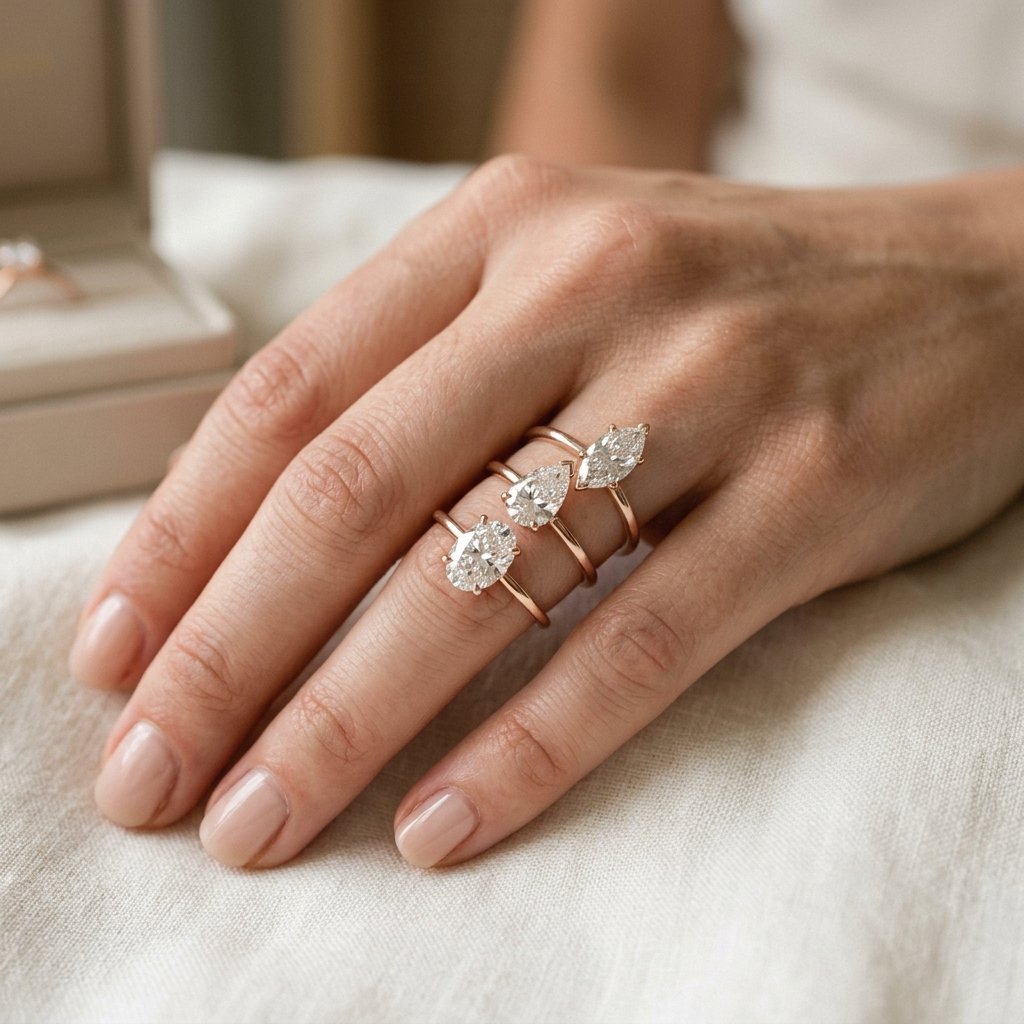
Best Elongating Shapes: Oval, Pear, and Marquise
Elongated shapes are the most popular choice for small hands because they create visual length along the finger. An oval diamond with a ratio around 1.40 to 1.50 can make the finger appear longer and more slender without adding unnecessary width.
Pear diamonds work similarly but with a more directional teardrop shape. The pointed tip draws the eye downward, adding length. Marquise diamonds are the most extreme elongators — the pointed ends create the longest silhouette per carat of any shape.
For all three shapes, the length-to-width ratio matters. A very elongated oval or pear may look unbalanced on a very small finger. A ratio between 1.35 and 1.50 is generally a good starting point for petite hands. Check the oval diamond ratio guide for more detail.
Best Balanced Shapes: Round, Cushion, and Emerald
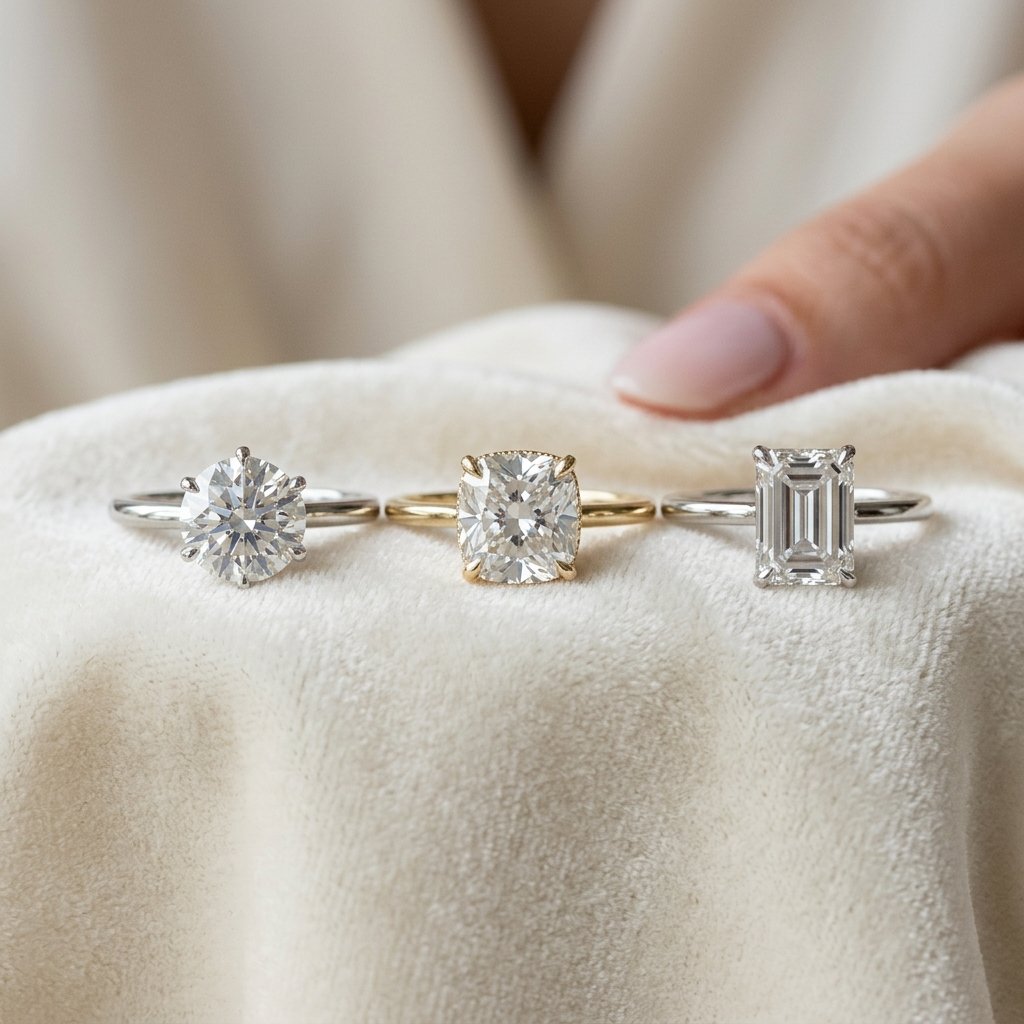
Not everyone wants an elongated diamond. If you prefer a more compact shape, round, cushion, and emerald cuts can look equally elegant on small hands.
Round diamonds are versatile and look proportional in most sizes. A 0.50 to 1.00 carat round on a petite finger often looks perfectly balanced. Cushion cuts with their rounded corners can feel soft and comfortable without looking too wide.
Emerald cuts can work well if the length-to-width ratio is not too extreme. A squarer emerald cut with a ratio around 1.30 to 1.40 can create an elegant, elongated look without overwhelming the finger.
Diamond Shape Comparison for Small Hands
| Shape | Visual Effect | Best Setting | Caution |
|---|---|---|---|
| Oval | Lengthens, balanced | Solitaire, hidden halo | Check ratio — too long may overwhelm |
| Pear | Lengthens, distinctive | Solitaire, V-prong tip | Tip protection required |
| Marquise | Maximum elongation | Solitaire, halo | Pointed ends need protection |
| Round | Classic, balanced | Any setting | May look small at lower carats |
| Cushion | Soft, romantic | Solitaire, hidden halo | Check depth for face-up size |
| Emerald | Elegant, clean | Solitaire, bezel | Wider shapes may feel bulky |
What Carat Size Works Best on Small Hands?
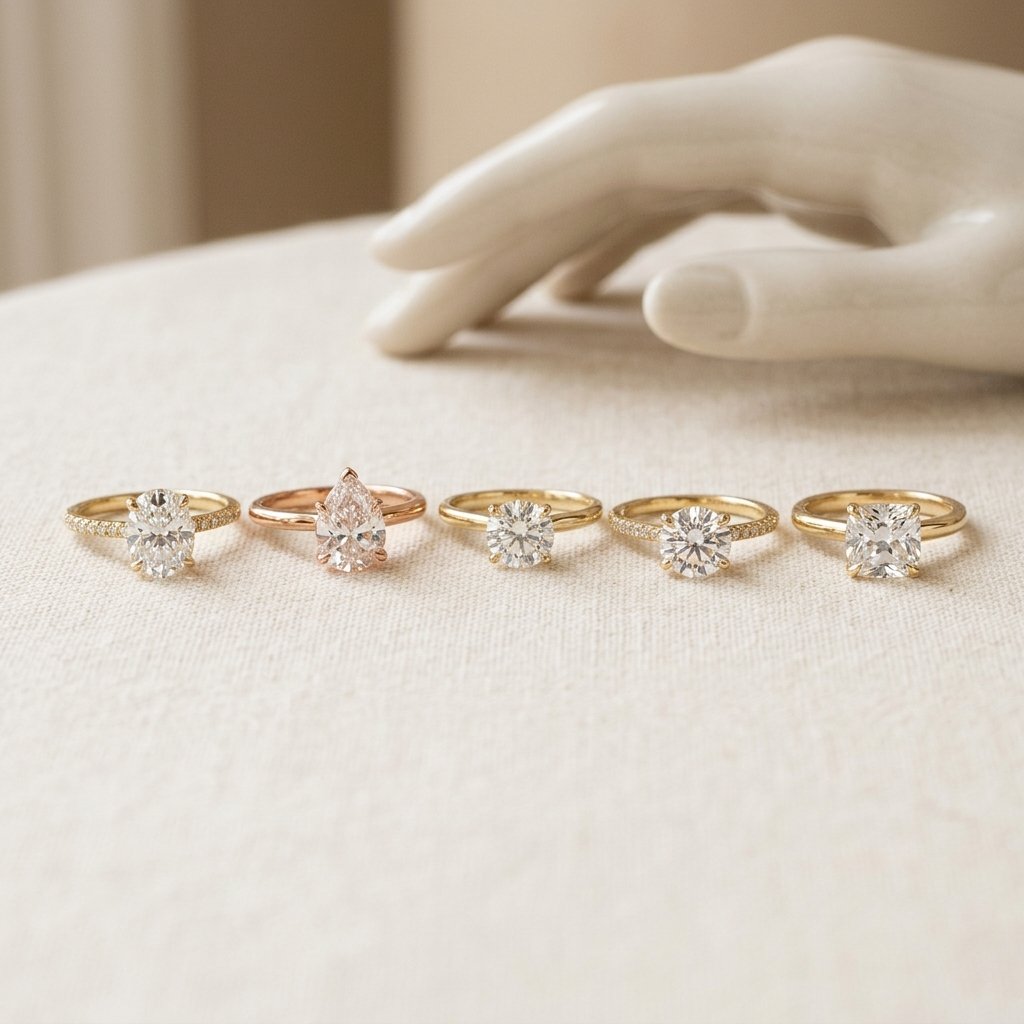
There is no single right carat size for small hands. A 0.50-carat round can look perfectly proportional on a size 4 finger, while the same stone might look small on a size 6 finger. A 1.50-carat oval on a petite hand can look substantial without appearing oversized.
The best approach is to try on rings in different carat weights and see how they feel. Pay attention to how the diamond sits between your fingers and whether the ring height feels comfortable for daily wear.
Setting Tips for Petite Fingers
The setting can make as much difference as the diamond shape. A thin band (1.5 to 2.0 mm) makes the diamond stand out without adding bulk. A low-profile setting keeps the ring comfortable and less prone to snagging. A solitaire or hidden halo setting adds sparkle without overwhelming a small hand.
Avoid overly thick bands or bulky halo settings if you want the ring to feel light and proportional. Browse our lab grown diamond ring styles or compare oval settings for more ideas.
Buyer Decision Box
Choose oval, pear, or marquise if: you want a lengthening effect on the finger.
Choose round or cushion if: you prefer a classic, balanced look.
Choose emerald if: you want refined geometry without too much width.
Choose a thinner band and lower profile if: daily comfort matters most.
Common Mistakes
- Choosing a band that is too wide — it can make the finger look shorter.
- Chasing carat weight without considering how the diamond fits on the finger.
- Ignoring ring height — a tall setting can feel bulky on a petite hand.
- Choosing a very elongated ratio that overwhelms a small finger.
- Assuming small hands cannot wear larger stones — proportion matters more than size.
Myth vs Fact
| Myth | Fact |
|---|---|
| Small hands can only wear small diamonds. | Small hands can wear larger diamonds — proportion matters more than absolute size. |
| Round diamonds are the best shape for small hands. | Elongated shapes like oval and pear can be more flattering on small hands. |
| Small hands should avoid wide rings. | Some wide shapes like cushion can look proportional if the finger can carry them. |
| Petite fingers need smaller carat weights. | Carat weight and finger size are independent — a 1ct oval can look beautiful on a size 4 finger. |
FAQ
What is the best diamond shape for small hands?
Oval diamonds are widely considered the best shape for small hands because they create a lengthening effect without being too directional.
What carat size is best for small hands?
There is no single best carat size. Try on 0.50, 1.00, and 1.50 carat rings to see what feels proportional on your finger.
Is oval or pear better for small hands?
Both work well. Oval is more symmetrical and safer. Pear is more distinctive and directional. Try both to see which feels more natural.
Is round good for small hands?
Yes, round diamonds can look beautiful on small hands. They are versatile and balanced, though they may not create the same lengthening effect as oval.
Is marquise good for small hands?
Marquise is an excellent choice for maximum elongation. The pointed ends create the longest silhouette per carat of any shape.
Is emerald cut good for small hands?
Emerald cuts can work well if the length-to-width ratio is not too extreme. Choose a squarer emerald cut rather than an elongated one.
What band width is best for small hands?
A band between 1.5 and 2.0 mm is usually the most proportional for small hands. Thicker bands can make the finger appear shorter.
Can small hands wear halo settings?
Yes, but choose a halo that is proportional. A very large halo can overwhelm a petite finger, while a modest halo can add sparkle without adding bulk.
Should small hands avoid large carat weights?
No. Many people with small hands wear 1.5 to 2 carat rings and love the look. The key is trying on different sizes to find what feels comfortable and balanced.
Can I wear a three-stone ring with small hands?
Yes, three-stone rings can work well. Choose smaller side stones that do not extend too far beyond the finger width for the most balanced appearance.
Final Buying Note
Small hands do not need special rules — just smart choices. Elongated shapes like oval, pear, and marquise create a lengthening effect that many petite-handed buyers prefer. Round and cushion cuts offer a balanced, classic alternative. The best way to decide is to try on rings in different shapes and sizes, and pay attention to how each one feels on your own finger.
Browse our lab grown diamond inventory, explore ring styles, or request a custom design.
© VANTYRE Jewelry Guide