
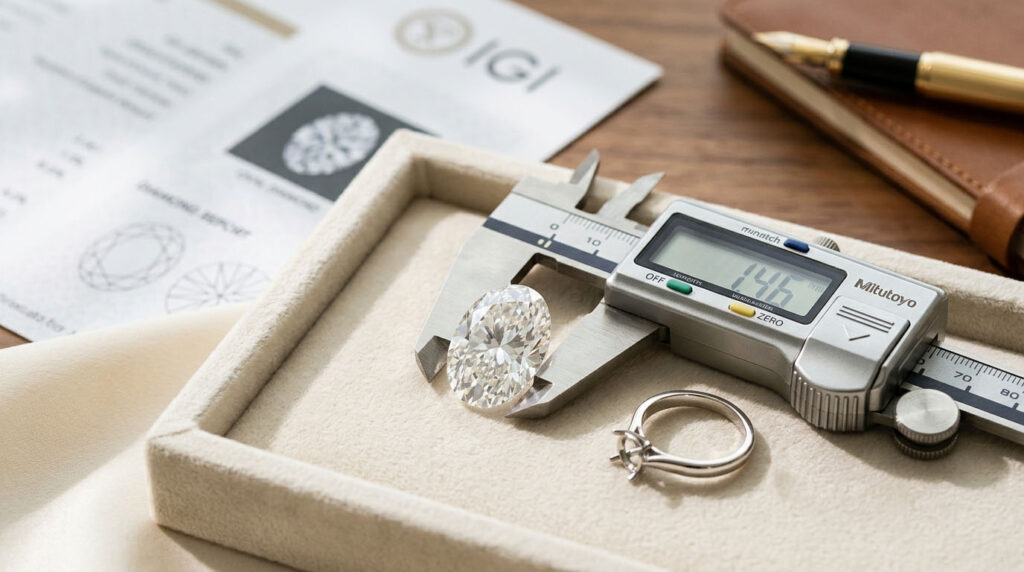
Oval diamonds can look very different even at the same carat weight. Some look soft and rounded, some look balanced and elegant, and some look long and slender. One of the main reasons is length-to-width ratio.
Understanding oval diamond ratio can help you choose a shape that looks balanced on the hand, fits your ring style, and matches the visual effect you want.
Oval diamond ratio means the diamond’s length divided by its width. A lower ratio, such as 1.30, looks shorter and wider. A middle ratio, such as 1.35 to 1.45, often looks balanced. A higher ratio, such as 1.50 or above, looks longer and slimmer. Many buyers prefer oval diamonds around 1.30:1 to 1.50:1, but the best ratio depends on personal style, finger shape, setting design, and the actual diamond appearance.
What Is Oval Diamond Ratio?
Oval diamond ratio is calculated by dividing the diamond’s length by its width. For example, if an oval diamond measures 10mm long and 7mm wide, the ratio is about 1.43.
This number helps describe the outline of the oval. A lower ratio looks shorter and wider. A higher ratio looks longer and slimmer. Ratio is not the same as carat weight, and it is not a diamond grade. It is simply a tool for understanding shape.
When comparing oval lab grown diamonds online, ratio can help you understand whether the stone looks rounder, balanced, or elongated. You can compare actual measurements in our lab grown diamond inventory.
What Does 1.30, 1.40, and 1.50 Oval Ratio Mean?
Small changes in oval ratio can make a diamond look very different. A 1.30 oval may look softer and wider, while a 1.50 oval may look longer and slimmer. A ratio around 1.35 to 1.45 often feels balanced to many buyers, but preference matters.
| Ratio | Shape Feel | Best For |
|---|---|---|
| 1.25–1.30 | Shorter and wider | Buyers who like a softer, rounder oval |
| 1.35–1.45 | Balanced oval | Classic oval engagement ring look |
| 1.50+ | Longer and slimmer | Buyers who want strong finger elongation |
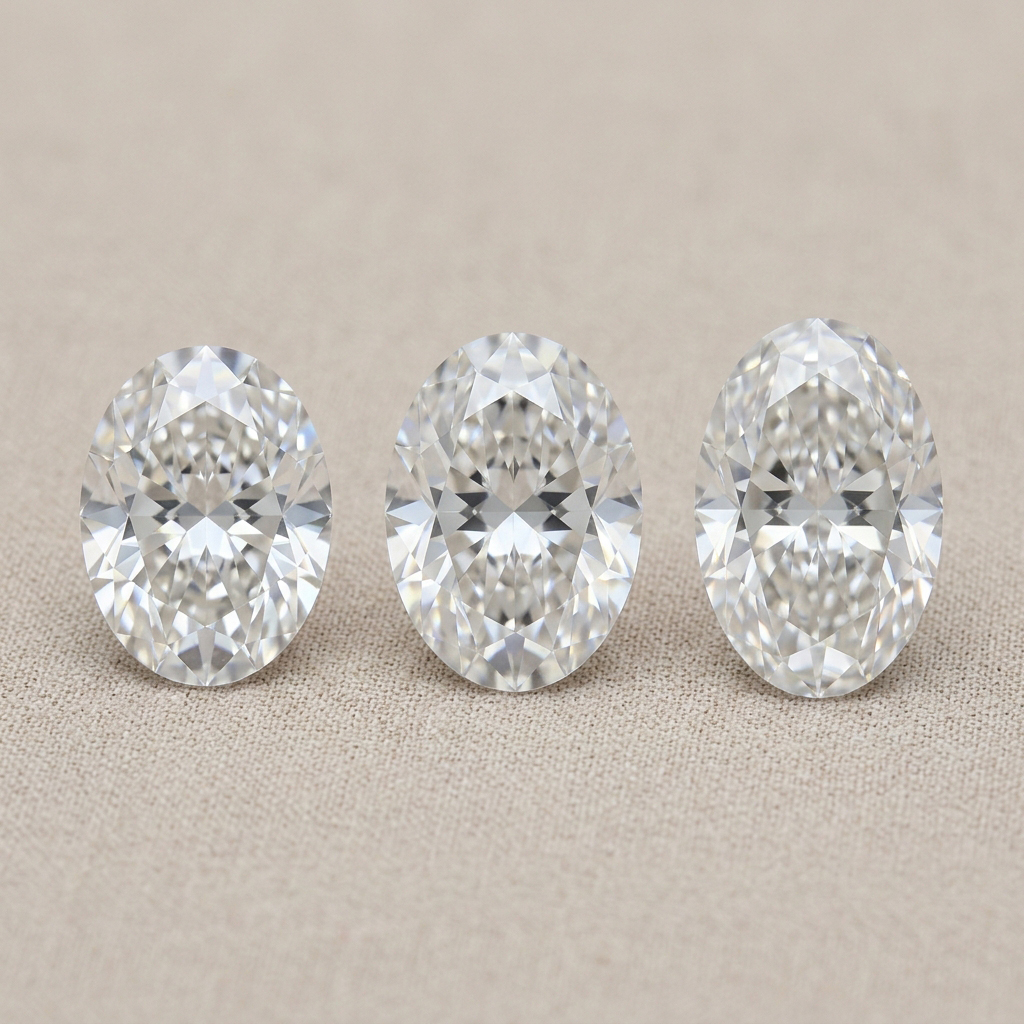
Oval ratio comes from length divided by width. When comparing stones online, always check the actual measurements in our lab grown diamond inventory.
Which Oval Diamond Ratio Looks Best?
Many buyers prefer an oval diamond ratio between 1.30 and 1.50, but there is no single perfect ratio. The best choice depends on the look you prefer, the ring setting, finger proportion, and the actual diamond appearance.
A ratio around 1.35 to 1.45 often creates a balanced oval look. A ratio closer to 1.30 gives a softer and rounder appearance. A ratio around 1.50 or above creates a longer and more slender outline.
Do not choose by ratio alone. A beautiful oval diamond should also look bright, balanced, and visually pleasing in photos or videos.
Does Oval Ratio Affect Bow-Tie?
Oval ratio can affect visual balance, but it does not guarantee whether a diamond will or will not have bow-tie. Bow-tie is mainly a light performance and visual appearance effect.
A longer oval may sometimes look more dramatic, but that does not automatically mean the bow-tie will be strong. A balanced oval can still show bow-tie, and a longer oval can still look beautiful if the cut and light performance are good.
The better approach is to check the ratio together with real photos or videos, measurements, depth, and overall brightness. For more detail, read our oval diamond bow-tie effect guide.
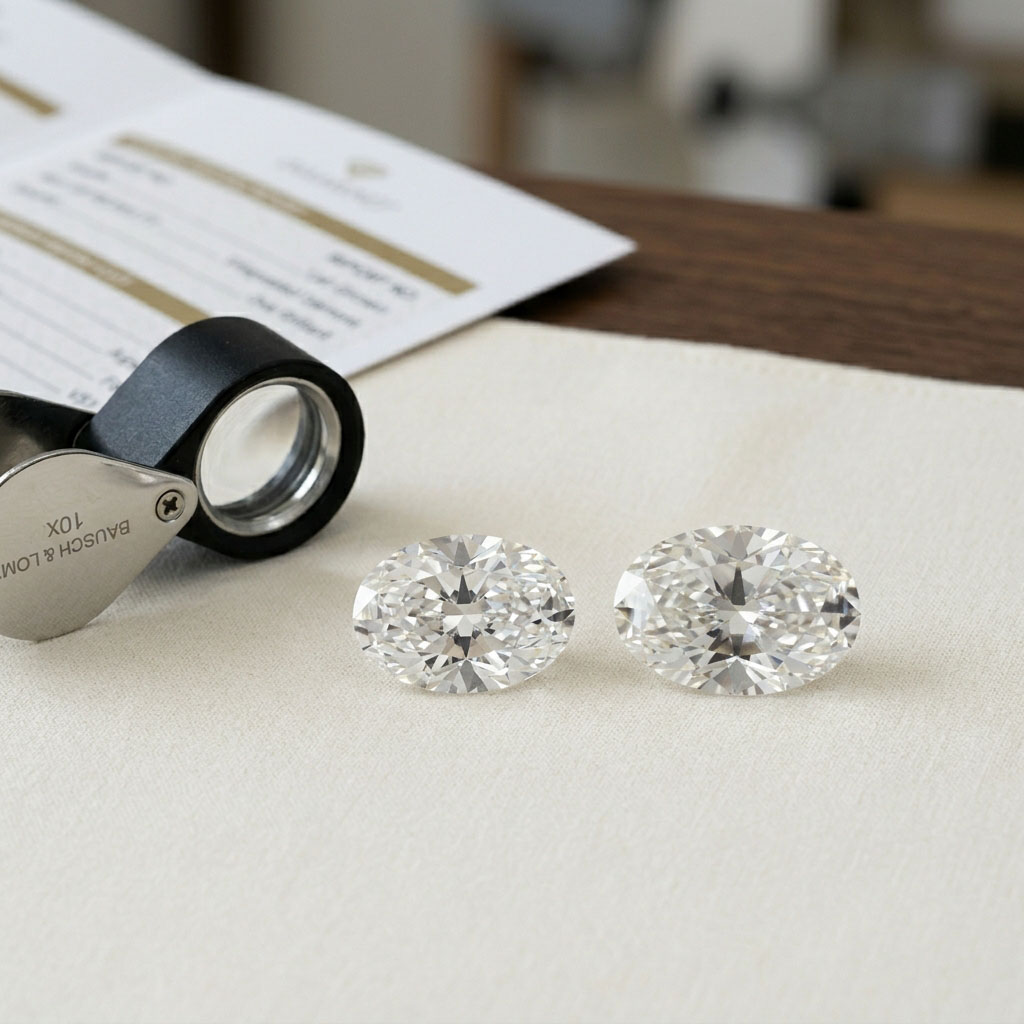
Ratio alone cannot guarantee whether an oval diamond will have bow-tie. Learn more in our oval diamond bow-tie effect guide.
Short Oval vs Balanced Oval vs Long Oval
Short Oval
A shorter oval looks softer, wider, and closer to a rounded shape. It can be a good choice for buyers who want an oval look without a very long outline.
Balanced Oval
A balanced oval is often the easiest choice for classic engagement rings. It does not look too short or too long, and it works well with many solitaire, halo, hidden halo, pavé, and three-stone settings.
Long Oval
A longer oval can create strong finger elongation and a more dramatic look. However, if the oval is too narrow or poorly balanced, it may not look as elegant in the setting.
How Oval Ratio Looks on the Hand
A longer oval can make the finger look more elongated, while a shorter oval gives a softer and more compact look. But hand appearance depends on more than ratio alone.
Finger size, band width, prong style, halo design, and setting height can all change how the oval diamond looks. A delicate band can make the center stone look more prominent, while a thicker band may make the same stone look more modest.
This is why oval ratio should be considered together with ring design. If you already know the setting style you want, make sure the oval measurements fit the design properly.
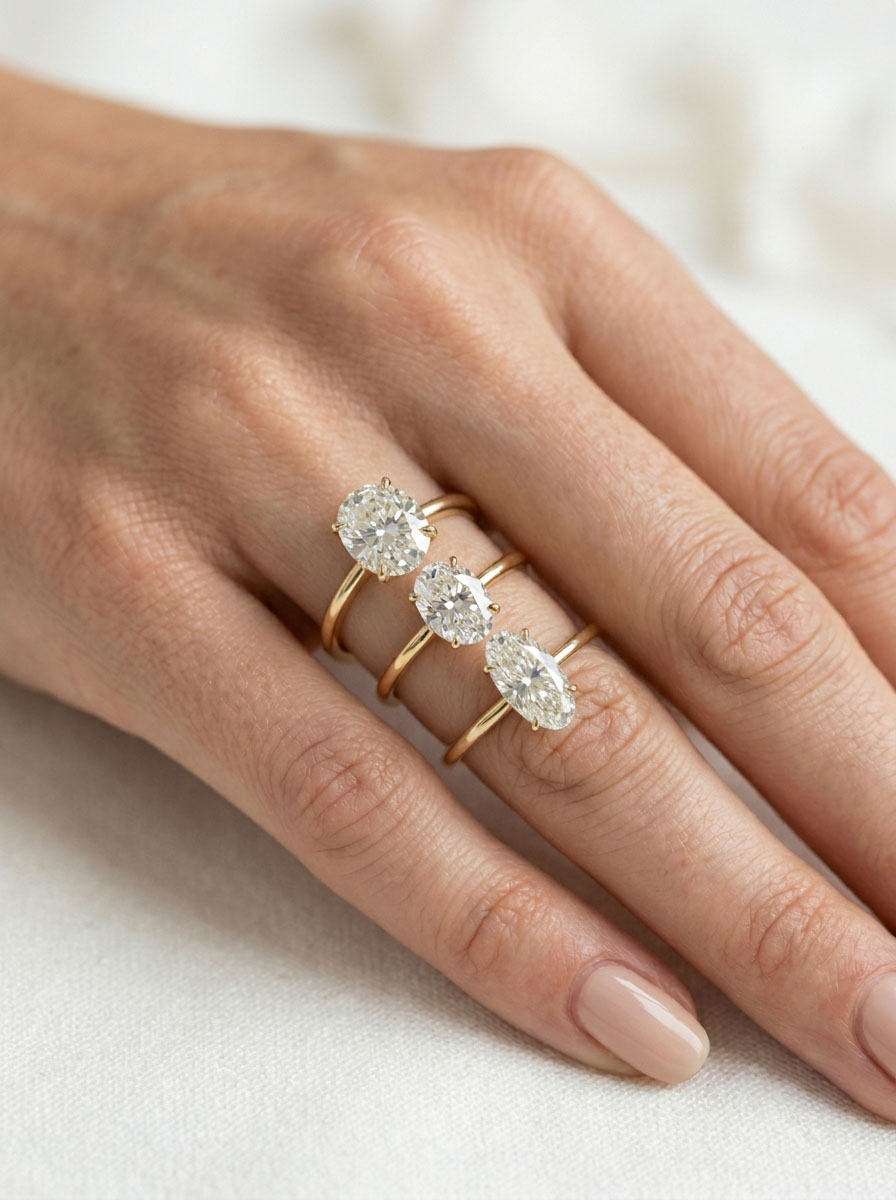
Oval ratio can change how the diamond looks on the hand, but the final effect also depends on the ring setting. Browse our lab grown diamond ring styles for setting inspiration.
How to Choose Oval Ratio When Buying Online
When buying an oval lab grown diamond online, use ratio as one part of the decision. It can help you narrow your preference, but it should not replace visual review.
- Check the diamond measurements.
- Calculate length divided by width.
- Decide if you prefer a short, balanced, or long oval.
- Compare real photos or videos when available.
- Check bow-tie and overall brightness.
- Make sure the setting fits the diamond measurements.
If you are not sure how measurements work, read our diamond measurements guide. If you are comparing oval shadows, read our bow-tie effect guide.
Common Mistakes When Choosing Oval Diamond Ratio
- Thinking one ratio is always best.
- Choosing only by carat weight.
- Ignoring measurements.
- Ignoring bow-tie effect.
- Choosing a very long oval without checking balance.
- Ignoring ring setting style.
- Comparing ratios without photos or videos.
Buyer Decision Box: Which Oval Ratio Should You Choose?
Choose a shorter oval if:
- You like a softer, rounder look.
- You do not want the diamond to look too long.
- You prefer a compact oval shape.
Choose a balanced oval if:
- You want a classic oval engagement ring look.
- You want a shape that works with most settings.
- You prefer a safe, elegant middle ground.
Choose a longer oval if:
- You want more finger elongation.
- You like a slim, elegant look.
- You are willing to check bow-tie and setting fit carefully.
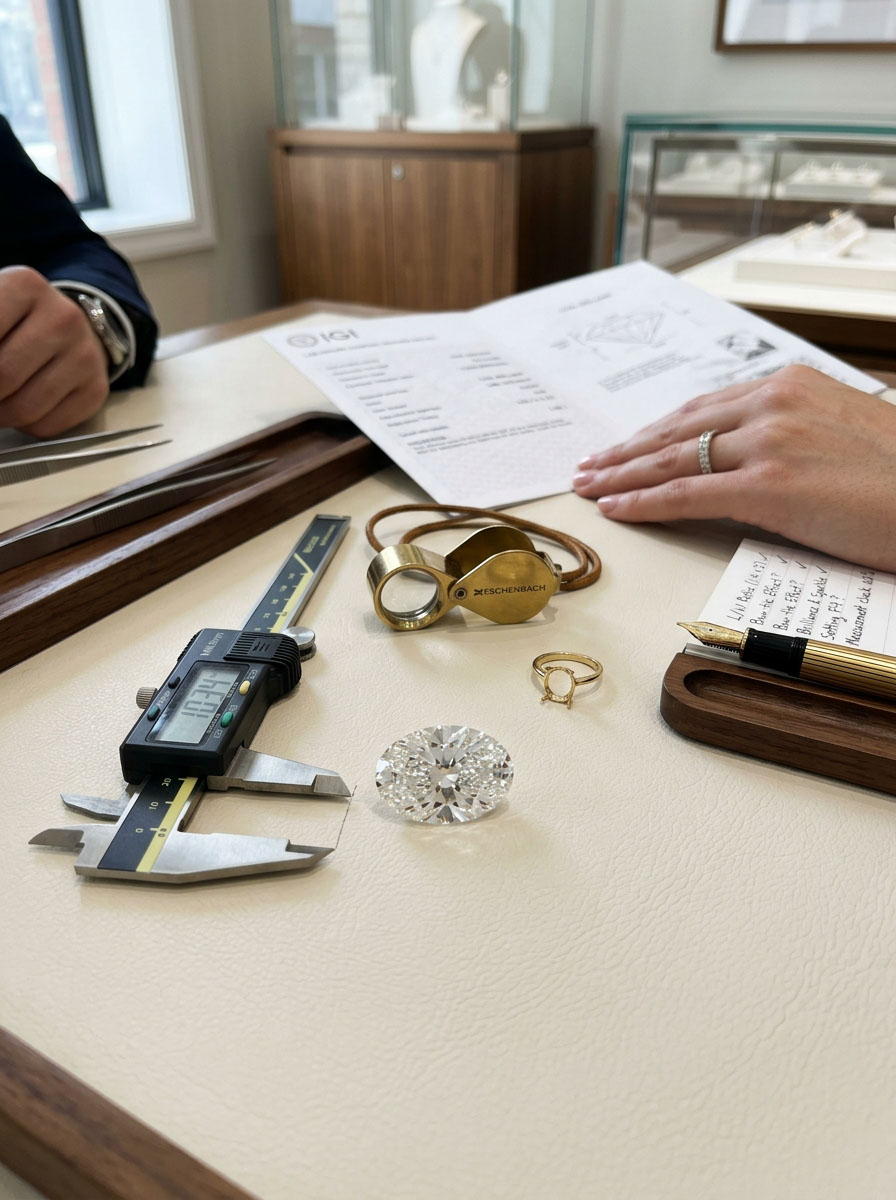
A good oval diamond should look balanced, bright, and suitable for the ring design. For made-to-order pieces, our custom jewelry service can help match the stone with the setting.
Myth vs Fact
| Myth | Fact |
|---|---|
| 1.40 is always the best oval ratio. | It is often balanced, but not always best for every buyer. |
| A longer oval always looks better. | Too long can look narrow or unbalanced. |
| Ratio can tell you everything. | Photos, videos, bow-tie, brightness, and setting fit still matter. |
| Short ovals are bad. | Some buyers prefer a softer, rounder oval. |
| Ratio replaces measurements. | Ratio comes from measurements, but you still need length and width. |
FAQ
What is oval diamond ratio?
Oval diamond ratio is the diamond’s length divided by its width. It helps describe whether the oval looks shorter, balanced, or more elongated.
How do you calculate oval diamond ratio?
Divide the diamond’s length by its width. For example, a 10mm by 7mm oval diamond has a ratio of about 1.43.
What is the best oval diamond ratio?
There is no single best ratio. Many buyers like oval diamonds around 1.30 to 1.50, with 1.35 to 1.45 often feeling balanced.
Is 1.40 a good oval diamond ratio?
Yes, 1.40 is often considered a balanced oval ratio, but the final choice should also depend on photos, videos, bow-tie, and setting fit.
Is 1.50 too long for an oval diamond?
Not always. A 1.50 ratio can look elegant and elongated, but very long ovals should be checked for balance, bow-tie, and setting compatibility.
Does oval ratio affect bow-tie?
Oval ratio can affect visual balance, but it does not guarantee bow-tie. Bow-tie also depends on cut, depth, facet arrangement, and lighting.
What ratio makes an oval diamond look bigger?
A longer oval may create more finger coverage and appear larger, but the best visual size also depends on measurements, depth, and setting style.
What oval ratio is best for engagement rings?
A balanced oval, often around 1.35 to 1.45, works well for many engagement rings, but shorter and longer ovals can also be beautiful.
Should I choose a short or long oval diamond?
Choose a shorter oval if you like a softer look. Choose a longer oval if you want more finger elongation. Choose a balanced oval if you want a classic middle ground.
Do lab grown oval diamonds have the same ratio rules?
Yes. Lab grown oval diamonds are judged visually in the same way for ratio, shape balance, measurements, bow-tie, and setting fit.
Final Buying Note
Oval diamond ratio is a useful guide, but it should not be the only factor you use. A balanced oval depends on measurements, bow-tie, brightness, setting style, and personal preference.
Before choosing an oval lab grown diamond, compare the ratio with real photos or videos and make sure the stone fits the ring design. You can browse our lab grown diamond inventory, explore ring styles, or request our custom jewelry service.
© VANTYRE Jewelry Guide