
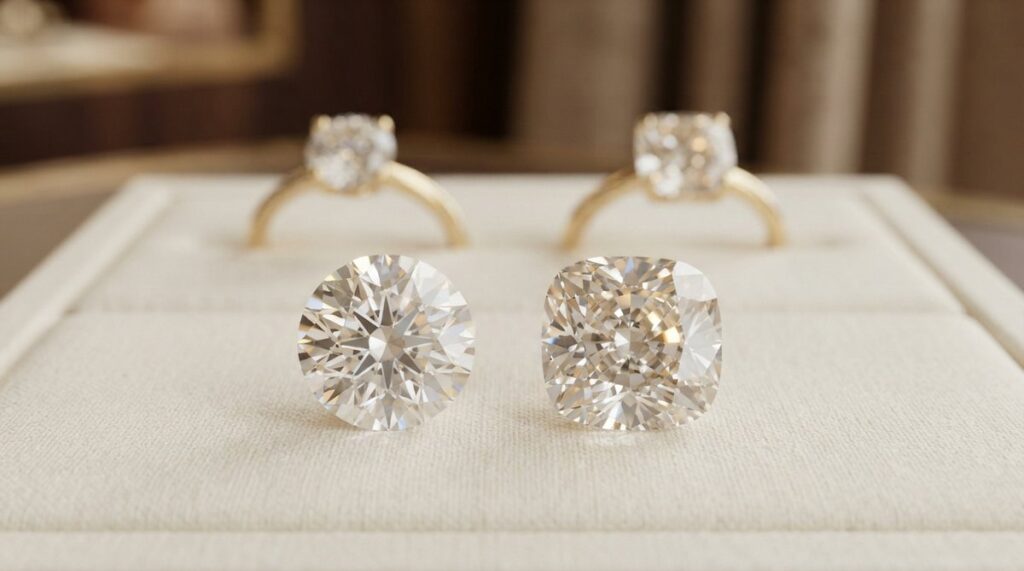
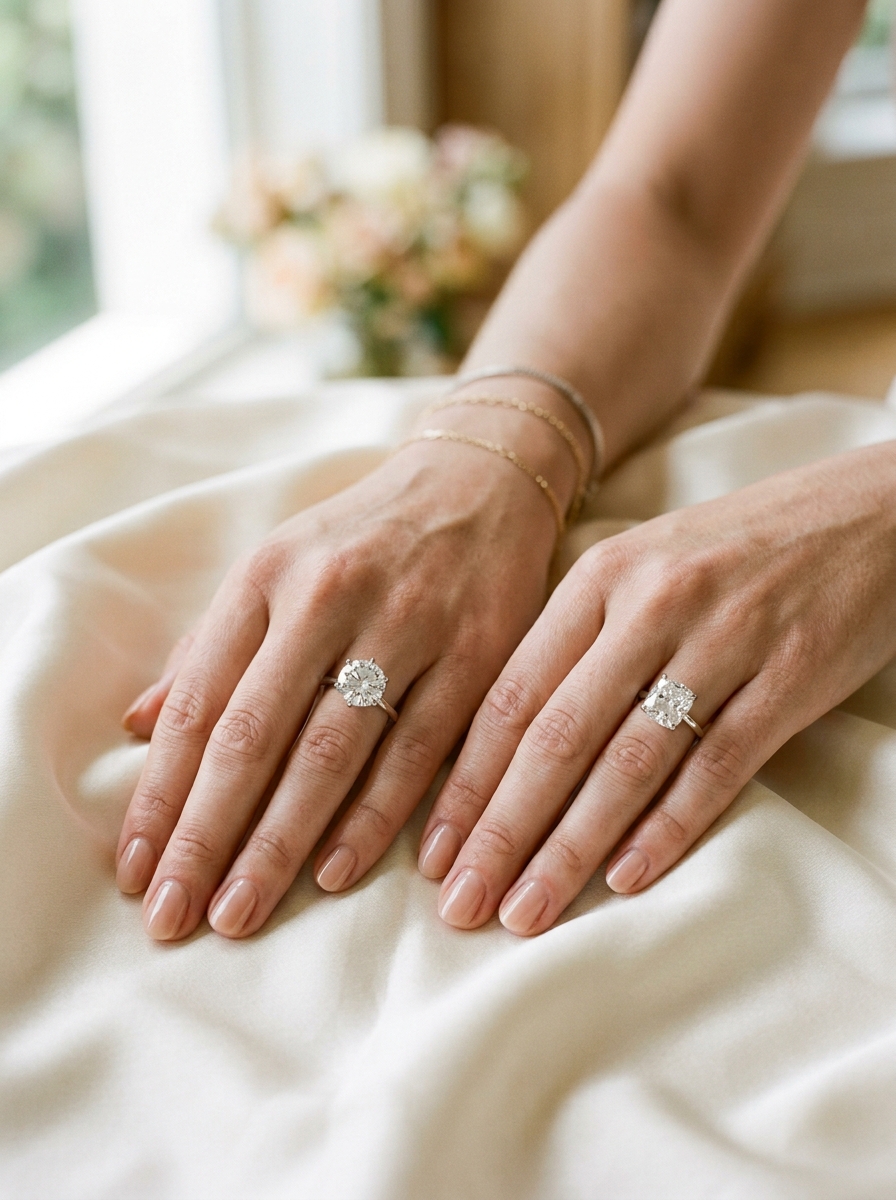
The most popular diamond shape in the world is round. It has been the default choice for engagement rings for over a century. Right next to it on every jeweler’s tray sits the cushion cut — softer corners, warmer mood, and a shape that has been quietly winning over buyers who want something different.
Both are beautiful. Both work in engagement rings. But the way they look on the finger, the way they handle light, and the sort of person each one suits are surprisingly different.
Here is how they compare.
Round brilliant diamonds offer the most consistent and predictable sparkle of any diamond shape, making them the safest choice for maximum brilliance. Cushion cut diamonds have a softer, pillow-like shape with rounded corners and a more romantic or vintage feel. Choose round for timeless sparkle. Choose cushion for a softer, more distinctive look.
What Is a Round Brilliant Diamond?
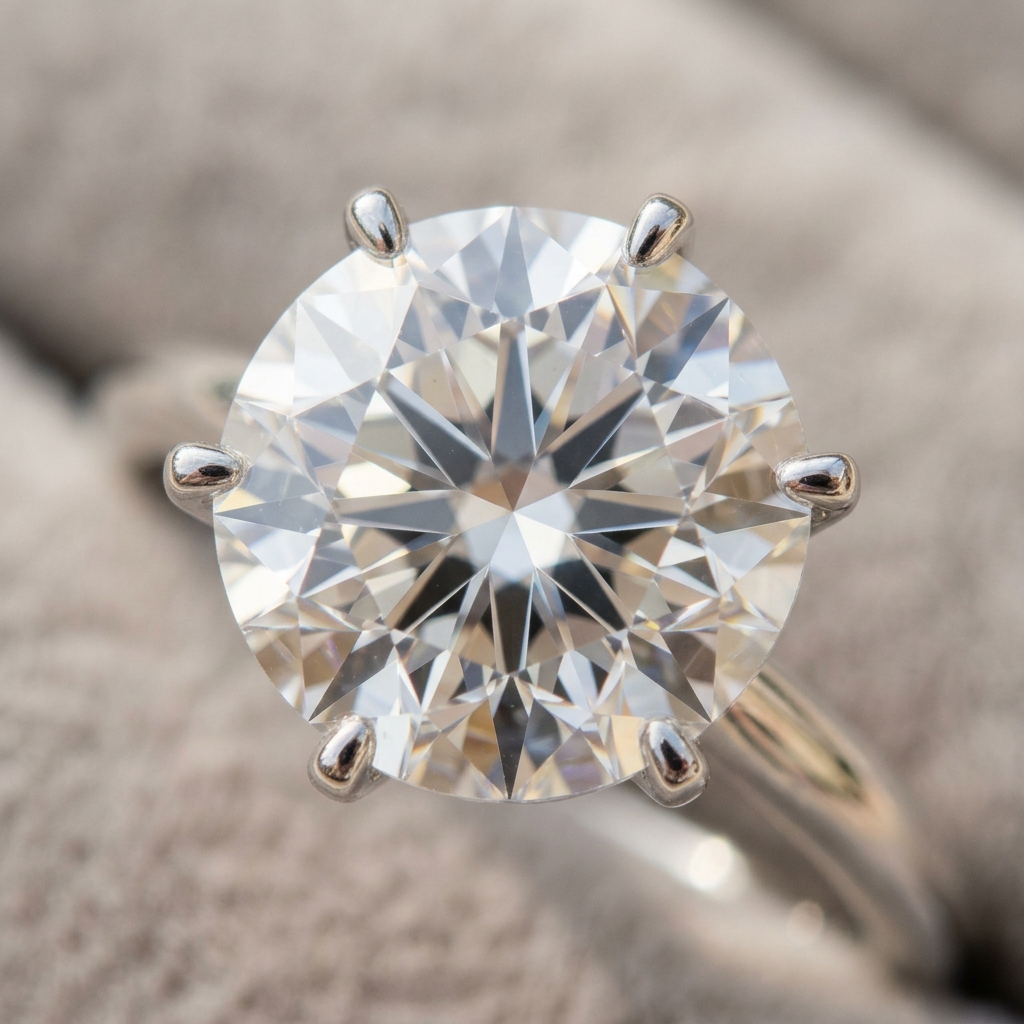
A round brilliant diamond is the most precisely engineered diamond shape. It uses 57 or 58 facets arranged in a specific mathematical pattern designed to maximize light return. When cut well, a round diamond returns more light to the eye than any other shape, which is why it is used as the benchmark for brilliance.
The round shape is symmetrical from every angle. It performs consistently under different lighting conditions and looks balanced on virtually any hand. Round diamonds also have the largest resale market and the most setting options available.
What Is a Cushion Cut Diamond?
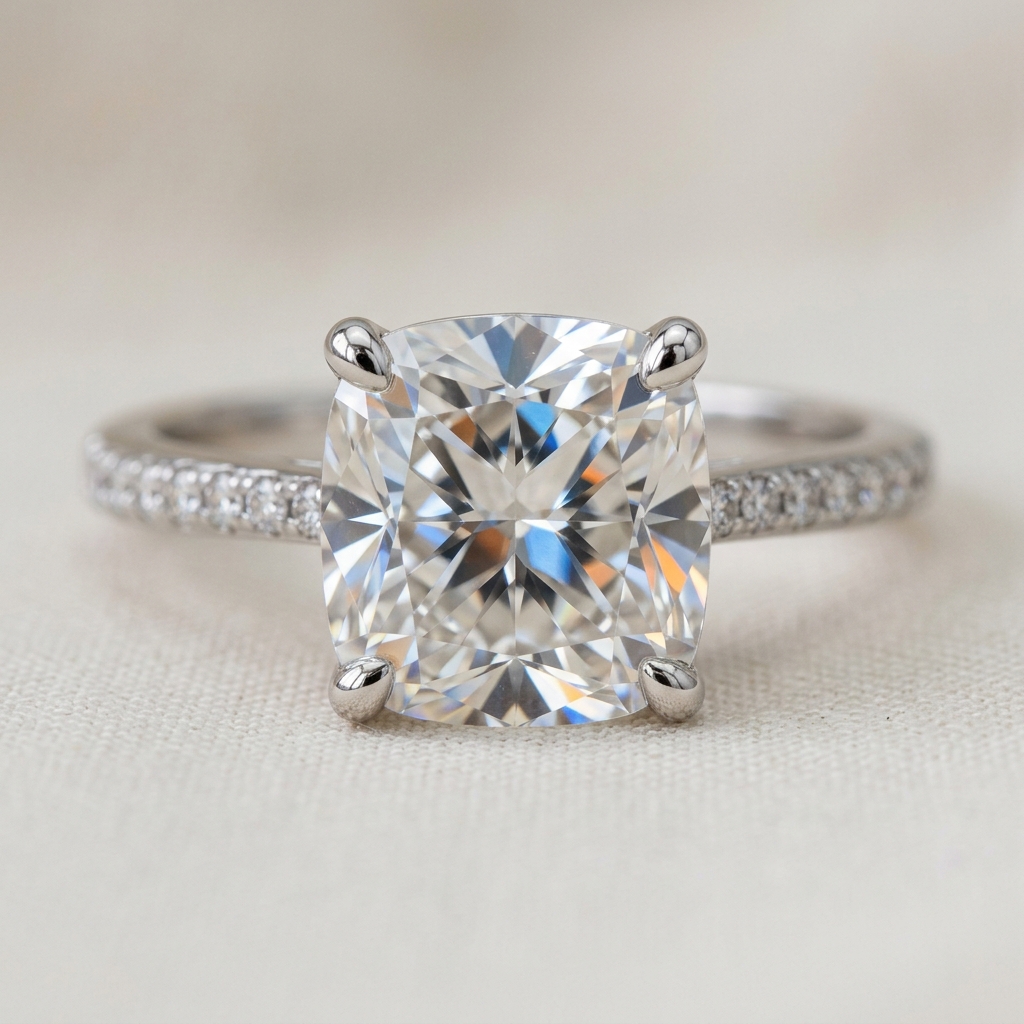
A cushion cut diamond is a square or rectangular shape with rounded corners — like a pillow, which is where the name comes from. The faceting can vary significantly between stones, but most cushion cuts fall into two style categories: those with a chunky, larger-facet look that creates broad flashes of light, and those with a crushed-ice appearance that scatters light into many tiny sparkles.
Cushion cuts can look vintage or modern depending on the faceting and ratio. Shorter, squarer cushions feel more traditional, while elongated cushions with a ratio above 1.15 feel more contemporary. The rounded corners make cushion cuts one of the most comfortable shapes to wear.
Cushion Cut vs Round Diamond Comparison
| Aspect | Round Brilliant | Cushion Cut |
|---|---|---|
| Shape | Perfect circle | Square or rectangle with rounded corners |
| Sparkle style | Consistent, bright, predictable | Varies — chunky flash or crushed ice |
| Visual softness | Crisp, geometric | Soft, romantic, pillowy |
| Price per carat | Higher (most demand) | Lower (15-30% less typically) |
| Setting flexibility | Fits almost any setting | Fits most, but halos need care |
| Best buyer | Wants maximum, predictable sparkle | Wants softer, distinctive character |
| Daily wear | Excellent | Excellent (rounded corners help) |
Which One Sparkles More?
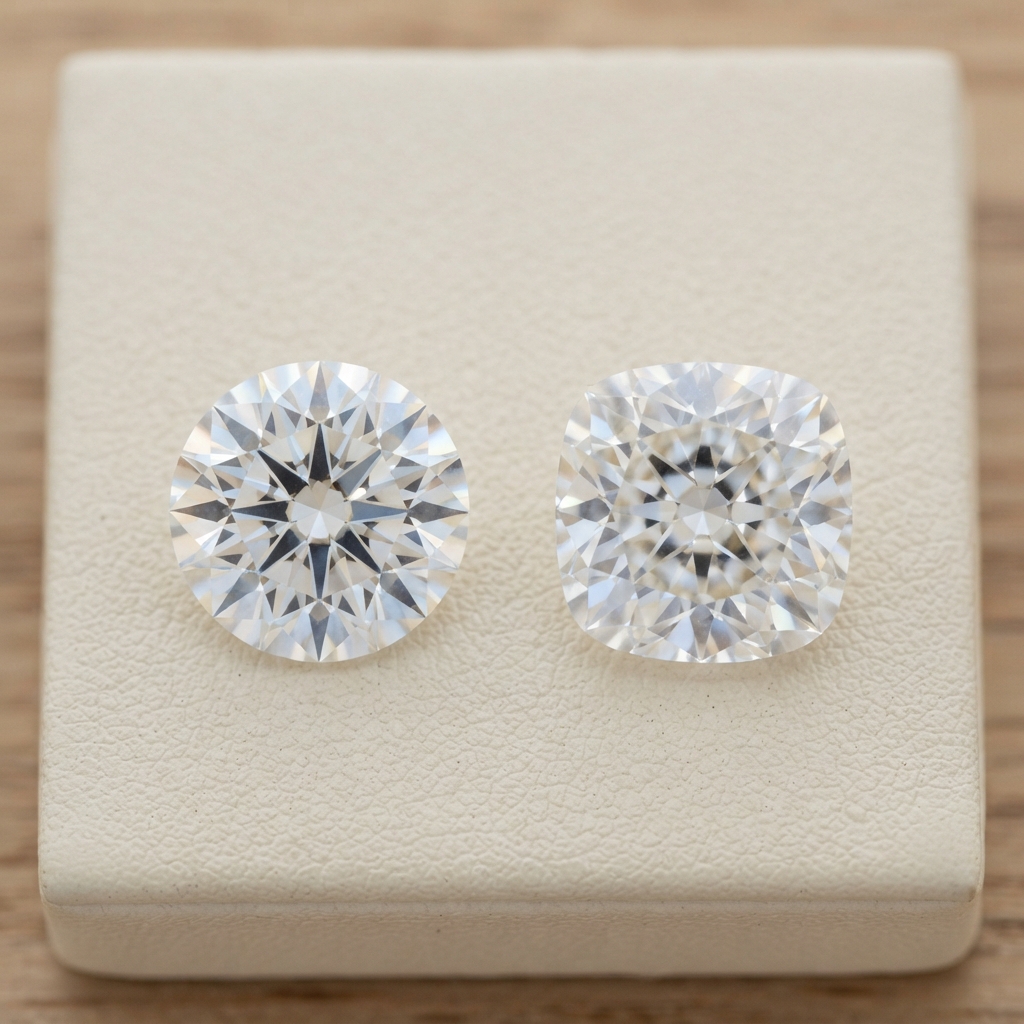
Round brilliant diamonds produce more consistent and predictable sparkle. The standardized faceting pattern is optimized for light performance, and a well-cut round diamond will outperform most cushion cuts in brilliance measurements.
Cushion cuts can also sparkle beautifully, but the result depends heavily on the individual stone’s faceting style and cut quality. Some cushion cuts produce stunning brilliance, while others may look dull if poorly cut. The variation is much wider than with rounds.
Which One Looks Bigger?
At the same carat weight, face-up size depends on the specific depth and measurements of each stone. Some cushion cuts have a shallower depth that makes them appear larger than a round of the same weight. Others are deeper and may look smaller. Always compare the actual length and width measurements rather than relying on carat weight alone. Understanding diamond measurements will help you make a more accurate comparison.
Best Settings for Cushion and Round Diamonds
Round diamonds fit almost any setting. Solitaire, halo, pavé, three-stone, bezel, tension — every style works with a round brilliant. This versatility is one of the main reasons round diamonds remain the most popular choice.
Cushion cuts pair well with solitaire, hidden halo, halo, pavé, vintage-inspired, and three-stone settings. The rounded corners make cushion cuts comfortable in any setting style. Halos around cushion cuts can be shaped to follow the soft corners for a seamless look. Browse our lab grown diamond ring styles or request a custom design for either shape.
Buyer Decision Box
Choose a round brilliant if: you want the most consistent, predictable sparkle. You prefer a classic, timeless look. You want maximum setting options. You value resale flexibility.
Choose a cushion cut if: you prefer softer, rounded edges. You want a romantic or vintage-inspired look. You like the idea of a less common shape. You want to maximize size for your budget.
Common Mistakes
- Assuming all cushion cuts look the same — faceting style varies dramatically between stones.
- Ignoring the facet style when choosing a cushion (chunky vs crushed ice).
- Comparing only by carat weight without checking length and width measurements.
- Choosing a cushion cut only because it costs less per carat without checking cut quality.
- Choosing a round only because it is popular without considering personal style.
Myth vs Fact
| Myth | Fact |
|---|---|
| Cushion cuts are always vintage. | Cushion cuts can look vintage or modern depending on faceting and ratio. |
| Round diamonds are overpriced. | Round diamonds cost more because they waste more rough, not because of arbitrary markup. |
| Cushion cuts sparkle as much as rounds. | Some cushion cuts sparkle beautifully, but rounds have more consistent brilliance. |
| Round diamonds suit every hand. | Round looks good on most hands, but elongated shapes can be more flattering for short fingers. |
FAQ
Which sparkles more, cushion or round?
Round brilliant diamonds generally sparkle more consistently due to their standardized faceting. Cushion cuts can also sparkle beautifully but the brilliance varies more between individual stones.
Which is more expensive, cushion or round?
Round diamonds are typically 15-30% more expensive per carat than cushion cuts of comparable quality because round cutting wastes more rough diamond material.
Which looks bigger, cushion or round?
It depends on the specific measurements. Some shallow cushion cuts appear larger than rounds of the same carat weight. Always compare length and width, not just carats.
Is cushion cut good for an engagement ring?
Yes. Cushion cut engagement rings are a popular alternative to round, offering a softer, more romantic look that works with many setting styles.
Is round cut good for an engagement ring?
Yes. Round brilliant is the most popular and time-tested engagement ring shape, with predictable brilliance and the widest setting selection.
Which is better for lab grown diamonds?
Both shapes work well. Lab grown round diamonds offer exceptional value compared to natural rounds. Lab grown cushion cuts allow buyers to maximize size and budget simultaneously.
What settings work best for cushion cuts?
Cushion cuts look beautiful in solitaire, hidden halo, halo, pavé, vintage, and three-stone settings. The rounded corners make them comfortable in any style.
What settings work best for round diamonds?
Round diamonds fit virtually every setting style, including solitaire, halo, pavé, bezel, tension, three-stone, and cathedral.
Which shape is more timeless?
Both are classic shapes with long histories. Round has been the most popular engagement ring shape for over a century. Cushion cuts have been worn since the 1800s and have never gone out of style.
Final Buying Note
Round and cushion cut diamonds serve different priorities. Round offers the most predictable brilliance and the widest setting selection. Cushion offers softer character, better value per carat, and a look that stands out from the crowd. Neither is objectively better — the right choice depends on whether you want the brightest possible sparkle or a shape with more personality.
Browse our lab grown diamond inventory, explore ring styles, or request a custom design.
© VANTYRE Jewelry Guide