
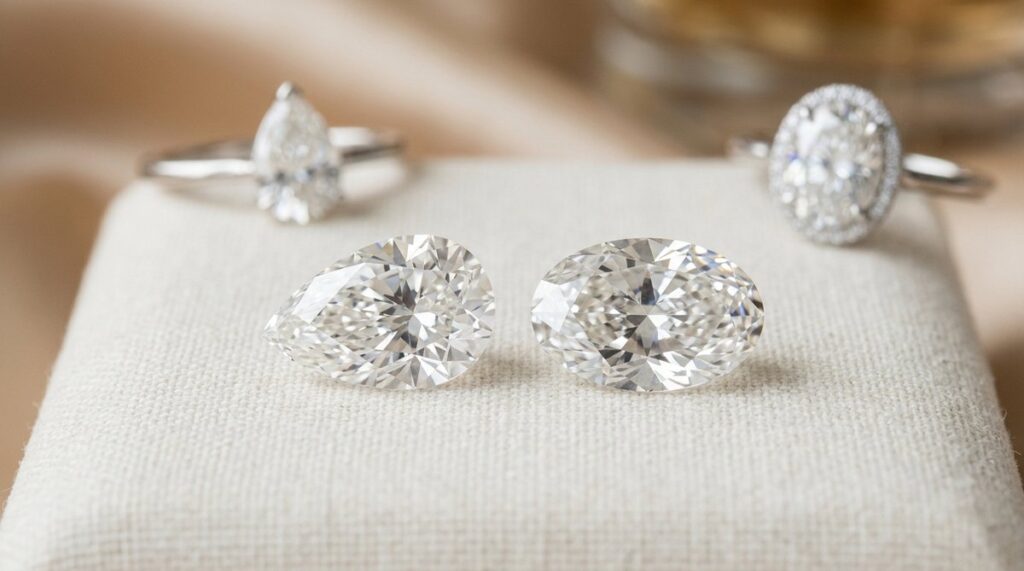
Oval and pear are the two most popular elongated diamond shapes, and they are often the final two choices for buyers who want something more interesting than a round brilliant. Both shapes create a lengthening effect on the finger, both show some bow-tie shadow, and both can look stunning in the right setting.
But they wear differently. Oval is balanced and symmetrical. Pear has a pointed tip that creates a more directional, graceful silhouette. The choice between them affects not only how the ring looks but also how much maintenance it needs.
Here is how they compare side by side.
Oval diamonds are symmetrical, soft, and classic, making them a safe and timeless choice for an elongated look. Pear diamonds are teardrop-shaped with a pointed tip, creating a more distinctive and graceful silhouette. Choose oval for balanced elegance. Choose pear for something more unique and expressive.
What Is an Oval Diamond?
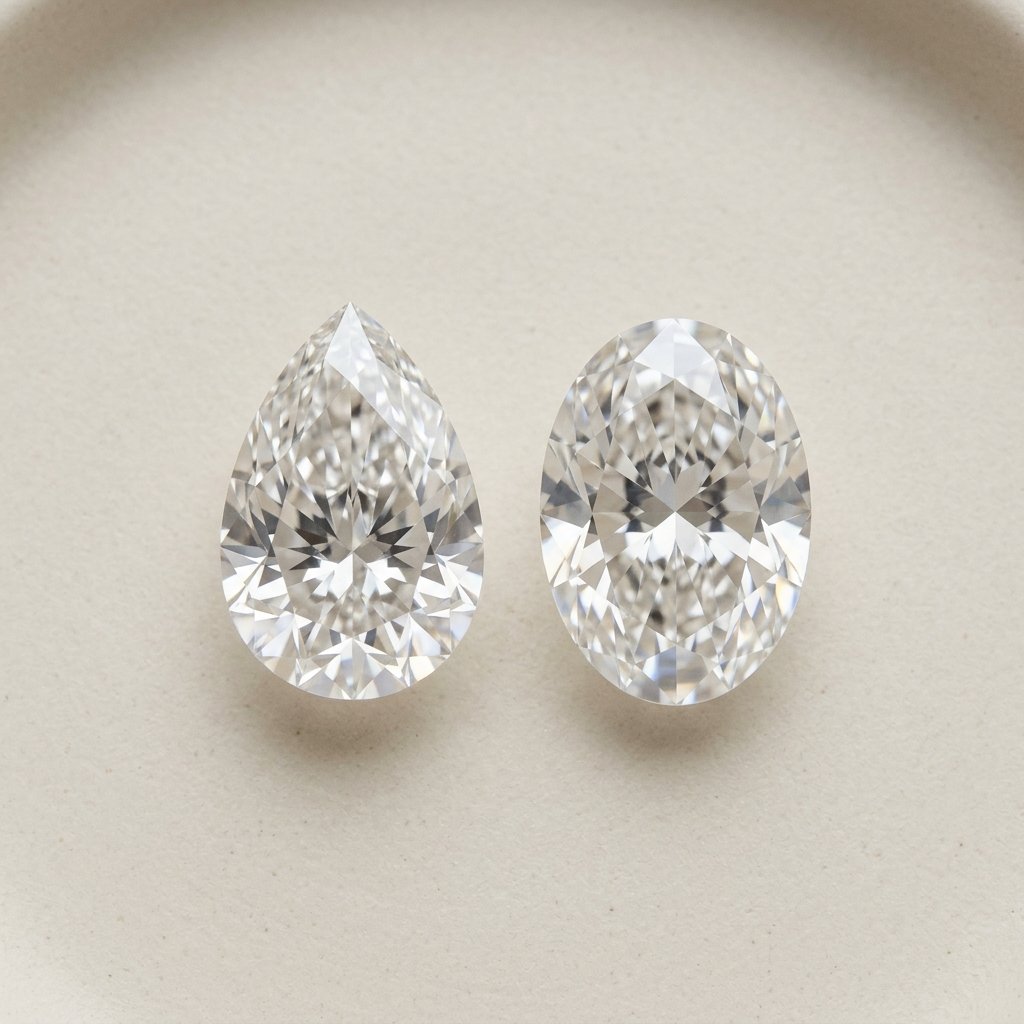
An oval diamond is an elongated brilliant cut with a symmetrical outline. It has the same faceting structure as a round brilliant but stretched into an oval shape. This gives it the sparkle of a round diamond with the finger-lengthening effect of an elongated silhouette.
The oval shape is one of the most popular alternatives to round. It looks balanced from every angle, fits a wide range of setting styles, and tends to look larger than a round diamond of the same carat weight. The length-to-width ratio typically falls between 1.30 and 1.50, with 1.40 being the most commonly preferred. Learn more about oval diamond ratios.
What Is a Pear-Shaped Diamond?
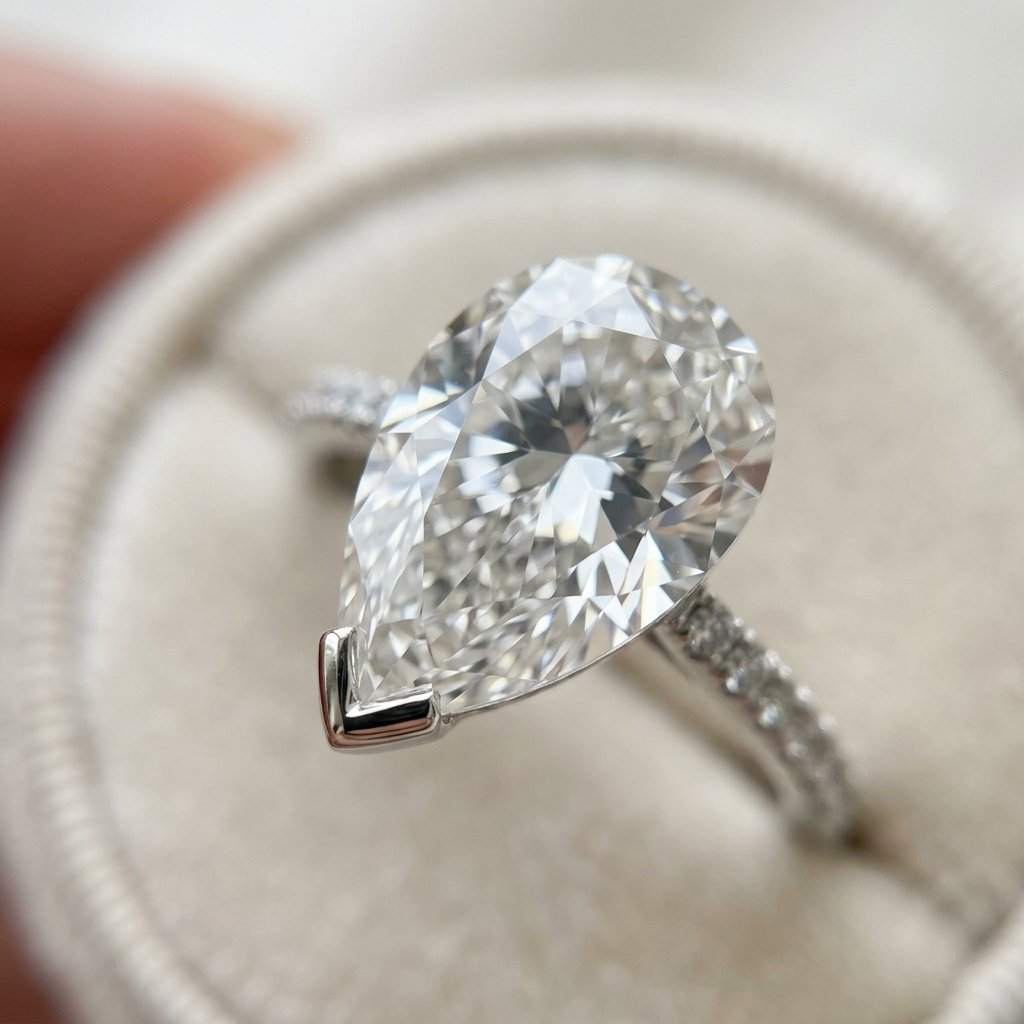
A pear-shaped diamond combines the round end of an oval with the pointed tip of a marquise, creating a teardrop silhouette. Like the oval, it uses brilliant-style faceting for sparkle. Unlike the oval, it is not symmetrical — the rounded end is wider than the pointed tip, which gives the pear shape its distinctive directional character.
The pointed tip of a pear diamond is its most vulnerable part. Unlike an oval, which has no sharp edges, the pear tip can chip if not properly protected by the setting. Most pear diamonds are set with a V-shaped prong or a bezel that covers the tip. This is the most important maintenance consideration for pear-shaped diamonds. Compare oval and pear ring settings.
Pear vs Oval Diamond Comparison
| Aspect | Oval Diamond | Pear Diamond |
|---|---|---|
| Shape | Symmetrical, elongated oval | Teardrop, rounded end + pointed tip |
| Mood | Soft, balanced, classic | Graceful, distinctive, directional |
| Finger effect | Even elongation | Directional, can point up or down |
| Tip protection | Not needed | Essential — V-prong or bezel |
| Bow-tie risk | Moderate | Moderate |
| Setting options | Most styles work | Most styles, but tip needs care |
| Best buyer | Wants classic elongated elegance | Wants distinctive, graceful style |
Which Shape Looks Better on the Hand?
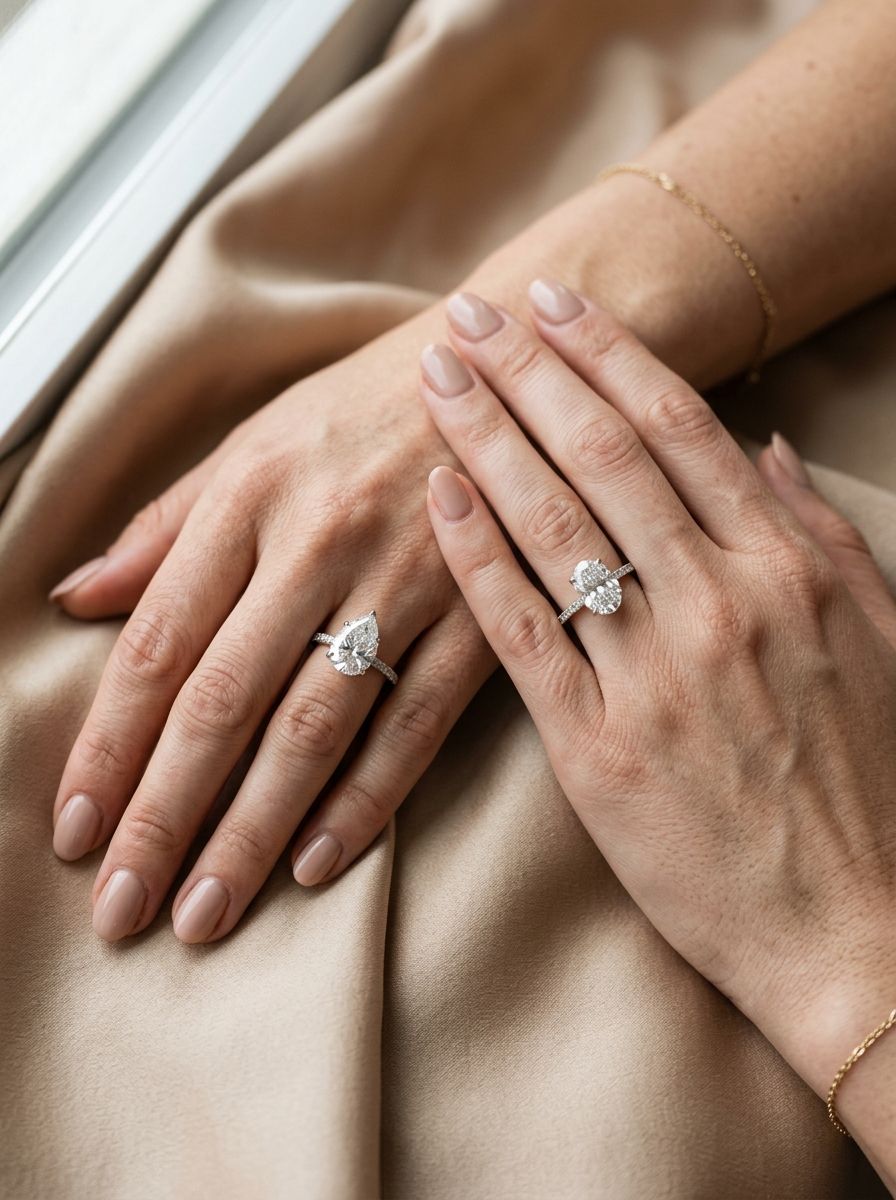
Oval diamonds create a balanced, evenly elongated look on the finger. The symmetrical outline makes the finger appear longer without drawing attention to one side. Oval is the safer choice if you are unsure about how a directional shape will look.
Pear diamonds can be worn with the tip pointing toward the fingertip or toward the hand. Pointing toward the fingertip is the most common orientation and creates the most elongation. Pointing toward the hand creates a more unusual look and can make the ring feel more balanced from the wearer’s perspective. The directional nature of the pear shape means it may not sit straight on every finger, which is something to check when trying on rings.
Bow-Tie, Sparkle, and Visual Checks
Both oval and pear diamonds can show a bow-tie effect — a dark shadow across the center of the stone that looks like a bow tie. This happens because elongated brilliant cuts have areas where light escapes from the pavilion rather than reflecting back to the eye.
Some bow-tie is normal in both shapes. The key is to check whether the bow-tie in a specific stone is subtle and acceptable or dark and distracting. View the diamond in person or in high-resolution video under different lighting conditions before buying. Learn more about the oval bow-tie effect.
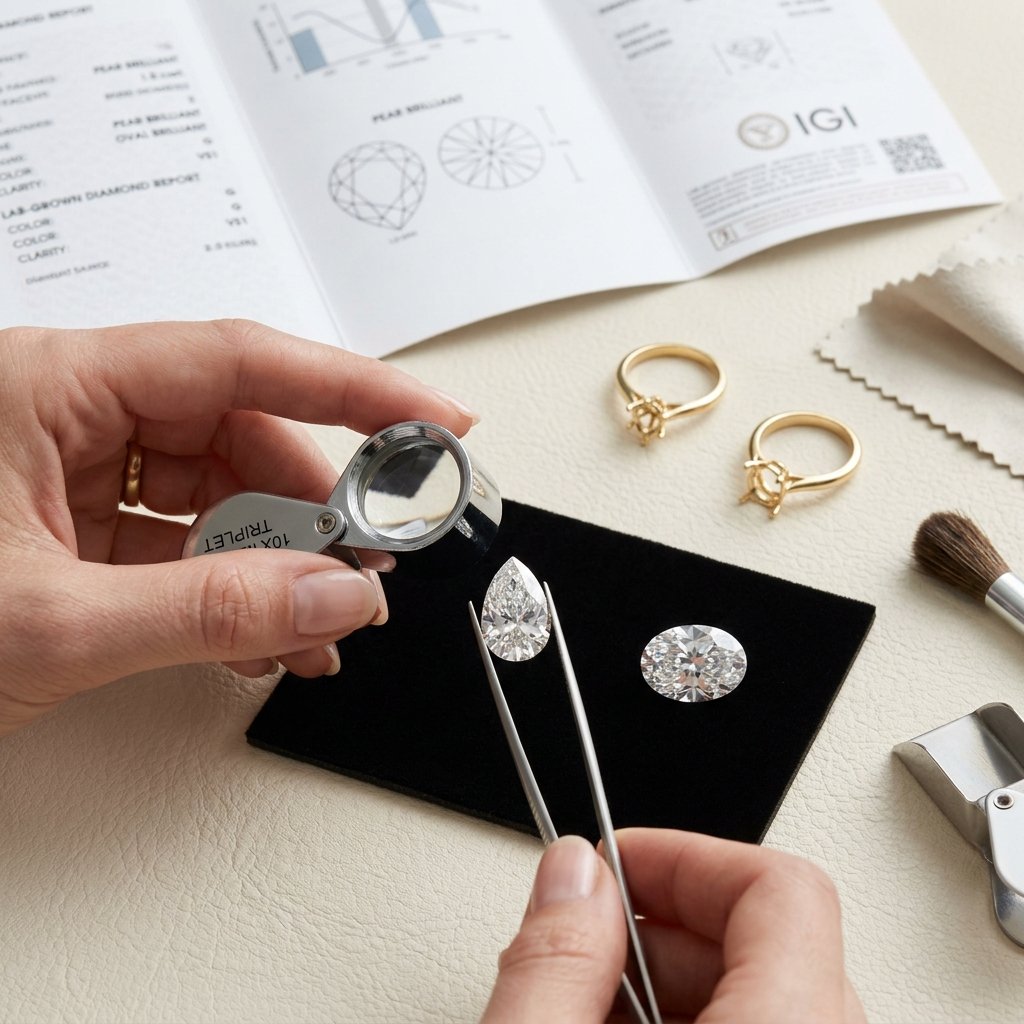
Best Settings for Pear and Oval Diamonds
Oval diamonds work well with solitaire, hidden halo, pavé, bezel, three-stone, and cathedral settings. The symmetrical shape fits most setting styles without special accommodations.
Pear diamonds need settings that protect the tip. Solitaire with V-prong, hidden halo, halo, bezel, three-stone, and east-west settings all work. The tip protection is the main difference — a pear in a standard prong setting without a V-prong at the tip is at risk of chipping. Browse our lab grown diamond ring styles or request a custom design.
Buyer Decision Box
Choose an oval if: you want a balanced, symmetrical elongated look. You prefer a safer, more classic style. You do not want to worry about tip protection.
Choose a pear if: you want a distinctive, graceful teardrop shape. You like the idea of a directional silhouette. You are willing to check tip protection.
Common Mistakes
- Ignoring pear tip protection — a pear without V-prong or bezel is at risk.
- Assuming oval and pear wear the same on the hand — pear is directional, oval is symmetrical.
- Choosing a pear without deciding point-up or point-down orientation.
- Ignoring the bow-tie effect in both shapes — check each stone individually.
- Comparing only by carat weight without checking length and width.
Myth vs Fact
| Myth | Fact |
|---|---|
| Pear diamonds chip easily. | Pear tips chip only if the setting does not protect them. A V-prong or bezel prevents damage. |
| Oval diamonds never have bow-tie. | Most oval diamonds show some bow-tie. What matters is whether it is subtle or distracting. |
| Pear and oval wear the same way. | Oval is symmetrical on the finger. Pear is directional and looks different pointing up vs down. |
| Pear diamonds are harder to set than ovals. | Both are straightforward for an experienced jeweler. Pear just needs extra tip attention. |
FAQ
Which looks bigger, pear or oval?
Both elongated shapes look larger than rounds of the same carat weight. Pear and oval are comparable in face-up size — the difference depends on the specific length-to-width ratio and depth of each stone.
Which is more flattering on the hand?
Oval is more universally flattering because it is symmetrical. Pear can be equally flattering when the orientation matches the finger shape, but it is less predictable without trying on.
Do pear diamonds have more bow-tie than ovals?
Both shapes can show bow-tie. The severity depends on the cut quality of the individual stone, not the shape alone. Always check real photos or videos.
Is a pear diamond less durable than an oval?
The tip of a pear diamond is more vulnerable than any part of an oval. With proper V-prong or bezel protection, a pear is perfectly durable for daily wear.
Should a pear diamond be worn point-up or point-down?
Point-up (tip toward the fingertip) is the most common and creates the most elongation. Point-down is less common but can look unique and balanced from the wearer’s view.
What settings work best for pear diamonds?
Solitaire with V-prong, hidden halo, halo, bezel, three-stone, and east-west settings all work well. The key is tip protection.
What settings work best for oval diamonds?
Oval diamonds work with solitaire, hidden halo, pavé, bezel, three-stone, and cathedral settings. No special accommodations needed.
Which is more expensive, pear or oval?
Prices are similar for comparable quality. Both are generally less expensive per carat than round brilliants of the same grade.
Which shape is more timeless?
Oval has a longer history as a mainstream engagement ring shape and is generally considered the safer classic choice. Pear has been popular for decades but feels more distinctive.
Which is better for lab grown diamonds?
Both work well as lab grown diamonds. Oval lab grown diamonds offer excellent value for buyers who want a classic elongated look. Pear lab grown diamonds offer a distinctive shape at a lower cost per carat than rounds.
Final Buying Note
Oval and pear diamonds both offer the finger-lengthening benefits of an elongated shape, but they serve different style goals. Oval is the safer, more classic choice. Pear is more distinctive and expressive. Try both on your finger before deciding, and check the bow-tie and tip protection on any stone you consider.
Browse our lab grown diamond inventory, explore ring styles, or request a custom design.
© VANTYRE Jewelry Guide