
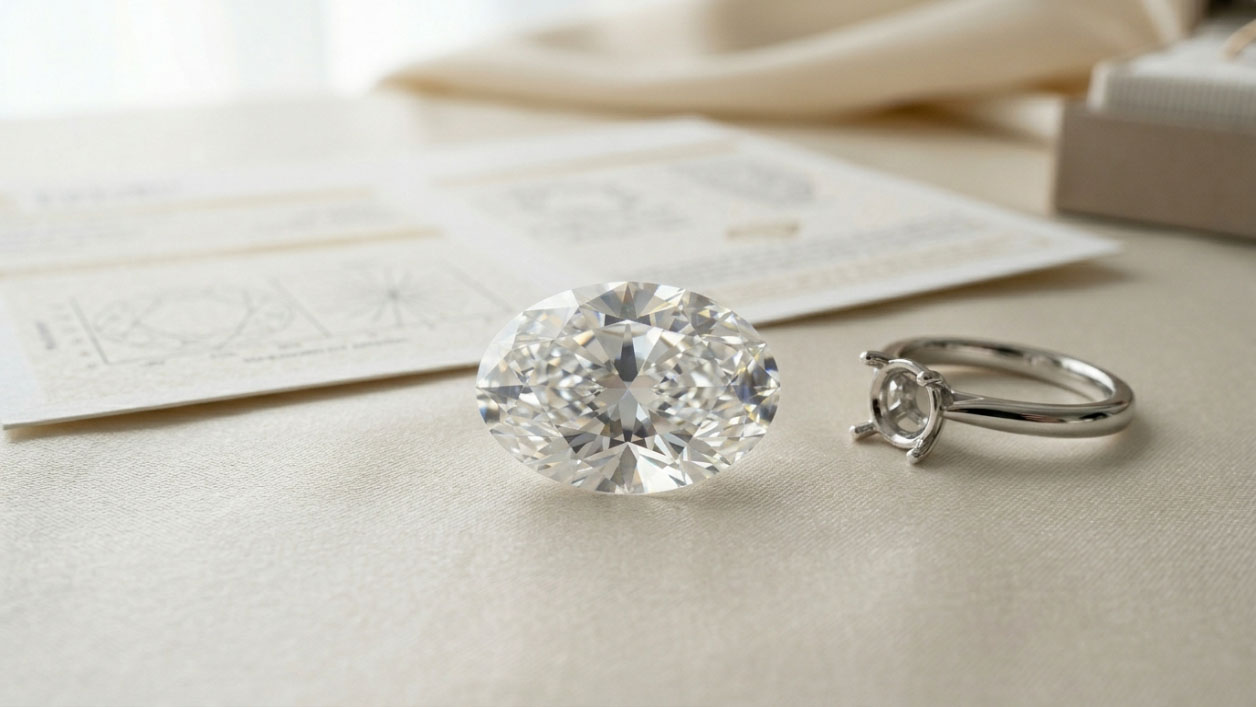
If you are comparing oval diamonds, you may notice a darker shadow across the center of some stones. This is often called the bow-tie effect. It can appear in oval, pear, and marquise diamonds, and it is one of the most important visual details to check before buying an elongated diamond shape.
The bow-tie effect is not always a problem. A mild bow-tie can be normal in many oval diamonds. But when the center looks too dark or distracting, it can affect the diamond’s brightness and overall beauty.
The bow-tie effect is a dark or shadow-like area across the center of some elongated diamonds, especially oval, pear, and marquise shapes. A slight bow-tie is common and may not be a problem, but a strong dark bow-tie can make the diamond look less bright. Because bow-tie is a visual effect, buyers should check real photos or videos instead of relying only on the certificate.
What Is the Bow-Tie Effect in an Oval Diamond?
The bow-tie effect is a darker shadow pattern across the center of an oval diamond that can look like a bow tie. It usually appears as a horizontal shadow across the middle area of the stone when viewed from the top.
It is important not to confuse bow-tie with a crack, black inclusion, or clarity problem. Bow-tie is mainly a light performance and visual appearance issue. It comes from how light travels through an elongated diamond shape.
Oval diamonds are not the only diamonds that can show bow-tie. Pear and marquise diamonds can also show this effect because they are elongated fancy shapes.
Why Do Oval Diamonds Have a Bow-Tie?
Oval diamonds can show bow-tie because their elongated shape affects how light travels through the stone. Unlike round brilliant diamonds, oval diamonds have a stretched outline and a different facet arrangement.
Several factors can affect how visible the bow-tie looks, including proportions, depth, symmetry, facet arrangement, and the lighting environment. This is why two oval diamonds with similar carat, color, and clarity grades can look very different in real life.
A certificate can help you compare basic diamond information, but it usually cannot fully show how strong or mild the bow-tie looks. Real photos and videos are especially important when choosing oval lab grown diamonds.
Is Bow-Tie Bad in an Oval Diamond?
A slight bow-tie is common, but a strong dark bow-tie can reduce the diamond’s brightness and visual appeal. The key question is not whether the diamond has any bow-tie at all. The real question is whether the bow-tie looks distracting.
If the center shadow is soft and the diamond still looks bright, lively, and balanced, the stone may still be a good choice. If the center stays very dark and draws too much attention, it may be better to compare other stones.
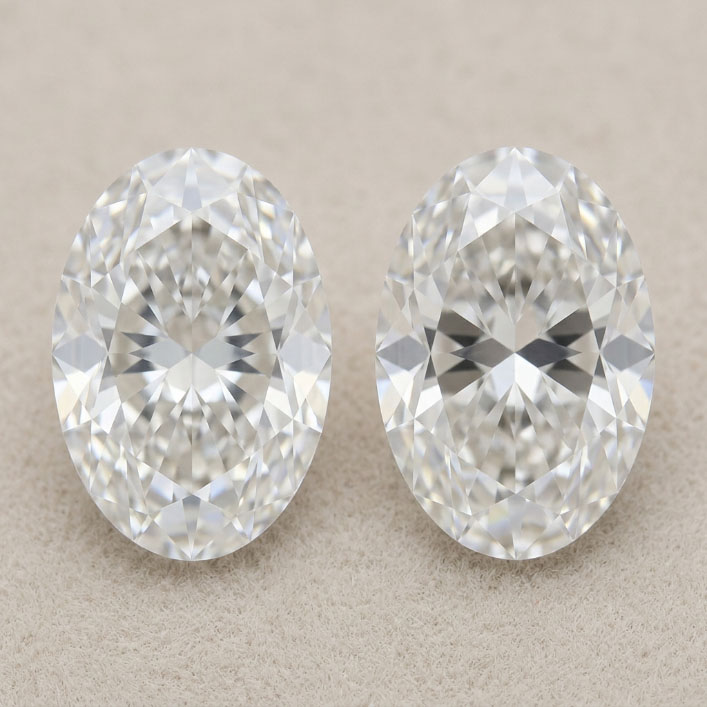
A bow-tie effect should be judged visually, not only by certificate grades. If you are comparing oval stones, review real photos or videos in our lab grown diamond inventory.
Can an IGI or GIA Certificate Show Bow-Tie?
A diamond certificate usually does not clearly grade bow-tie effect, so buyers should check real images or videos. A grading report can show carat weight, color, clarity, measurements, polish, symmetry, fluorescence, and other technical details, but bow-tie is mainly a visual appearance issue.
This does not mean the certificate is not useful. It is still important for confirming the diamond’s identity and basic grades. But when choosing an oval diamond, the certificate should be used together with real visual review.
If you are still learning how to read report details, see our guide on how to read an IGI certificate for lab grown diamonds.
How to Check Bow-Tie Before Buying an Oval Diamond
Check the center of the oval diamond in real photos or videos and look for strong dark shadows that do not move well with light. A good visual check is often more useful than looking at certificate grades alone.
- Look at the center of the stone.
- Check whether the dark area is mild or strong.
- Watch the diamond video if available.
- Compare the bow-tie with the overall sparkle.
- Check measurements and length-to-width balance.
- Do not judge by certificate data alone.
When the diamond moves, a mild shadow may change with the light. A strong bow-tie may stay dark and distracting across the center. That difference is important when choosing a stone for a ring.
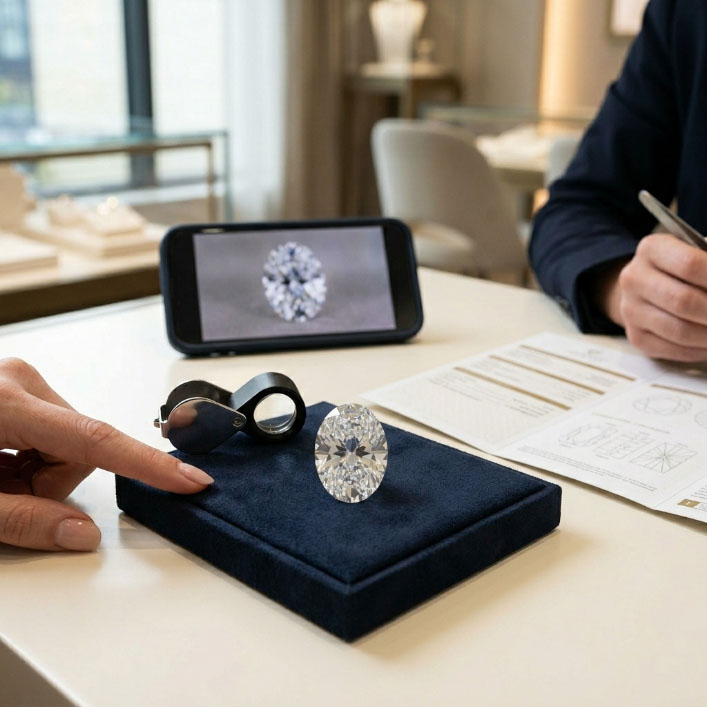
Because bow-tie is a visual effect, buyers should check how the diamond looks under movement and light. You can also read our oval vs round diamond guide before choosing a shape.
Does Length-to-Width Ratio Affect Bow-Tie?
Length-to-width ratio can affect the overall shape and visual balance of an oval diamond, but it is not the only factor behind bow-tie. A balanced oval outline can still show bow-tie, and a diamond with a common ratio is not automatically free from bow-tie.
Length-to-width ratio mainly tells you how round or elongated the oval looks. A shorter oval may feel closer to round, while a longer oval can look more slender. Very long and narrow oval diamonds may sometimes look less balanced, depending on the cut and setting.
For this reason, ratio should be used as a guide, not a guarantee. Always combine ratio, measurements, photos, videos, and setting fit before choosing.
Do Pear and Marquise Diamonds Also Have Bow-Tie?
Yes. Pear and marquise diamonds can also show bow-tie because they are elongated fancy shapes. Their shape stretches the diamond outline, which can affect how light returns through the center.
Marquise diamonds often create strong visual length, but the center should still be checked for dark shadows. Pear diamonds should be checked for bow-tie, symmetry, tip protection, and how balanced the rounded end looks.
These shapes can be beautiful, but they should be judged visually. A certificate alone does not always tell you how the diamond will look in motion.
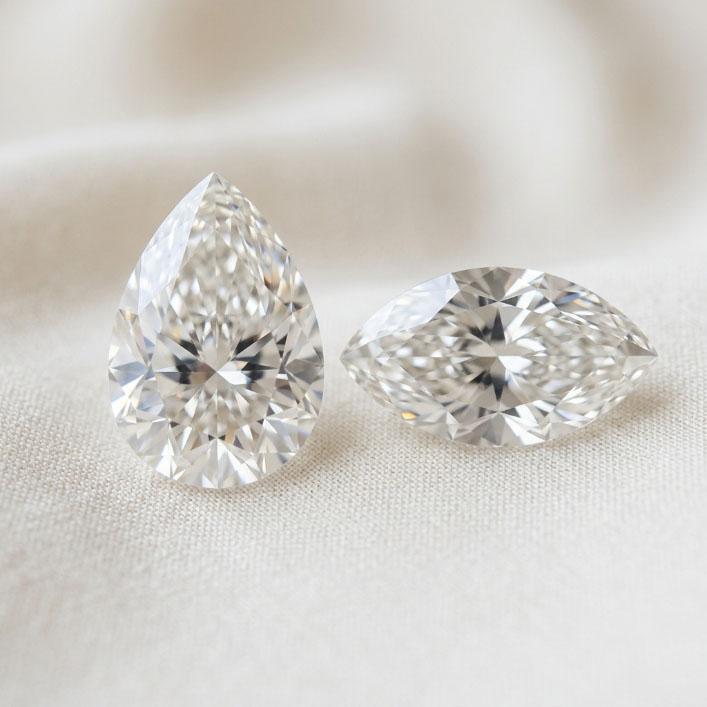
Oval, pear, and marquise diamonds can all show center shadow patterns because of their elongated outlines. For a wider comparison, see our diamond shape guide.
Should You Avoid Every Oval Diamond With Bow-Tie?
No. You do not need to avoid every oval diamond with bow-tie, but you should avoid stones where the dark center is too strong or distracting. Many oval diamonds have some level of center shadow, especially under certain lighting.
The better approach is to compare how the diamond looks as a whole. Does the center still look lively? Does the shadow move with light? Does the diamond look balanced in shape? Does the setting support the oval properly?
If the answer is yes, a mild bow-tie may not be a serious issue. If the center looks consistently dark and pulls your eye away from the rest of the diamond, it is worth comparing another stone.
Buyer Decision Box: Is This Oval Diamond a Good Choice?
Choose the oval diamond if:
- The bow-tie is mild.
- The center still looks bright.
- The length-to-width ratio looks balanced.
- The stone looks good in real photos or videos.
- The measurements match your setting.
Be careful if:
- The center looks very dark.
- The bow-tie does not move well with light.
- The oval looks too narrow or unbalanced.
- You only have certificate data and no visual reference.
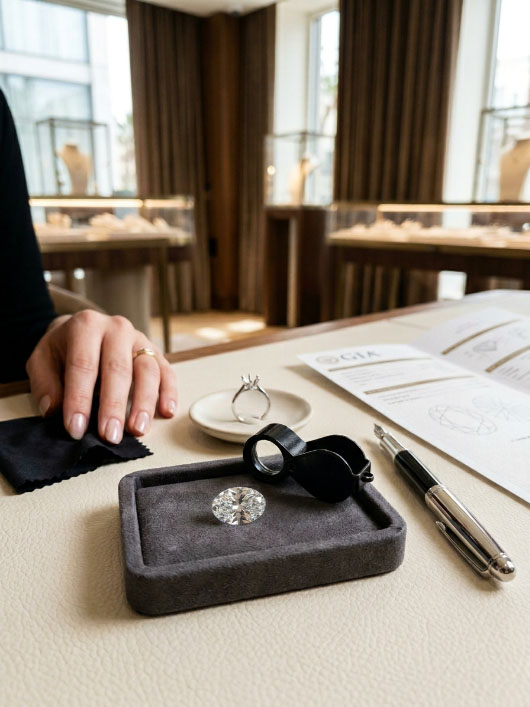
A good oval diamond should look balanced, bright, and suitable for the setting. For made-to-order designs, our custom jewelry service can help match the stone with the ring design.
Common Mistakes When Judging Bow-Tie
- Thinking every bow-tie means a bad diamond.
- Ignoring a strong dark bow-tie.
- Relying only on certificate grades.
- Choosing an oval only by carat weight.
- Ignoring measurements and shape balance.
- Not checking real photos or videos.
- Comparing diamonds under completely different lighting.
Myth vs Fact
| Myth | Fact |
|---|---|
| Every oval diamond with bow-tie is bad. | A mild bow-tie can be normal and may not be distracting. |
| Certificate grades always show bow-tie. | Bow-tie is mainly a visual feature, so photos or videos matter. |
| Higher clarity means no bow-tie. | Bow-tie is not the same as clarity. |
| Longer oval always looks better. | A very long oval may look unbalanced if proportions are not right. |
| Only oval diamonds have bow-tie. | Pear and marquise diamonds can also show bow-tie. |
FAQ
What is the bow-tie effect in oval diamonds?
The bow-tie effect is a darker shadow pattern across the center of some oval diamonds. It can look like a bow tie when the stone is viewed from the top.
Is bow-tie bad in an oval diamond?
A mild bow-tie is common and may not be a problem. A strong dark bow-tie can make the diamond look less bright and more distracting.
Can an oval diamond have no bow-tie?
Some oval diamonds show very little bow-tie, but elongated shapes often have some level of center shadow under certain lighting.
Does IGI show bow-tie on the certificate?
An IGI report usually does not clearly grade bow-tie effect. Buyers should check photos or videos to judge how visible the bow-tie looks.
Does GIA grade bow-tie effect?
Bow-tie is mainly a visual appearance feature. Standard diamond reports usually do not give a simple bow-tie grade, so visual review is important.
How can I avoid a strong bow-tie in an oval diamond?
Review real photos or videos, check the center of the stone, compare brightness, and avoid diamonds where the dark center looks too strong or distracting.
Do pear diamonds have bow-tie?
Yes. Pear diamonds can show bow-tie because they are elongated fancy shapes.
Do marquise diamonds have bow-tie?
Yes. Marquise diamonds can show bow-tie, especially because their shape is long and narrow.
Does bow-tie affect sparkle?
A strong bow-tie can make the center of the diamond look darker and less bright. A mild bow-tie may not strongly affect the overall look.
Should I buy an oval diamond with a slight bow-tie?
You can consider it if the bow-tie is mild, the diamond still looks bright, and the overall appearance is balanced in photos or videos.
Final Buying Note
The bow-tie effect is one of the most important visual details to check when buying an oval lab grown diamond. A slight bow-tie can be normal, but a strong dark center may affect the diamond’s beauty.
Before choosing, compare the certificate, measurements, real photos or videos, and how the stone will look in the setting. You can browse our lab grown diamond inventory, explore ring styles, or request a custom jewelry service.
© VANTYRE Jewelry Guide