
Two engagement ring styles dominate the conversation more than any others. One puts everything into a single diamond. The other tells a story with three. The choice between a solitaire and a three-stone setting is not about quality — it is about what kind of statement you want the ring to make.
The solitaire is minimal, focused, and timeless. The three-stone is layered, symbolic, and visually wider. Both have been popular for generations, and neither is going anywhere.
This guide breaks down the differences so you can decide which one fits your style, your finger, and your budget.
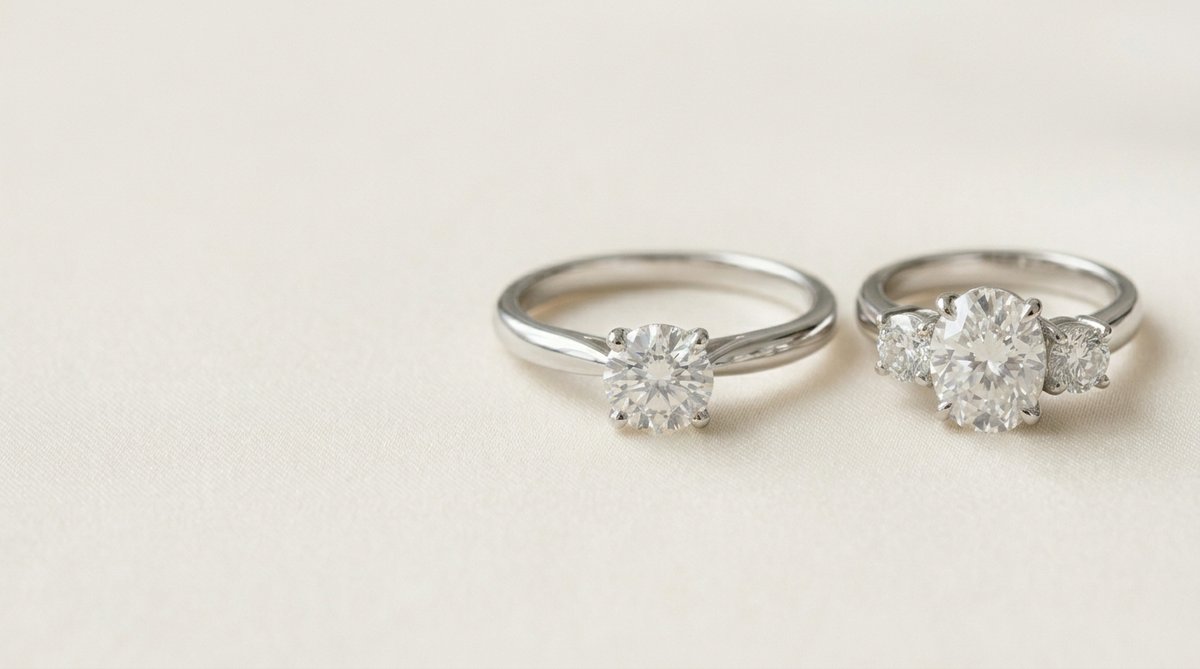
A solitaire setting features a single diamond held by prongs on a plain band. The focus is entirely on the center stone. A three-stone setting has a larger center diamond with two smaller side stones, creating a wider, more layered look. Solitaire is best for minimalists who want the diamond to speak for itself. Three-stone is best for those who want more sparkle and symbolic meaning.
What Is a Solitaire Setting?
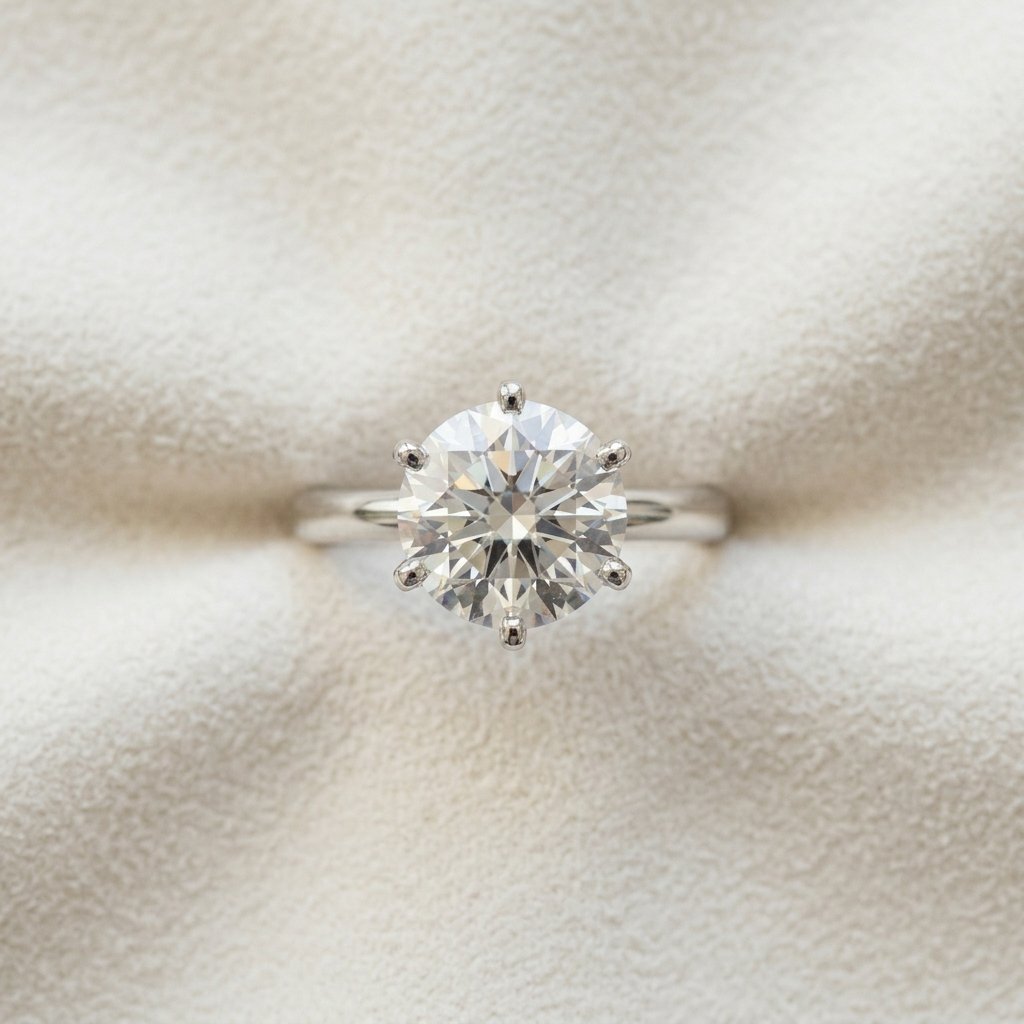
A solitaire setting holds a single diamond as the centerpiece of the ring. The band is plain — no additional diamonds, no decorative metalwork competing for attention. The diamond is typically held by four or six prongs that rise from the center of the band.
The solitaire is the most recognizable engagement ring style in the world. It became popular in the late 19th century when diamond marketing shifted focus to the stone itself, and it has remained the benchmark for engagement rings ever since.
The appeal is simple: nothing distracts from the diamond. The cut, color, clarity, and carat weight of a single stone determine the entire look of the ring. If you want the diamond to be the only thing people notice, a solitaire does that better than any other setting.
What Is a Three-Stone Setting?
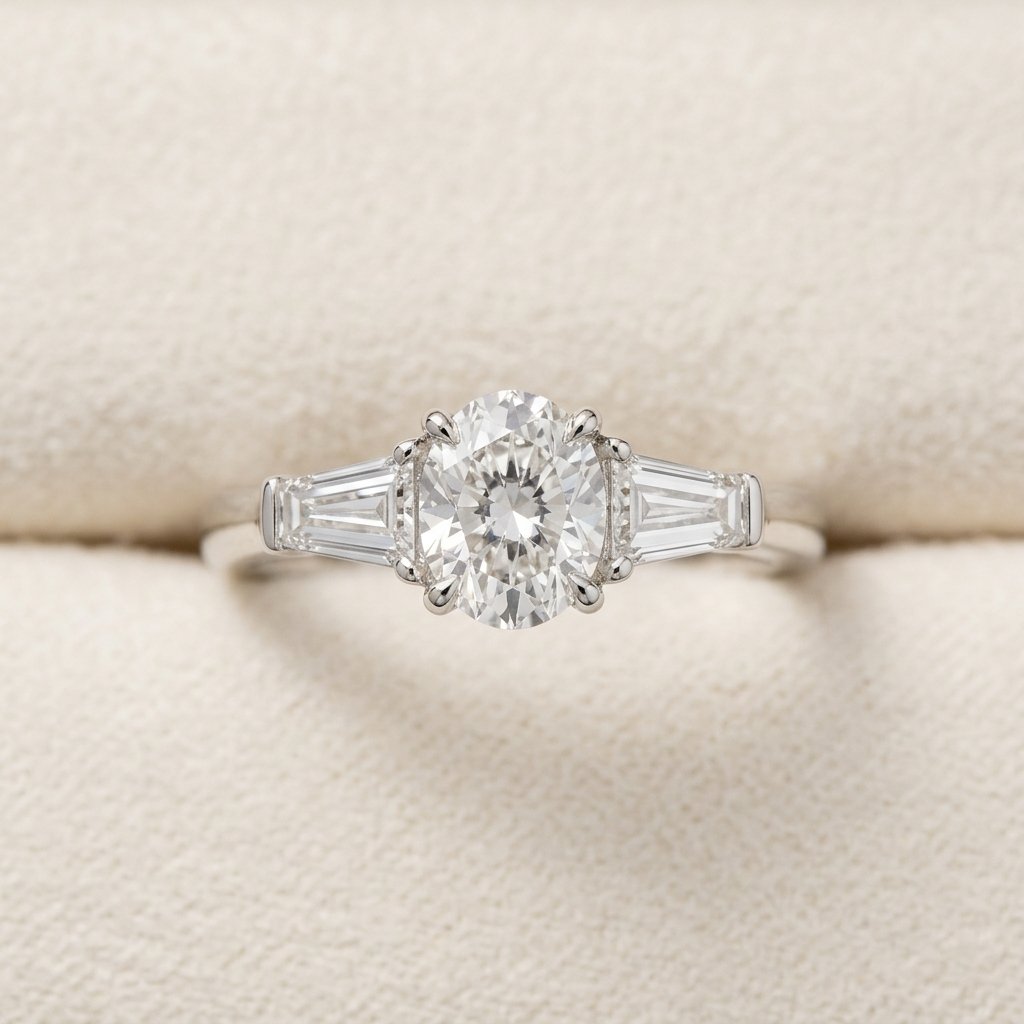
A three-stone setting features a larger center diamond flanked by two smaller side diamonds on the same band. The side stones can be round, tapered baguette, half-moon, pear-shaped, or trapezoid. The overall effect is a ring that is wider and more layered than a solitaire.
The three stones are often said to represent the past, present, and future of a relationship — hence the nickname trilogy ring. This symbolism, combined with the extra sparkle from the side stones, makes the three-stone setting a popular choice for engagement rings and anniversary gifts alike.
The center stone in a three-stone setting usually accounts for 50-70% of the total diamond weight, with the two side stones making up the rest. A common ratio is a 1-carat center with two 0.3 to 0.5 carat side stones.
Key Differences Between Solitaire and Three-Stone
| Aspect | Solitaire | Three-Stone |
|---|---|---|
| Visual focus | Single diamond | Center + side stones |
| Ring width | Narrower | Wider |
| Sparkle | From one stone | From three stones |
| Finger effect | Elongating | Widening |
| Symbolism | Unity, focus | Past, present, future |
| Maintenance | Lower | Higher (more stones) |
| Cost for same center | Lower | Higher (extra stones) |
| Resale | Stronger | Narrower market |
Visual Comparison: How They Look on the Finger
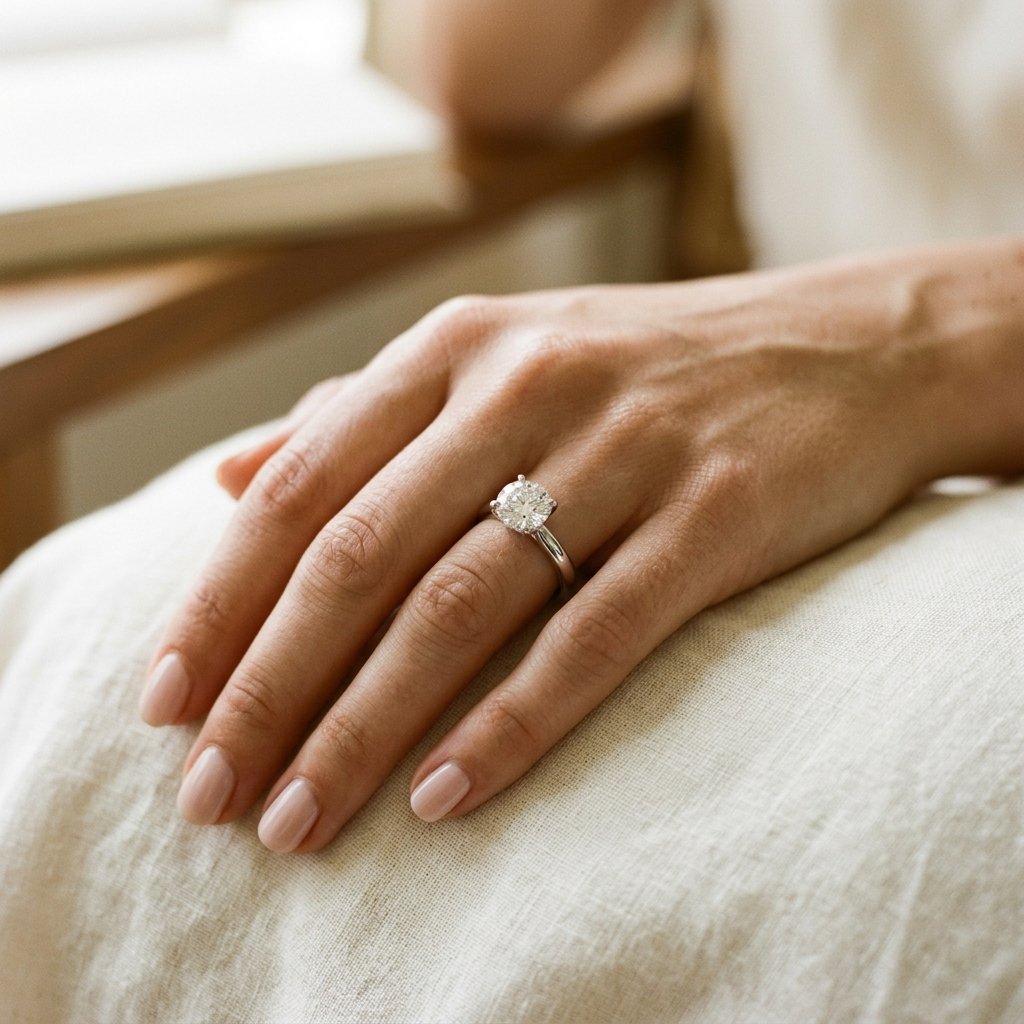
The most noticeable difference is width. A solitaire sits compactly on the finger — the ring width is limited to the band size plus the diamond’s diameter. A three-stone extends further across the finger because the side stones add width on both sides.
For someone with shorter fingers, a solitaire can create a more elongating effect. For someone with longer fingers who wants the ring to fill more visual space, a three-stone can balance the finger proportions better.
The sparkle pattern is different too. A solitaire sparkles from a single concentrated point. A three-stone sparkles across a wider area, with the side stones catching light at different angles throughout the day.
Which One Sparkles More?
A three-stone setting produces more total sparkle because there are three diamonds instead of one. The side stones catch light from different angles and add brilliance even when the center stone is not facing a direct light source.
However, a well-cut solitaire diamond can outshine a three-stone ring with lower-quality side stones. The key is the cut quality of each diamond. If you invest in an Excellent cut for all three stones, the three-stone will sparkle more overall. If the side stones are poorly cut, they can look dull next to a brilliant center stone.
Symbolism and Meaning
The solitaire represents unity and singularity. The single diamond is often seen as a symbol of an undivided focus on one person. It is a simple, powerful statement.
The three-stone setting carries the past-present-future meaning, which makes it especially popular for couples who want to acknowledge their journey together. It is also a common choice for anniversary upgrades, where the original engagement ring was a solitaire and the upgraded ring adds side stones.
Cost Comparison
A solitaire is generally less expensive than a three-stone setting with the same center diamond, simply because you are paying for one diamond instead of three. However, the cost difference depends heavily on the quality and size of the side stones.
Many buyers choose a smaller center diamond in a three-stone setting because the side stones add visual width that makes the total diamond presence look larger. A 0.7-carat center with two 0.3-carat side stones has a total weight of 1.3 carats and often looks more impressive on the finger than a 1-carat solitaire — sometimes for less money.
Buyer Decision Box: Solitaire or Three-Stone?
Choose a solitaire if: you want a timeless, minimalist look. You want the diamond quality to speak for itself. You prefer a narrower ring profile. You want maximum flexibility with wedding band pairing.
Choose a three-stone if: you want more total sparkle and visual width. You like the past-present-future symbolism. You have longer fingers and want the ring to fill more space. You want a more layered, ornate look.
Browse lab grown diamond rings or compare lab grown diamonds.
Pros and Cons
Three-Stone — Pros: More total sparkle, wider finger coverage, symbolic meaning, more visual interest. Cons: More expensive, harder to clean between stones, harder to pair with straight wedding bands, narrower resale market.
Myth vs Fact
| Myth | Fact |
|---|---|
| Solitaire rings are boring. | A well-cut solitaire in a quality setting is one of the most elegant ring styles. |
| Three-stone rings are only for anniversaries. | Three-stone rings work for engagements, anniversaries, and milestone gifts. |
| A three-stone always costs more than a solitaire. | A three-stone with smaller side stones can cost less than a larger solitaire. |
| Solitaire diamonds are always the best quality. | The center stone quality depends on budget, not the setting type. |
FAQ
Which setting looks better on small hands?
Solitaire settings tend to look better on smaller hands or shorter fingers because they do not add width. A three-stone can overwhelm a narrow finger if the side stones are too large.
Can you wear a three-stone ring with a wedding band?
Yes, but the side stones may prevent a straight band from sitting flush. Many jewelers offer curved or notched wedding bands designed for three-stone engagement rings.
Which setting is more secure for the center diamond?
Solitaire settings with six prongs offer excellent security. Three-stone settings hold the center stone between the side stones, which can add lateral support. Both are secure with proper construction.
Can you add side stones to an existing solitaire?
It is possible but often not cost-effective. Retrofitting a solitaire into a three-stone requires rebuilding the head of the ring, which can cost more than buying a new setting.
Which setting has better resale value?
Solitaire settings generally have stronger resale value because the single diamond is easier to repurpose and appeals to a broader market.
Final Buying Note
Neither setting is better than the other. The solitaire is for people who want clean, focused elegance. The three-stone is for people who want more sparkle, more width, and more meaning. Try both on your finger before deciding — the way they feel in person is often different from how they look in photos.
Browse our lab grown diamond rings, compare lab grown diamonds, or read our pavé setting guide for more setting comparisons.
© VANTYRE Jewelry Guide