
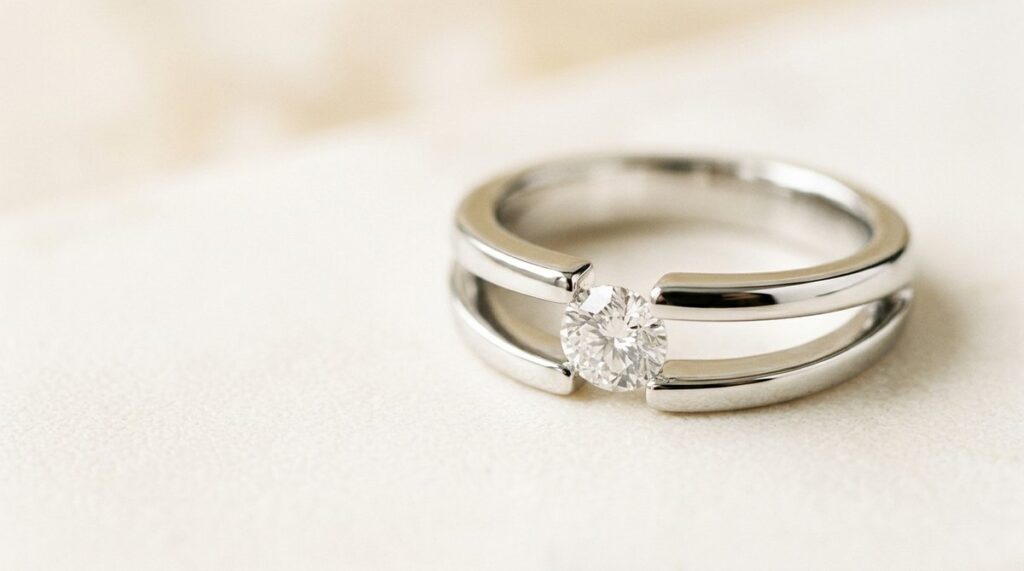
Most engagement rings hold the diamond with prongs, a bezel, or a channel. A tension setting does none of those things. Instead, the diamond is held in place by the compression of the band itself — no claws, no metal rim, no visible support. From certain angles, the stone appears to float.
The tension setting is one of the most engineering-driven ring styles available. It is also one of the least understood. Many people assume it is fragile or unsafe. In reality, a properly made tension setting is as secure as any other mounting, and the visual effect is unlike anything else in jewelry.
Here is how tension settings work, what makes them different, and whether one is right for you.
A tension setting uses the natural spring force of a split metal band to hold the diamond in place. The band is precision-cut so the two halves clamp around the diamond girdle. The result is a ring where the diamond appears to float with no visible prongs or bezel. Tension settings require exact engineering and are best suited for round or princess cut diamonds.
How a Tension Setting Works
A tension setting starts with a solid metal band that is cut in the center, creating two separate ends. A groove is machined into each end to match the exact circumference of the diamond girdle. The band is then spread apart slightly, the diamond is inserted into the grooves, and the band is released. The metal’s natural spring tension holds the diamond securely in place.
The entire ring is engineered around the specific dimensions of the diamond. Unlike a prong setting where the prongs can be adjusted, a tension setting must be made to fit one diamond and one diamond only. This is why tension-set rings cannot be resized and are rarely sold with interchangeable center stones.
Most tension settings use platinum or a specific high-tensile gold alloy because softer metals cannot generate enough clamping force to hold a diamond securely.
Best Diamond Shapes for Tension Settings
Not all diamond shapes work well in a tension setting. The best shapes have strong, non-fragile edges where the band will clamp:
- Round brilliant: The best shape for tension settings. The symmetrical round girdle distributes clamping pressure evenly. Most tension-set rings use round diamonds.
- Princess cut: Works well because the square shape has four strong corners for clamping. The corners must be slightly protected.
- Cushion cut: Acceptable but less common. The rounded corners can work if the groove is precisely cut.
- Emerald and Asscher: Not recommended. The step-cut corners are fragile and the long straight edges make even clamping difficult.
- Oval, pear, marquise: Avoid. The pointed ends of these shapes concentrate pressure unevenly and increase the risk of damage.
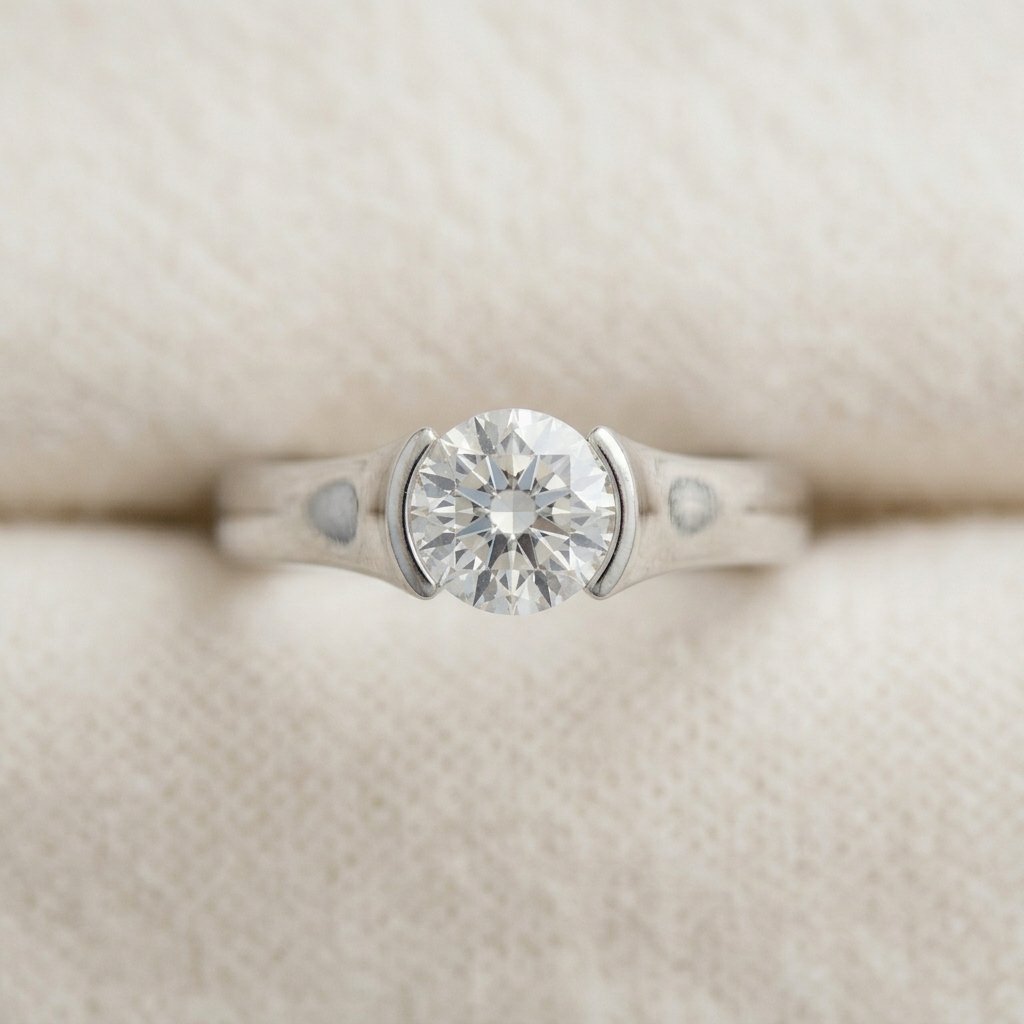
Tension Setting vs Prong Setting
| Aspect | Tension Setting | Prong Setting |
|---|---|---|
| Diamond visibility | Maximum — no metal covers the stone | High — prongs cover small areas |
| Security | High (with proper engineering) | Moderate (needs annual inspection) |
| Resizability | Cannot be resized | Can be resized |
| Diamond replacement | Very difficult | Easy |
| Cost | Higher (custom engineering) | Lower to moderate |
| Availability | Limited to specialized jewelers | Available everywhere |
| Light exposure | Maximum — open on both sides | High — open sides |
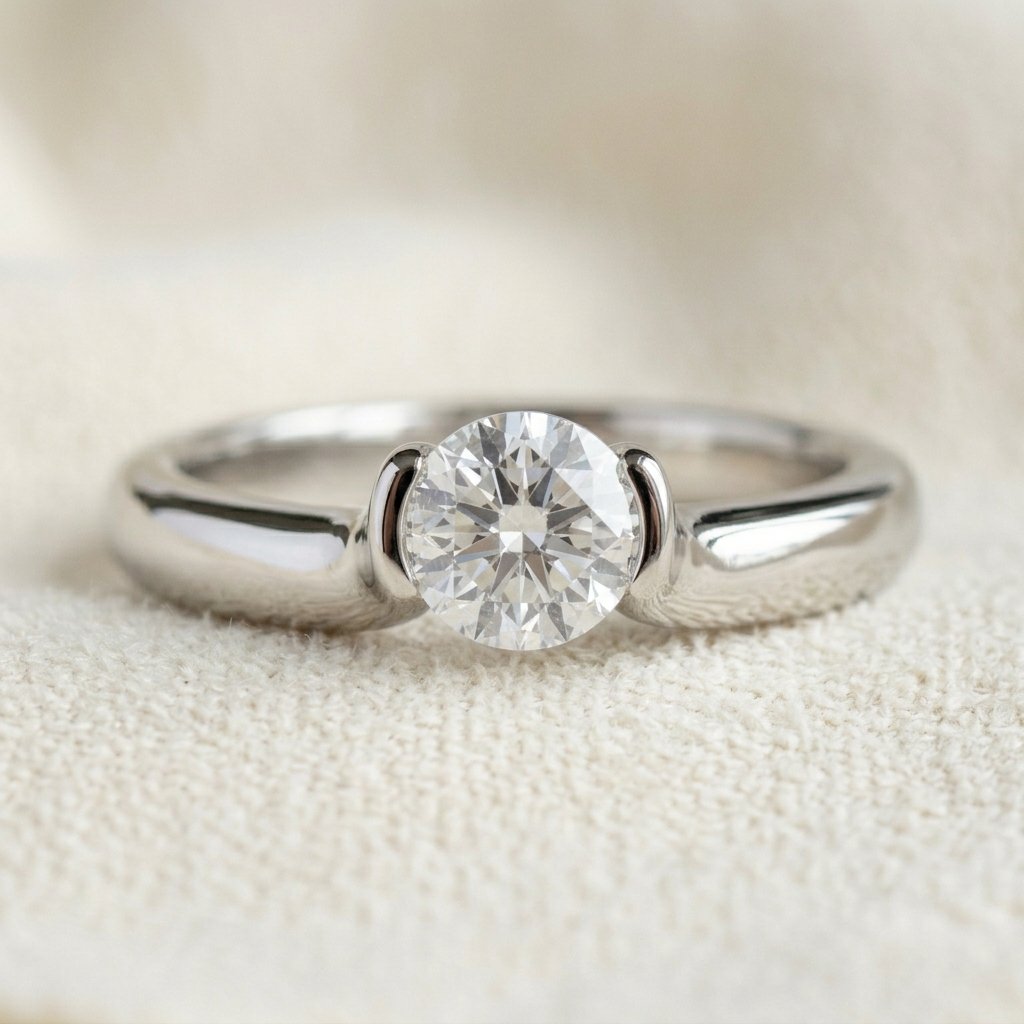
Is a Tension Setting Safe for Daily Wear?
Yes, with caveats. A tension setting from a reputable jeweler is engineered to withstand normal daily wear. The clamping force is calculated to hold the diamond securely while allowing the metal to flex slightly without losing tension over time.
However, tension settings are not ideal for people who work with their hands, play contact sports, or frequently expose their rings to hard impacts. A strong sideways blow can dislodge the diamond or bend the band. For most office workers and everyday wearers, this is not a concern.
Regular inspections are recommended. A jeweler can test the clamping tension using a specialized tool to ensure the diamond has not loosened over time.
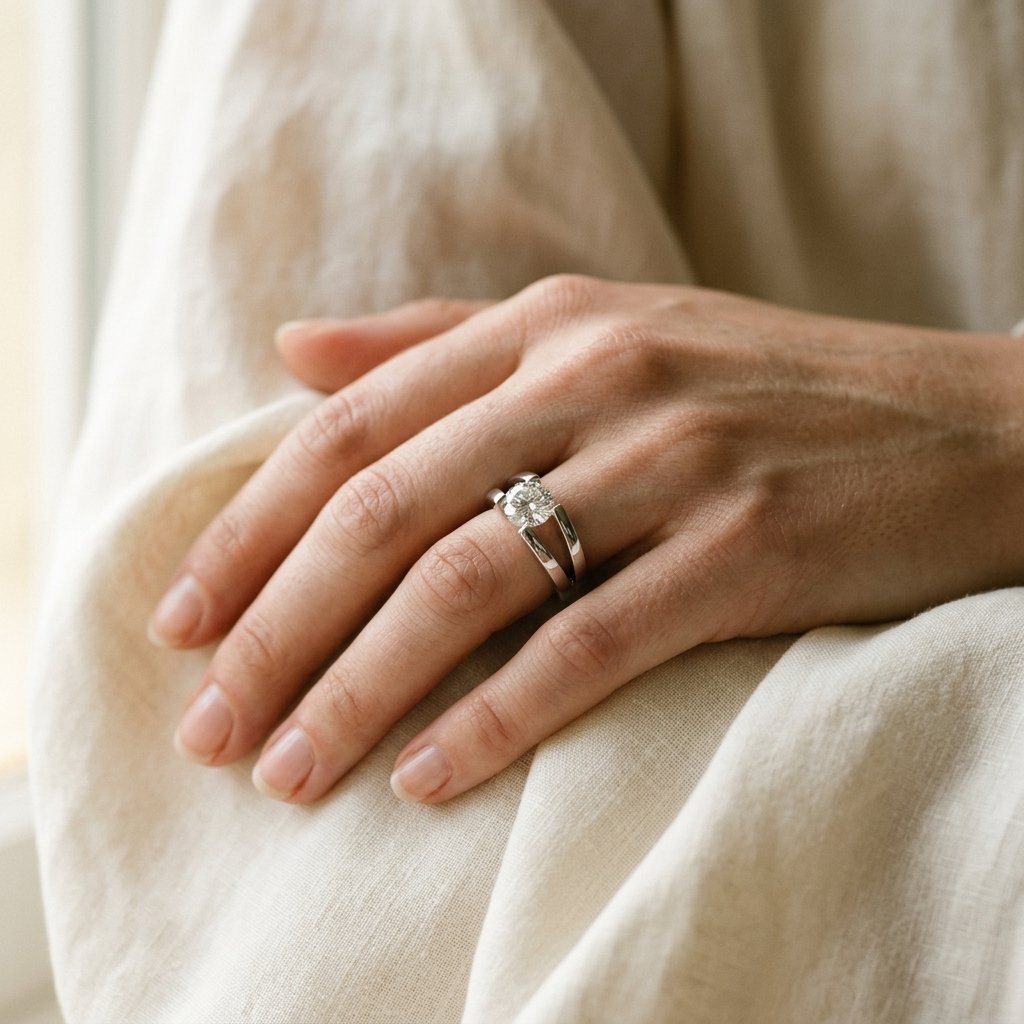
Buyer Decision Box: Is a Tension Setting Right for You?
Choose a tension setting if: you love modern, minimalist design. You want maximum diamond visibility. You are willing to buy from a specialized jeweler. You do not plan to resize the ring.
Choose a prong or bezel setting if: you want flexibility to change the diamond later. You may need to resize the ring. You want a style available at any jeweler. You have an active lifestyle with frequent hand impact.
Browse lab grown diamond rings or compare lab grown diamonds.
Pros and Cons
Cons: Cannot be resized. Diamond replacement is extremely difficult. Limited to round and princess cuts. More expensive than prong settings. Requires a specialized jeweler. Less impact-resistant than bezel settings.
Myth vs Fact
| Myth | Fact |
|---|---|
| Tension settings are not secure. | Properly engineered tension settings hold diamonds as securely as prongs. |
| The diamond is held by glue. | No adhesive is used. Pure metal compression holds the diamond. |
| Any jeweler can make a tension setting. | Very few jewelers have the precision engineering capability required. |
| Tension settings work with any diamond shape. | Only round and princess cuts are recommended for tension settings. |
FAQ
Can the diamond fall out of a tension setting?
It is extremely unlikely under normal wear. The clamping force is calculated to hold the diamond through daily activities. A strong direct impact at the right angle could dislodge it, but the same impact could also damage a prong setting.
Can a tension setting be resized?
No. Resizing changes the circumference of the band, which alters the clamping force on the diamond. Tension settings are made to fit one finger size permanently.
How much does a tension setting cost compared to a prong setting?
A tension setting typically costs 30-50% more than a comparable prong setting due to the custom engineering and precision machining required.
Can you replace the diamond in a tension setting?
Not easily. The band is cut to fit one specific diamond. Replacing it with a different diamond would require recutting the groove or remaking the ring entirely.
Is a tension setting comfortable to wear?
Yes. The band sits flush against the finger with no prongs or raised edges, similar to a bezel setting. Most people find tension settings very comfortable.
Final Buying Note
A tension setting is not for everyone. It is a specialized piece of jewelry engineering that trades flexibility and repairability for a unique visual effect. If you love the floating diamond look and do not mind the limitations, it is one of the most striking ring styles available. If you want something more traditional that can be easily resized or repaired, a prong or bezel setting is a better choice.
Browse our lab grown diamond rings, compare lab grown diamonds, or read our solitaire vs three-stone guide for more setting comparisons.
© VANTYRE Jewelry Guide