
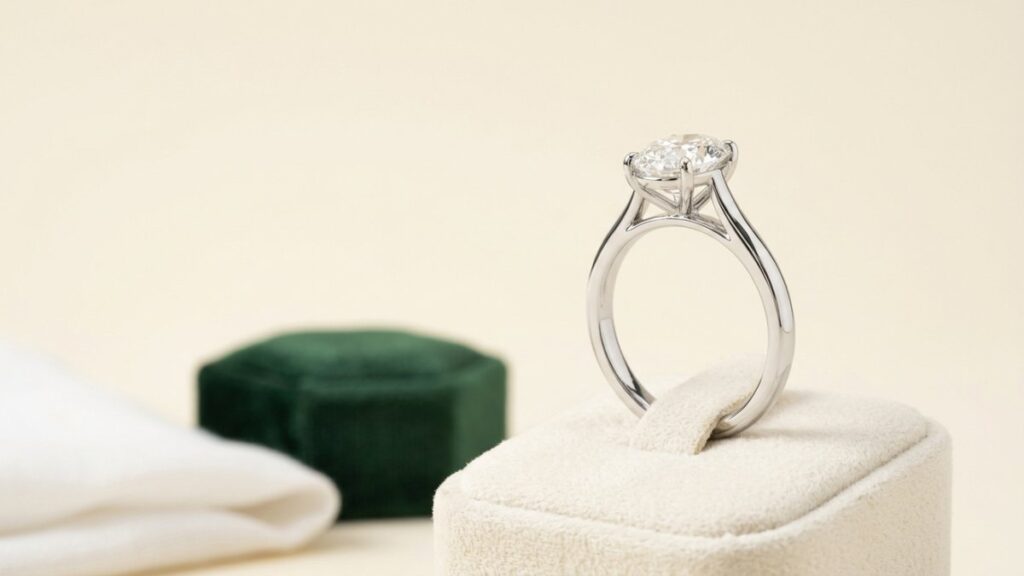
Most engagement rings sit flat on the finger. The cathedral setting does the opposite — it lifts the center diamond up on two curved arches, making the ring look taller, lighter, and more dramatic before you even get close enough to see the stone.
It is one of the oldest setting styles still in widespread use, and for good reason. The arched design is not just decorative — it adds real structural strength, makes the center diamond look visibly larger, and pairs well with nearly every diamond shape on the market.
Here is what a cathedral setting actually is, how it compares to other styles, and whether it is the right choice for your engagement ring.
A cathedral setting uses two curved metal shoulders that rise from the band to support the center stone, creating a bridge-like structure. Named after Gothic cathedral arches, this design lifts the diamond higher off the finger, adds strength through the arch shape, and works with round, oval, pear, emerald, and cushion diamonds.
What Makes a Cathedral Setting Different
Walk into any jewelry store and you will see two types of solitaire rings side by side. One sits flat — the center diamond is mounted directly on top of the band with a small peg or head. The other rises — the band curves upward on both sides to meet the center stone.
That second ring is a cathedral setting.
The key difference is the cathedral shoulders — two curved sections of metal that extend from the band up to the center stone. In a flat-top solitaire, the stone sits directly on the band. In a cathedral, the stone is cradled between two rising arches. This changes everything about how the ring looks, how it feels, and how well it holds up over time.
The name comes from Gothic cathedral architecture, where arched ceilings and flying buttresses distribute weight and create height. The same principle applies here — the arches make the setting stronger while giving it a more graceful silhouette.
Anatomy of a Cathedral Setting
A cathedral setting has five main parts. Understanding them helps when comparing rings:
- Cathedral shoulders (arches): The curved sections that rise from the band on each side. They can be low and gentle or tall and dramatic.
- Basket or head: The section that holds the center diamond. It sits between the two arches and connects downward to the band.
- Shank (band): The part that goes around the finger. Usually plain or slightly tapered to keep the focus on the arches.
- Prongs: The metal claws that hold the diamond. Four or six prongs are most common.
- Bridge (gallery): The area underneath the diamond. Some cathedral settings use this space for a hidden halo.
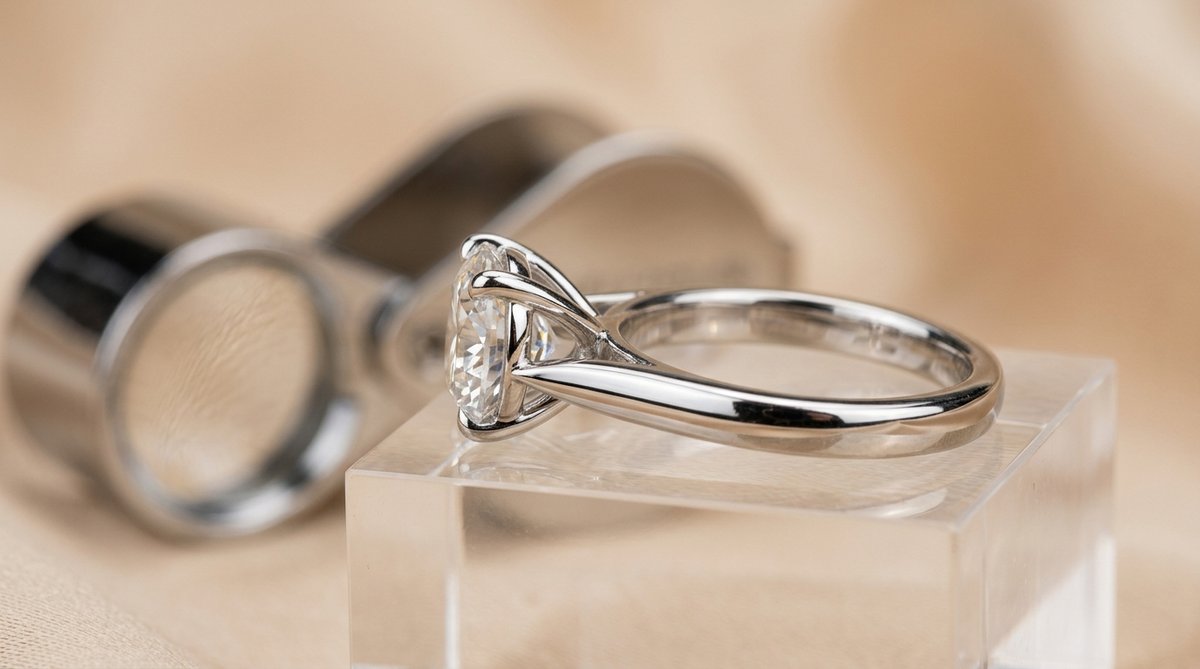
Low-Profile vs High-Profile Cathedral Settings
Not all cathedral settings look the same. The biggest difference between them is how high the arches rise.
Low-profile cathedral settings have gentle, shallow arches. The center diamond sits closer to the finger. These rings are more practical for daily wear — they snag less on clothing, feel less bulky, and fit more easily under gloves or sleeves. They have a subtler look that works well for people who want cathedral elegance without the height.
High-profile cathedral settings have tall, dramatic arches. The center diamond is lifted higher off the finger. These rings make a stronger visual statement and are more traditional in appearance. The extra height also makes the diamond look larger from a distance. The trade-off is practicality — high arches catch on sweaters, scarves, and hair more easily.
| Aspect | Low-Profile | High-Profile |
|---|---|---|
| Arch height | Gentle, shallow | Tall, dramatic |
| Snag risk | Low | Higher |
| Visual impact | Subtle | Bold |
| Daily wear | Easy | Requires care |
| Best for | Active lifestyles | Traditional look |
Why a Cathedral Setting Works Better Than You Think
The cathedral design is not just about looks. The arched shoulders serve a real purpose.
It is stronger. The arches distribute pressure from the center stone down into the band rather than concentrating it at a single solder point. A flat-top peg head setting puts all the stress on one small joint. The cathedral spreads that stress across two arches. For diamonds over one carat, this extra strength matters.
It makes the diamond look larger. When a diamond sits higher, it catches light from more angles. The exposed sides of the stone are visible rather than hidden inside a setting. From a 45-degree angle — the most common viewing angle — a cathedral-set diamond looks noticeably bigger than the same stone in a flat setting.
It works with every shape. Round, oval, pear, emerald, cushion, princess — cathedral arches can be shaped to complement any diamond outline. This is one of the few settings where you can change the diamond shape without changing the ring style.
It is comfortable. The arches curve upward, away from the fingers. They do not press against adjacent fingers the way some wide-band settings do. Most people forget they are wearing a cathedral ring within a few days.
Best Diamond Shapes for a Cathedral Setting
Cathedral settings complement most diamond shapes, but some pairings work better than others:
- Round brilliant: The arches frame the round shape cleanly from every angle. This is the most popular combination for a reason.
- Oval: The elongated shape follows the vertical lines of the arches. Oval cathedrals look especially elegant in low-profile settings.
- Pear: The pointed tip of a pear diamond points downward toward the converging arches. The effect is balanced and intentional.
- Emerald and Asscher: The straight, step-cut lines of these cuts create a deliberate contrast with the curved metal arches.
- Cushion: The rounded corners match the gentle curve of cathedral shoulders. The two shapes feel naturally coordinated.
Round and oval are the safest choices if you want a classic cathedral look. Pear and emerald work better if you want something that stands out.
Cathedral Setting Variations
The basic cathedral design can be customized in several ways:
- Plain cathedral: Clean metal arches with no diamonds. Minimalist and timeless.
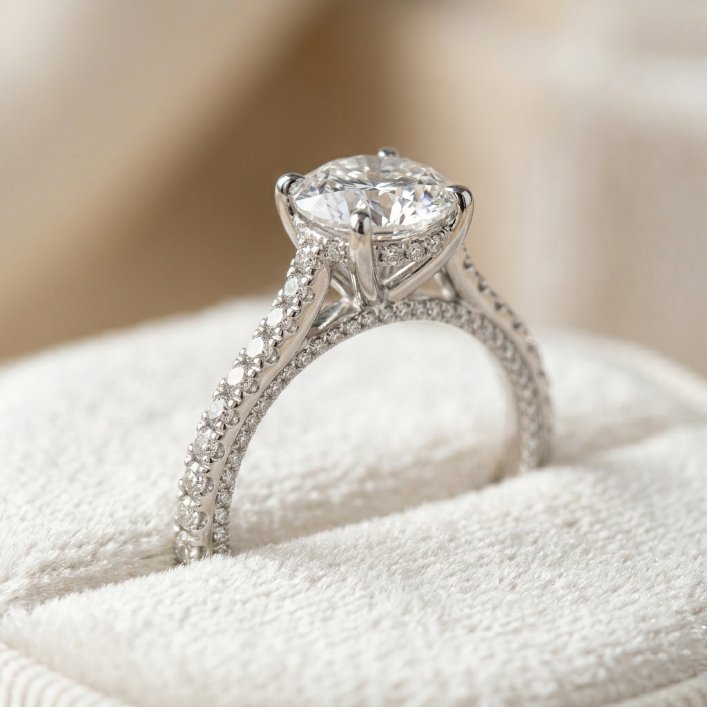
- Pavé cathedral: Small diamonds running along the arches. More sparkle, same silhouette.
- Open cathedral: Cut-out sections in the arches for a lighter, modern look.
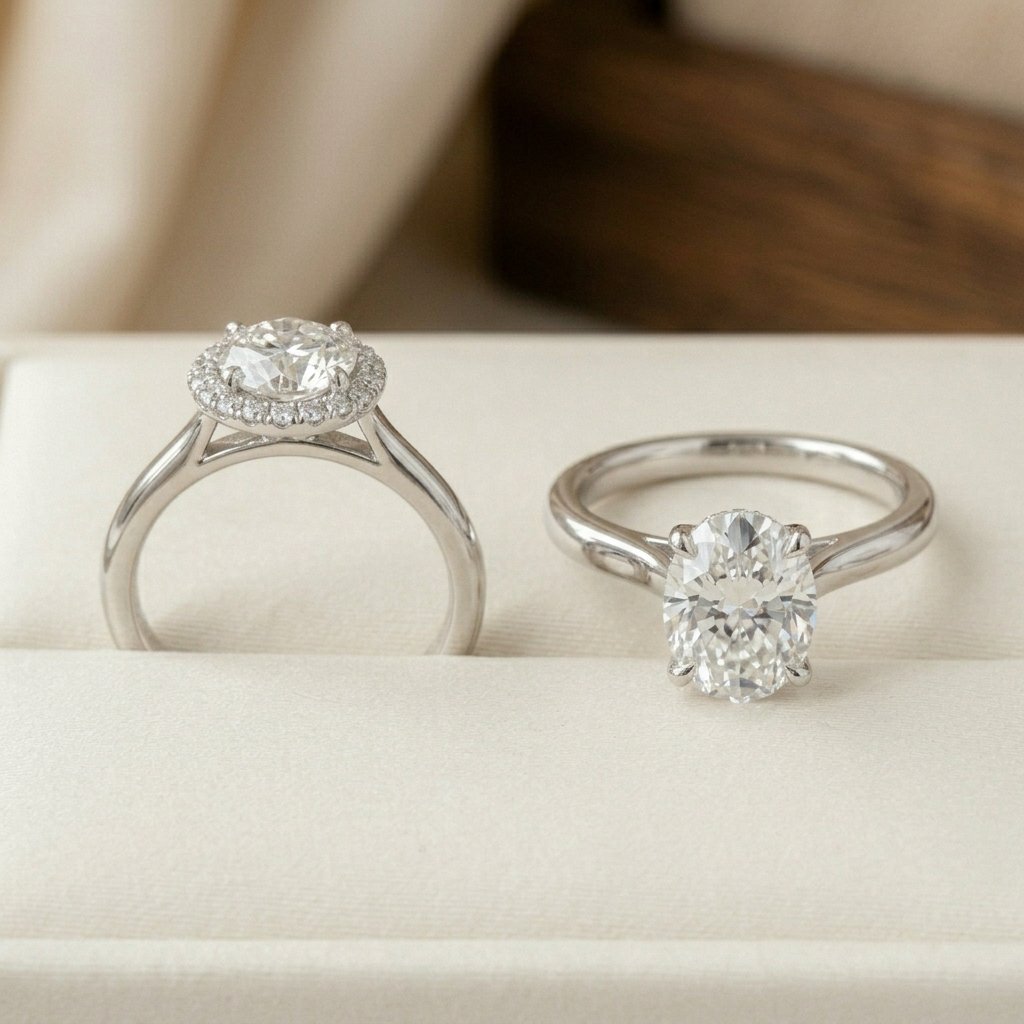
- Cathedral with hidden halo: A ring of diamonds set underneath the center stone in the bridge area, visible only from the side.
Pros and Cons
Cons: High-profile versions snag on clothing. Less suitable for very active lifestyles or manual work. More expensive than flat-top solitaire settings. Some low-profile cathedrals require curved wedding bands.
Cathedral Setting vs Other Settings
| Setting | Profile Height | Security | Best Diamond Shapes |
|---|---|---|---|
| Cathedral | Medium to high | Very secure | All shapes |
| Flat-top solitaire | Low | Moderate | Round, princess |
| Trellis | Medium | Secure | Oval, pear, cushion |
| Peg head | Low | Less secure | Round |
| Halo | Medium | Secure | Round, cushion |
Myth vs Fact
| Myth | Fact |
|---|---|
| Common misconception. | The actual truth. |
FAQ
Is a cathedral setting secure enough for a 2-carat diamond?
Yes. The arched shoulders distribute weight better than most other setting types. For diamonds over 1.5 carats, a cathedral setting is actually one of the safer choices — more secure than peg head or four-prong flat settings.
Can you see the diamond better in a cathedral setting?
Yes. The raised position means more of the diamond is exposed to light. From the side and at a 45-degree angle, the diamond appears larger and brighter than the same stone in a lower setting.
Will a cathedral setting fit with a straight wedding band?
High-profile cathedrals usually allow a straight band to sit flush. Low-profile cathedrals may need a curved or notched band. Many jewelers sell matching curved wedding bands designed for cathedral engagement rings.
Do cathedral settings go out of style?
Cathedral settings have been popular for decades and show no signs of fading. They are considered a classic, not a trend. Unlike halo settings which peaked and softened, cathedral settings have maintained steady popularity.
Can you resize a cathedral engagement ring?
Most cathedral settings can be resized, but rings with heavy pavé-set shoulders are more difficult and expensive to adjust. Always check with your jeweler before purchasing if resizing may be needed later.
Are cathedral settings more expensive than other solitaires?
Yes, because they use more metal and require more labor. Expect to pay 10-20% more than a comparable flat-top solitaire. However, they are usually less expensive than fully pavé-set or halo settings.
Final Buying Note
The cathedral setting has been around for generations because it solves a problem that most ring settings ignore — how to make a diamond look its best while keeping the ring secure and comfortable. The arched shoulders add strength, height, and a silhouette that works with almost any diamond you choose.
If you are deciding between a cathedral and a flat-top solitaire, the choice usually comes down to lifestyle and taste. Low-profile for daily practicality. High-profile for a bolder look. Both will hold up well over time.
Browse our lab grown diamond rings, compare lab grown diamonds, or read our hidden halo vs halo comparison for more setting guidance.
© VANTYRE Jewelry Guide