
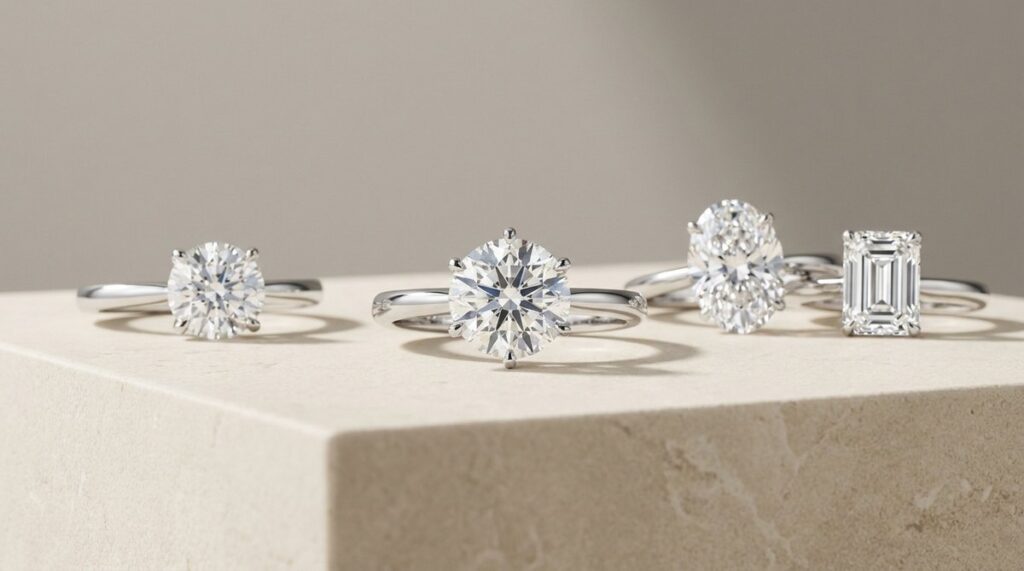
A 3 carat diamond sounds massive. In many ways it is. But the jump from 2 carats to 3 carats is not as dramatic as most people expect — and the price jump can be even more surprising. Understanding how carat weight translates to visible size at these higher weights helps you decide whether the upgrade is worth it.
This guide compares 2 carat and 3 carat diamonds side by side.
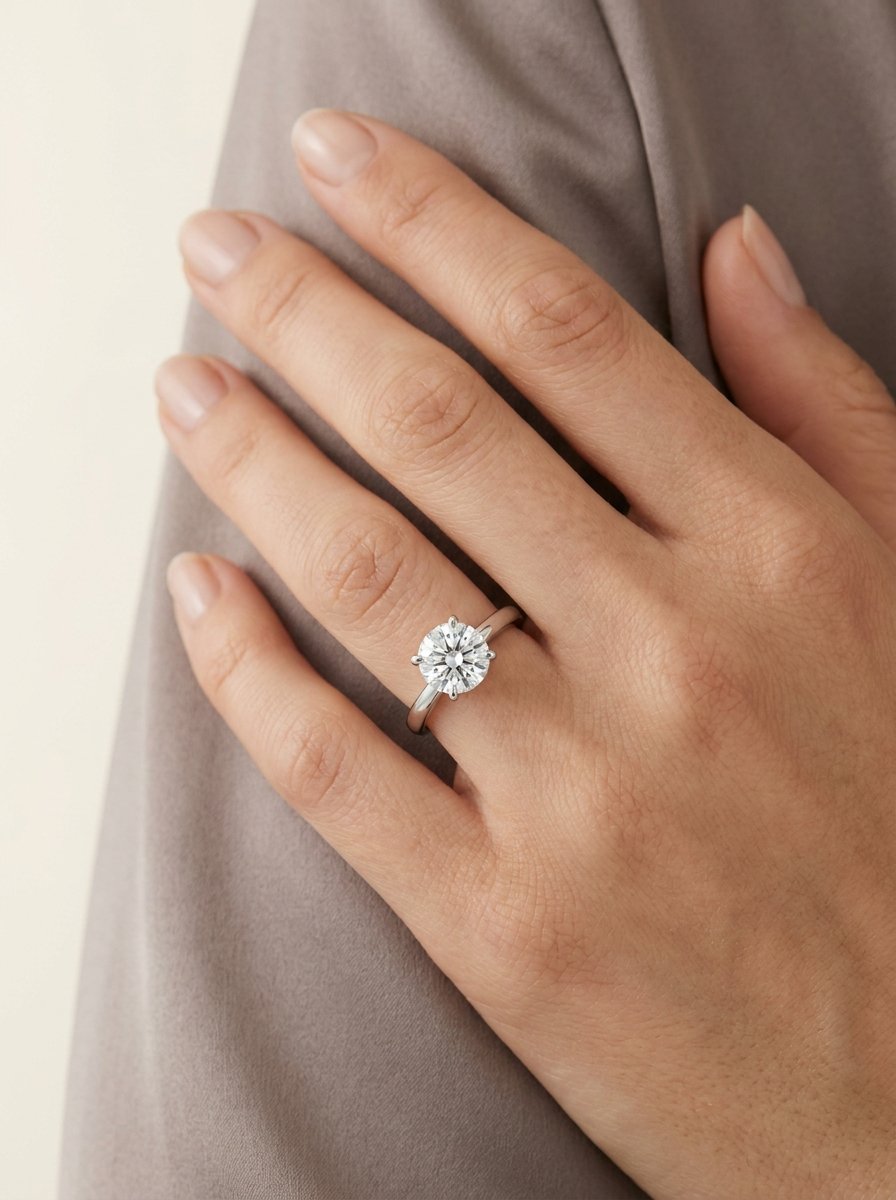
A 2 carat round diamond measures about 8.1 mm in diameter. A 3 carat round measures about 9.3 mm — roughly 15% wider, not 50% wider. The price difference is substantial. For many buyers, the extra cost of a 3 carat diamond delivers diminishing visual returns compared to the jump from 1 to 2 carats.
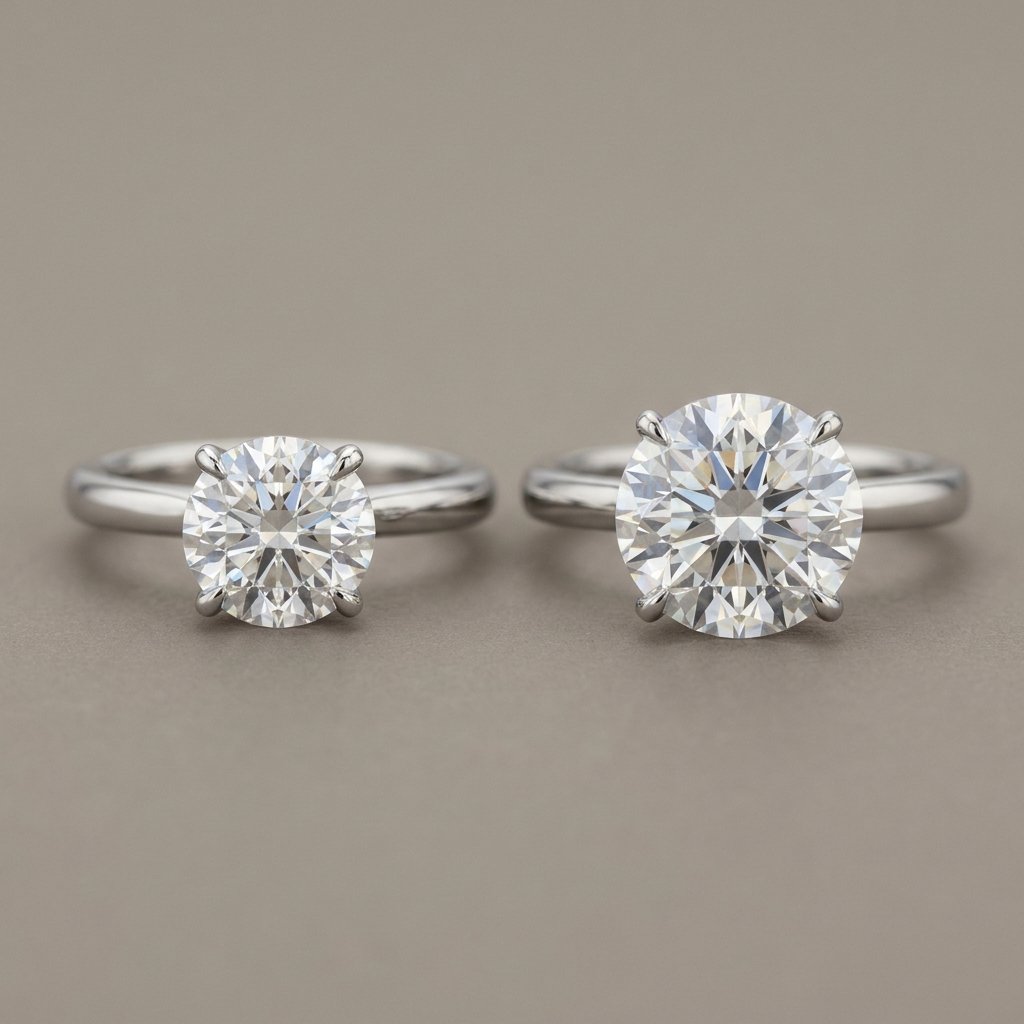
2 Carat vs 3 Carat: Size Comparison
| Metric | 2 Carat Round | 3 Carat Round |
|---|---|---|
| Diameter | ~8.1 mm | ~9.3 mm |
| Surface area | ~52 mm² | ~68 mm² |
| Visible size increase | Baseline | ~31% more surface area |
| Price increase | Baseline | 2–3x more typically |
| Setting needs | Standard | Larger head, wider band |
| Daily wear | Manageable | More attention, may snag |
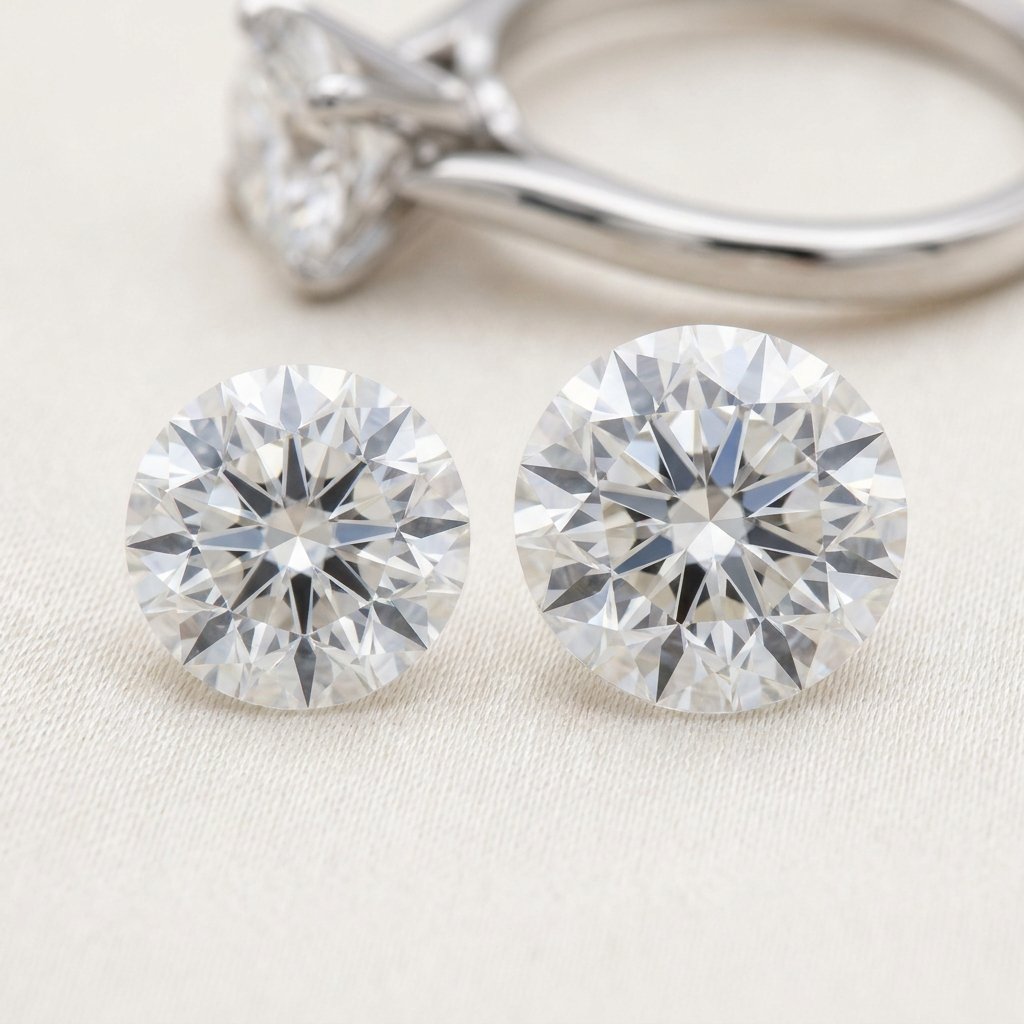
Is Bigger Always Better?
Not always. A 3 carat diamond makes a strong visual statement and is unmistakably large. But it also requires more maintenance, a more substantial setting, and it draws more attention. For buyers who value subtlety or daily practicality, a well-cut 2 carat diamond in an flattering shape can be just as impressive.
Elongated shapes like oval, pear, and marquise make both sizes appear larger than rounds of the same carat weight. A 2 carat oval can look as long as a 3 carat round on the finger. Compare which shapes look biggest.
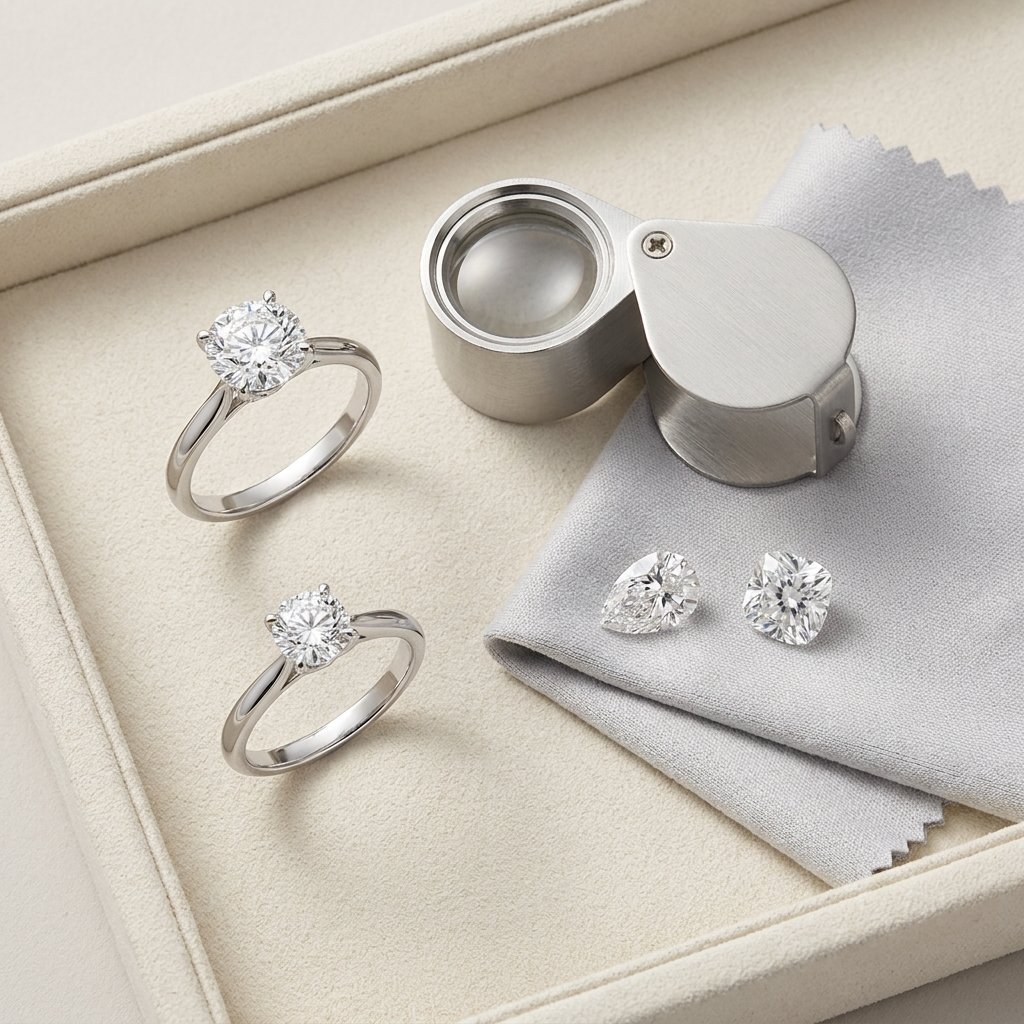
Buyer Decision Box
Choose 2 carat if: you want a large diamond that remains practical for daily wear. You prefer a balanced size-to-cost ratio.
Choose 3 carat if: you want a show-stopping diamond. You have the budget and accept the maintenance and attention that comes with it.
Consider a 2.5 carat if: you want something between the two sizes with a moderate price increase.
Common Mistakes
- Expecting a 3 carat diamond to look 50% larger than 2 carat — it is only about 15% wider.
- Underestimating the setting cost — larger diamonds need larger, more expensive settings.
- Choosing 3 carat without considering daily practicality — it is a very noticeable size.
- Ignoring that a well-cut 2 carat oval can look as impressive as a 3 carat round.
Myth vs Fact
| Myth | Fact |
|---|---|
| A 3 carat diamond is 50% larger than a 2 carat. | A 3 carat round is about 15% wider and has about 31% more surface area. |
| 3 carat diamonds fit in standard settings. | 3 carat diamonds need settings designed for larger stones with wider bands and secure heads. |
| Bigger always looks better. | Cut quality, shape, and setting affect appearance more than carat weight alone. |
FAQ
How much bigger is a 3 carat diamond than a 2 carat?
A 3 carat round is about 1.2 mm wider and has about 31% more surface area than a 2 carat round.
Is a 3 carat diamond worth the price jump?
It depends. The visual difference is modest compared to the price increase, but some buyers appreciate the exclusivity of a 3 carat diamond.
Can I wear a 3 carat diamond every day?
Yes, but it requires a secure setting and you should be comfortable with the attention a large diamond attracts.
Does a 2 carat oval look as big as a 3 carat round?
A 2 carat oval can appear as long as a 3 carat round on the finger because of the elongated shape. Check mm measurements to compare.
What is the best shape for a 3 carat diamond?
Round and oval are the most popular. Elongated shapes make a 3 carat diamond look even more impressive.
Final Buying Note
The jump from 2 carat to 3 carat offers diminishing visual returns for a significant price increase. A well-cut 2 carat diamond in the right shape and setting can look just as impressive as a 3 carat, especially if you choose an elongated shape. Try on both sizes before deciding, and remember that cut quality and shape affect visible size as much as carat weight.
Browse our lab grown diamond inventory, explore ring styles, or request a custom design.
© VANTYRE Jewelry Guide