
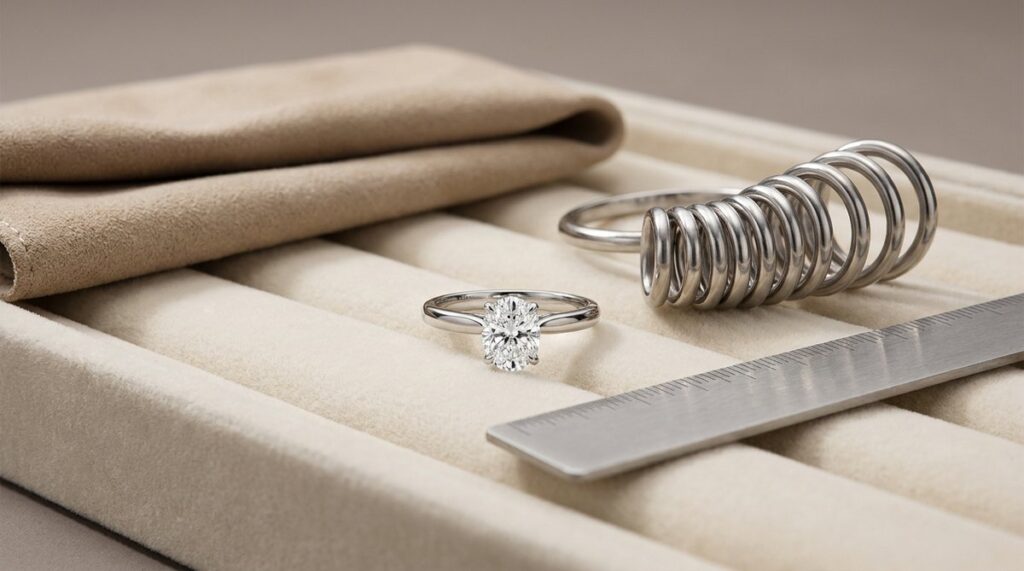
Buying a ring online is easy. Getting the size right is the hard part. A wrong ring size can delay a made-to-order ring, add resizing costs, or turn a perfect proposal into a trip back to the jeweler. The good news is that you can measure ring size at home with reasonable accuracy — if you use the right method and understand its limits.
This guide covers the most reliable home measurement methods, the fit factors most guides ignore, and when you should confirm your size with a professional.
To measure ring size at home, use one of three reliable methods: measure the inner diameter of a ring that already fits, use a printable ring sizer, or use a physical ring gauge. Measure at room temperature, repeat a few times, and if the ring is a valuable or made-to-order piece, confirm the size with a jeweler before ordering.
Why Ring Size Accuracy Matters
Ring size is not just about comfort — it affects security, longevity, and the cost of your purchase. A ring that is too loose can slip off and be lost. A ring that is too tight can be uncomfortable and hard to remove, especially when fingers swell. Getting the size right the first time also avoids resizing fees and production delays on made-to-order pieces.
For custom jewelry and engagement rings, the size is baked into the design. Unlike stock rings that can be adjusted easily, a made-to-order ring is built to your exact size. Getting it wrong means either paying for a resize or living with a poor fit.
The takeaway: a few extra minutes measuring carefully can save you time, money, and frustration.
Method 1: Measure an Existing Ring’s Inner Diameter
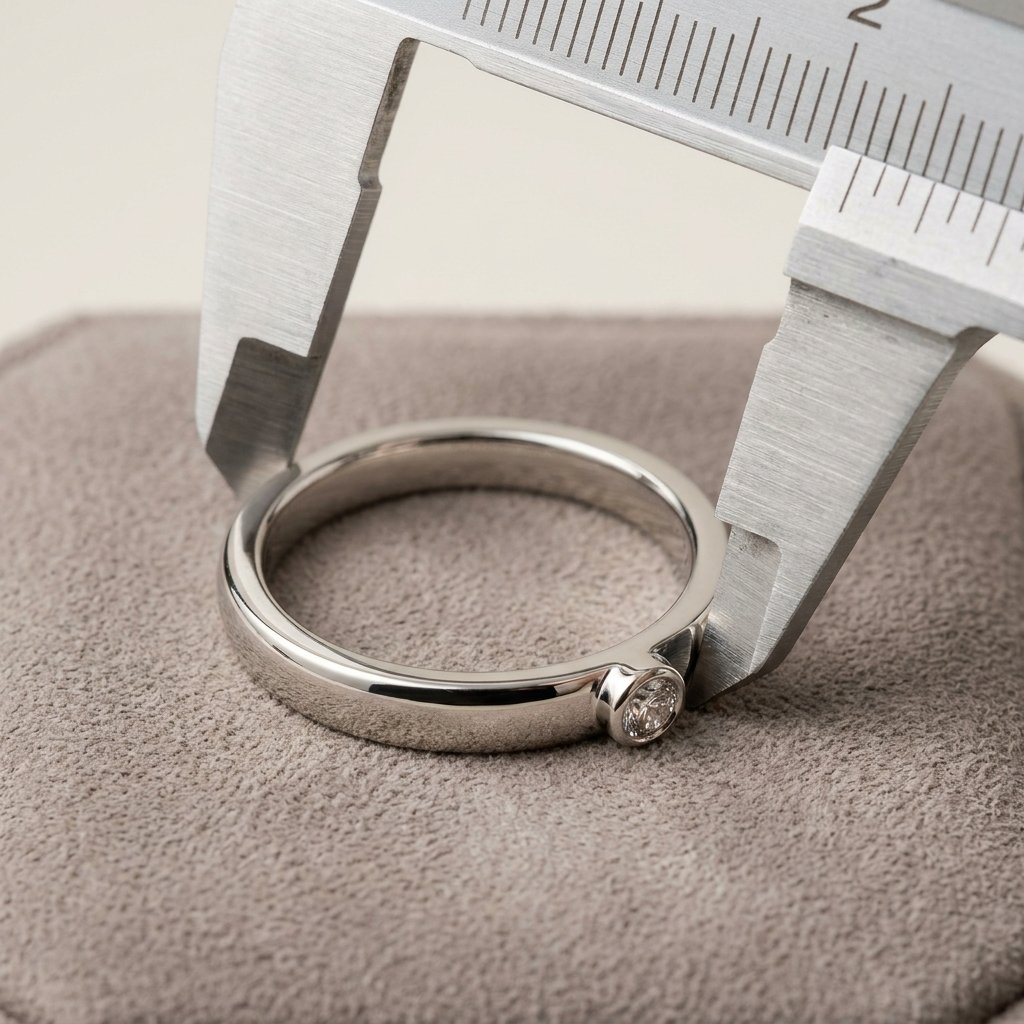
If you already have a ring that fits the target finger well, this is the most accurate home method. Take the ring, place it on a ruler, and measure the inner diameter in millimeters — from the inside edge to the opposite inside edge. Do not include the width of the metal band.
Once you have the inner diameter in millimeters, use a ring size chart to convert it to a US, UK, or EU size. For example, an inner diameter of 16.5 mm corresponds to a US size 6. This method works best with rings of a similar band width to the ring you plan to buy.
Method 2: Use a Printable Ring Sizer
Printable ring sizers are a popular home method. Print the sizer at 100% scale (do not let your printer scale it down), place the ring over the circles, and find the size where the inner edge of the ring matches the circle outline. The key is making sure the print scale is correct — most printable sizers include a calibration line to verify.
This method is convenient and free, but accuracy depends on print scale and how carefully you align the ring. It is a good starting point, but confirm with a physical gauge or jeweler for important purchases.
Method 3: Use a Physical Ring Gauge
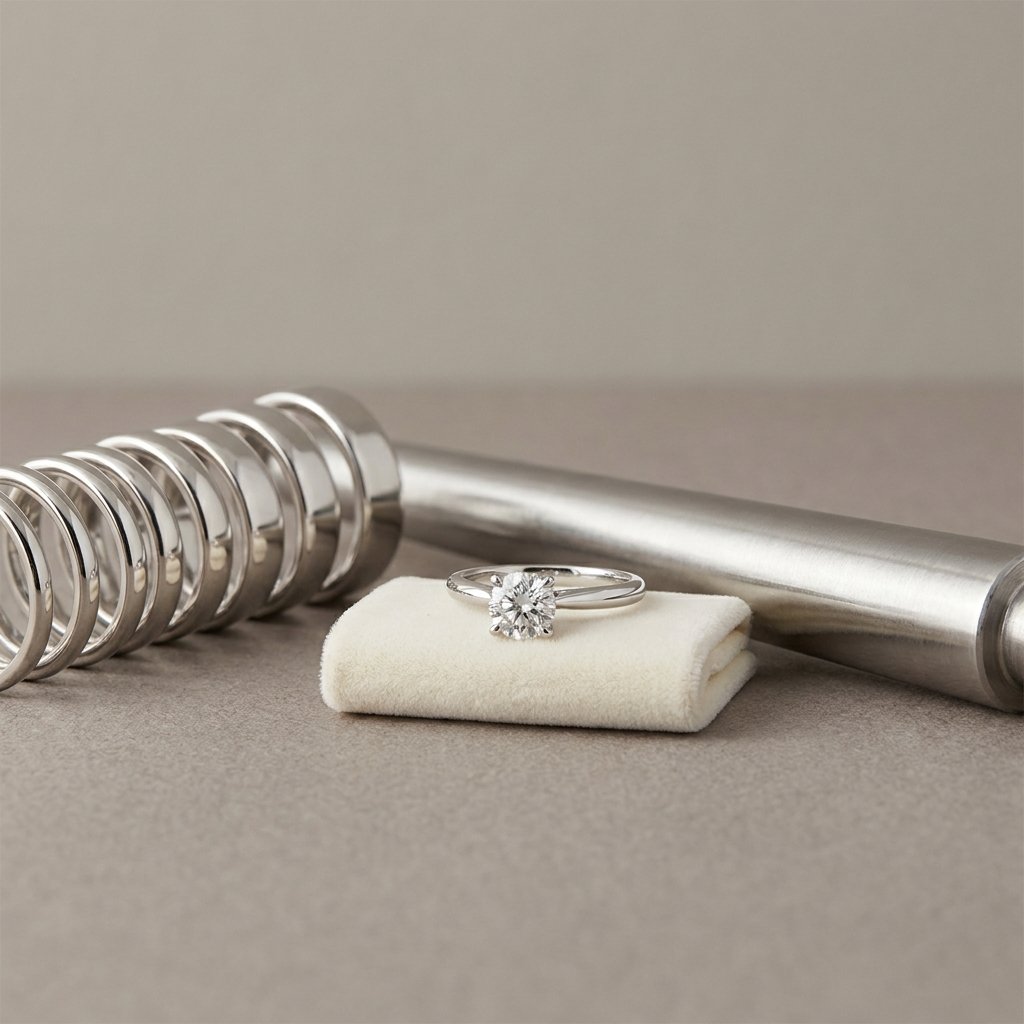
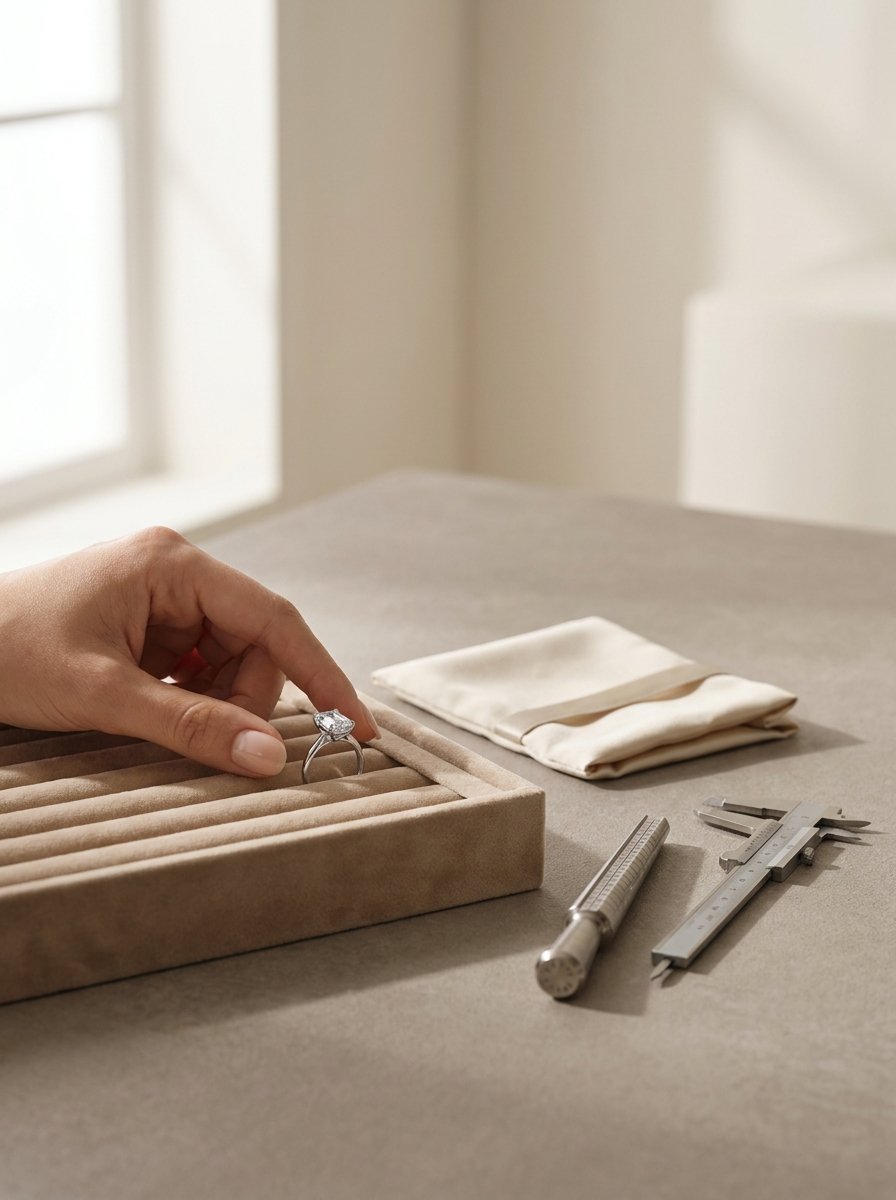
A physical ring gauge — either a set of metal sizing rings or a plastic ring sizer — is the most accurate home method. Slide the sizing rings onto your finger until you find the one that fits snugly but comfortably. The gauge size is your ring size.
Physical gauges are inexpensive and available online. They are the closest thing to a professional measurement you can get at home. Combine this with measuring an existing ring for the most reliable result.
Ring Measurement Methods Compared
| Method | Accuracy | Ease | Best For |
|---|---|---|---|
| Existing ring inner diameter | High | Easy | If you have a well-fitting ring |
| Physical ring gauge | High | Easy | Most accurate home option |
| Printable ring sizer | Moderate | Easy | Quick starting point |
| String or paper strip | Low | Very easy | Rough estimate only |
Fit Factors Most Guides Ignore
Your ring size is not a fixed number. It changes with the time of day, temperature, and even your activity level. Fingers are smallest in the early morning and largest in the evening or after exercise. Warm weather causes fingers to swell; cold weather makes them shrink.
Band width also matters. A wide band (6 mm or more) fits more snugly than a narrow band of the same size. If you are choosing a wider band, you may need to go up half a size. Ring profile and setting height can also affect how a ring feels. Learn more about ring settings.
Buyer Decision Box
Use an existing ring measurement if: you have a ring that fits the target finger well.
Use a physical ring gauge if: you are buying for yourself or have access to a sizing set.
Use a printable sizer if: you need a quick estimate and are ordering a low-cost ring.
Confirm with a jeweler if: you are buying an engagement ring or made-to-order custom piece.
Review your ring size with VANTYRE before ordering or browse lab grown diamonds.
Practical Checklist
- Measure at room temperature, not right after exercise or in cold weather.
- Measure in the evening when fingers are at their largest.
- Repeat the measurement 2–3 times for consistency.
- Consider the band width of the ring you plan to order.
- If between sizes, choose the larger size for comfort.
- Confirm with a jeweler for engagement rings and custom pieces.
Common Mistakes
- Measuring with a string or paper strip — this method is highly inaccurate.
- Measuring in the morning when fingers are smallest.
- Ignoring band width — wide bands fit tighter.
- Printing a sizer at the wrong scale.
- Assuming your ring size never changes.
Myth vs Fact
| Myth | Fact |
|---|---|
| Home measurement is always accurate. | Home methods are useful but less precise than professional sizing. |
| Your ring size never changes. | Finger size changes with temperature, time of day, and body changes. |
| String measurement is reliable. | String or paper methods are the least accurate home approach. |
| All rings of the same size fit the same. | Band width and ring profile affect how a size feels. |
FAQ
How do I measure my ring size at home?
Measure the inner diameter of a ring that fits, use a printable sizer at 100% scale, or use a physical ring gauge. Measure at room temperature in the evening.
What is the most accurate home ring sizing method?
A physical ring gauge or measuring an existing ring’s inner diameter are the most accurate home methods.
Can I measure ring size with a piece of string?
You can, but it is the least accurate method. String stretches and wraps unevenly, leading to measurement errors.
Do fingers change size during the day?
Yes. Fingers are smallest in the morning and swell throughout the day, especially in warm weather or after activity.
What size should I choose if I am between sizes?
Choose the larger size for comfort. It is easier to make a ring slightly smaller than to enlarge it.
Does band width affect ring size?
Yes. Wider bands fit more snugly and may require going up half a size compared to narrow bands.
Should I confirm my ring size with a jeweler?
Yes, especially for engagement rings and made-to-order custom pieces. Professional sizing is the most accurate.
Can all rings be resized if the size is wrong?
No. Some rings with certain settings or designs cannot be easily resized. Check resizing limits before ordering.
Final Buying Note
Measuring ring size at home is practical and possible with the right method. Use an existing ring or a physical gauge for the best accuracy, measure at room temperature, and pay attention to fit factors like band width and swelling. For engagement rings and custom pieces, confirm your size with a jeweler before production — a few minutes of verification beats weeks of resizing hassle.
Browse our lab grown diamonds, explore ring settings, or request a custom design.
© VANTYRE Jewelry Guide