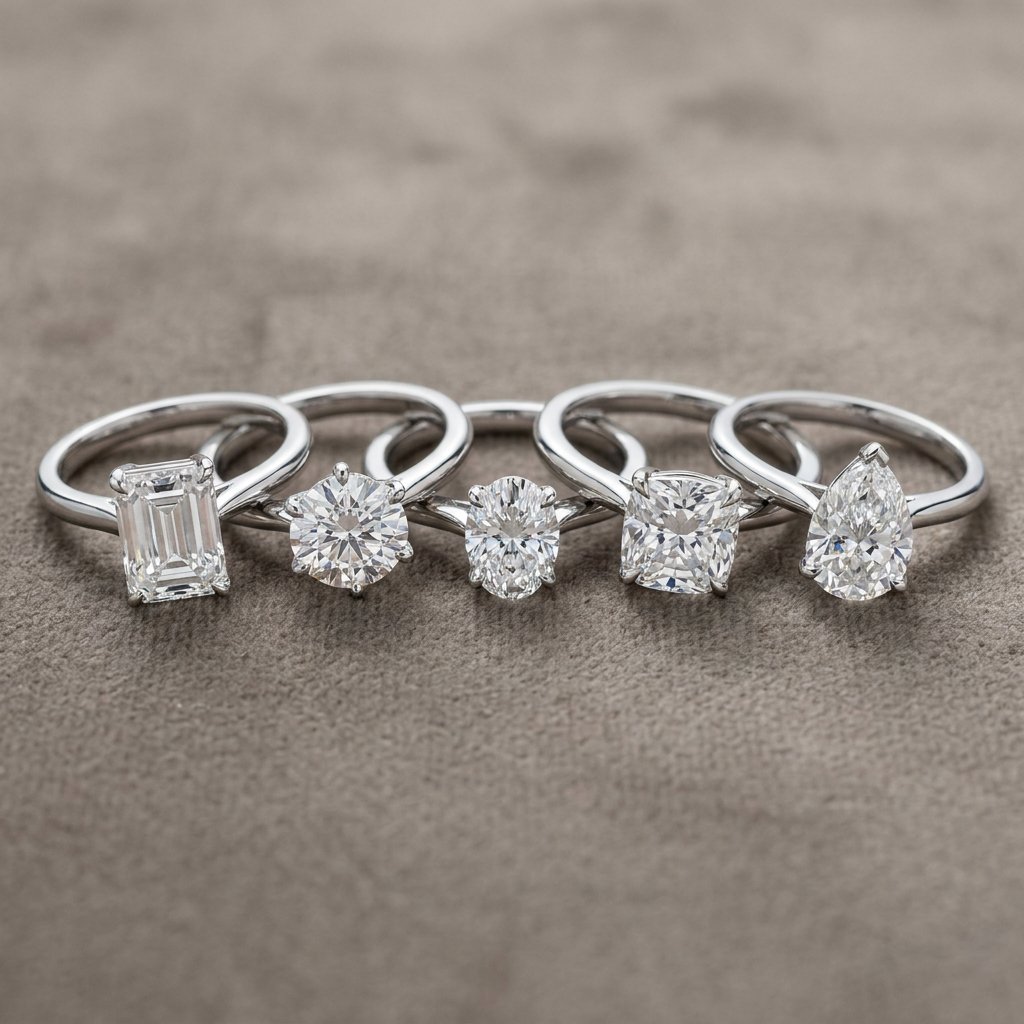
Carat weight and diamond size are related but different. Carat tells you the weight. Millimeters tell you the visible size. By prioritizing cut quality, shape choice, and actual dimensions, you can find a diamond that looks larger than its carat weight suggests — and avoid overpaying for a heavy stone that faces up small.
Carat weight and diamond size are related but different. Carat tells you the weight. Millimeters tell you the visible size. By prioritizing cut quality, shape choice, and actual dimensions, you can find a diamond that looks larger than its carat weight suggests — and avoid overpaying for a heavy stone that faces up small.
No. Shape and cut depth cause significant variation in millimeter dimensions at the same carat weight.
Final Buying Note
Carat weight and diamond size are related but different. Carat tells you the weight. Millimeters tell you the visible size. By prioritizing cut quality, shape choice, and actual dimensions, you can find a diamond that looks larger than its carat weight suggests — and avoid overpaying for a heavy stone that faces up small.
If visible size matters most, prioritize mm measurements. If prestige matters, carat still counts.
Do all 1 carat diamonds have the same dimensions?
No. Shape and cut depth cause significant variation in millimeter dimensions at the same carat weight.
Final Buying Note
Carat weight and diamond size are related but different. Carat tells you the weight. Millimeters tell you the visible size. By prioritizing cut quality, shape choice, and actual dimensions, you can find a diamond that looks larger than its carat weight suggests — and avoid overpaying for a heavy stone that faces up small.
If visible size matters most, prioritize mm measurements. If prestige matters, carat still counts.
Do all 1 carat diamonds have the same dimensions?
No. Shape and cut depth cause significant variation in millimeter dimensions at the same carat weight.
Final Buying Note
Carat weight and diamond size are related but different. Carat tells you the weight. Millimeters tell you the visible size. By prioritizing cut quality, shape choice, and actual dimensions, you can find a diamond that looks larger than its carat weight suggests — and avoid overpaying for a heavy stone that faces up small.
Choose an elongated shape (oval, pear, marquise) with ideal cut proportions. You get more mm per carat.
Should I prioritize carat or mm when shopping?
If visible size matters most, prioritize mm measurements. If prestige matters, carat still counts.
Do all 1 carat diamonds have the same dimensions?
No. Shape and cut depth cause significant variation in millimeter dimensions at the same carat weight.
Final Buying Note
Carat weight and diamond size are related but different. Carat tells you the weight. Millimeters tell you the visible size. By prioritizing cut quality, shape choice, and actual dimensions, you can find a diamond that looks larger than its carat weight suggests — and avoid overpaying for a heavy stone that faces up small.
How can I get a larger-looking diamond without paying for higher carat?
Choose an elongated shape (oval, pear, marquise) with ideal cut proportions. You get more mm per carat.
Should I prioritize carat or mm when shopping?
If visible size matters most, prioritize mm measurements. If prestige matters, carat still counts.
Do all 1 carat diamonds have the same dimensions?
No. Shape and cut depth cause significant variation in millimeter dimensions at the same carat weight.
Final Buying Note
Carat weight and diamond size are related but different. Carat tells you the weight. Millimeters tell you the visible size. By prioritizing cut quality, shape choice, and actual dimensions, you can find a diamond that looks larger than its carat weight suggests — and avoid overpaying for a heavy stone that faces up small.
No. Cut quality, shape, and depth affect visible size more than carat weight alone.
How can I get a larger-looking diamond without paying for higher carat?
Choose an elongated shape (oval, pear, marquise) with ideal cut proportions. You get more mm per carat.
Should I prioritize carat or mm when shopping?
If visible size matters most, prioritize mm measurements. If prestige matters, carat still counts.
Do all 1 carat diamonds have the same dimensions?
No. Shape and cut depth cause significant variation in millimeter dimensions at the same carat weight.
Final Buying Note
Carat weight and diamond size are related but different. Carat tells you the weight. Millimeters tell you the visible size. By prioritizing cut quality, shape choice, and actual dimensions, you can find a diamond that looks larger than its carat weight suggests — and avoid overpaying for a heavy stone that faces up small.
Does higher carat always mean a larger-looking diamond?
No. Cut quality, shape, and depth affect visible size more than carat weight alone.
How can I get a larger-looking diamond without paying for higher carat?
Choose an elongated shape (oval, pear, marquise) with ideal cut proportions. You get more mm per carat.
Should I prioritize carat or mm when shopping?
If visible size matters most, prioritize mm measurements. If prestige matters, carat still counts.
Do all 1 carat diamonds have the same dimensions?
No. Shape and cut depth cause significant variation in millimeter dimensions at the same carat weight.
Final Buying Note
Carat weight and diamond size are related but different. Carat tells you the weight. Millimeters tell you the visible size. By prioritizing cut quality, shape choice, and actual dimensions, you can find a diamond that looks larger than its carat weight suggests — and avoid overpaying for a heavy stone that faces up small.
Carat weight measures mass. Diamond size refers to millimeter dimensions. They are related but not the same.
Does higher carat always mean a larger-looking diamond?
No. Cut quality, shape, and depth affect visible size more than carat weight alone.
How can I get a larger-looking diamond without paying for higher carat?
Choose an elongated shape (oval, pear, marquise) with ideal cut proportions. You get more mm per carat.
Should I prioritize carat or mm when shopping?
If visible size matters most, prioritize mm measurements. If prestige matters, carat still counts.
Do all 1 carat diamonds have the same dimensions?
No. Shape and cut depth cause significant variation in millimeter dimensions at the same carat weight.
Final Buying Note
Carat weight and diamond size are related but different. Carat tells you the weight. Millimeters tell you the visible size. By prioritizing cut quality, shape choice, and actual dimensions, you can find a diamond that looks larger than its carat weight suggests — and avoid overpaying for a heavy stone that faces up small.
What is the difference between carat weight and diamond size?
Carat weight measures mass. Diamond size refers to millimeter dimensions. They are related but not the same.
Does higher carat always mean a larger-looking diamond?
No. Cut quality, shape, and depth affect visible size more than carat weight alone.
How can I get a larger-looking diamond without paying for higher carat?
Choose an elongated shape (oval, pear, marquise) with ideal cut proportions. You get more mm per carat.
Should I prioritize carat or mm when shopping?
If visible size matters most, prioritize mm measurements. If prestige matters, carat still counts.
Do all 1 carat diamonds have the same dimensions?
No. Shape and cut depth cause significant variation in millimeter dimensions at the same carat weight.
Final Buying Note
Carat weight and diamond size are related but different. Carat tells you the weight. Millimeters tell you the visible size. By prioritizing cut quality, shape choice, and actual dimensions, you can find a diamond that looks larger than its carat weight suggests — and avoid overpaying for a heavy stone that faces up small.
What is the difference between carat weight and diamond size?
Carat weight measures mass. Diamond size refers to millimeter dimensions. They are related but not the same.
Does higher carat always mean a larger-looking diamond?
No. Cut quality, shape, and depth affect visible size more than carat weight alone.
How can I get a larger-looking diamond without paying for higher carat?
Choose an elongated shape (oval, pear, marquise) with ideal cut proportions. You get more mm per carat.
Should I prioritize carat or mm when shopping?
If visible size matters most, prioritize mm measurements. If prestige matters, carat still counts.
Do all 1 carat diamonds have the same dimensions?
No. Shape and cut depth cause significant variation in millimeter dimensions at the same carat weight.
Final Buying Note
Carat weight and diamond size are related but different. Carat tells you the weight. Millimeters tell you the visible size. By prioritizing cut quality, shape choice, and actual dimensions, you can find a diamond that looks larger than its carat weight suggests — and avoid overpaying for a heavy stone that faces up small.
Carat measures weight. Millimeter measurements tell you the actual visible size.
A 1 carat diamond always has the same dimensions.
A 1 carat round is ~6.5 mm. A 1 carat oval can be 7.5 × 5.5 mm.
Higher carat always means a bigger-looking diamond.
A well-cut 0.90 carat can look as large as a deep-cut 1.00 carat.
FAQ
What is the difference between carat weight and diamond size?
Carat weight measures mass. Diamond size refers to millimeter dimensions. They are related but not the same.
Does higher carat always mean a larger-looking diamond?
No. Cut quality, shape, and depth affect visible size more than carat weight alone.
How can I get a larger-looking diamond without paying for higher carat?
Choose an elongated shape (oval, pear, marquise) with ideal cut proportions. You get more mm per carat.
Should I prioritize carat or mm when shopping?
If visible size matters most, prioritize mm measurements. If prestige matters, carat still counts.
Do all 1 carat diamonds have the same dimensions?
No. Shape and cut depth cause significant variation in millimeter dimensions at the same carat weight.
Final Buying Note
Carat weight and diamond size are related but different. Carat tells you the weight. Millimeters tell you the visible size. By prioritizing cut quality, shape choice, and actual dimensions, you can find a diamond that looks larger than its carat weight suggests — and avoid overpaying for a heavy stone that faces up small.
Carat measures weight. Millimeter measurements tell you the actual visible size.
A 1 carat diamond always has the same dimensions.
A 1 carat round is ~6.5 mm. A 1 carat oval can be 7.5 × 5.5 mm.
Higher carat always means a bigger-looking diamond.
A well-cut 0.90 carat can look as large as a deep-cut 1.00 carat.
FAQ
What is the difference between carat weight and diamond size?
Carat weight measures mass. Diamond size refers to millimeter dimensions. They are related but not the same.
Does higher carat always mean a larger-looking diamond?
No. Cut quality, shape, and depth affect visible size more than carat weight alone.
How can I get a larger-looking diamond without paying for higher carat?
Choose an elongated shape (oval, pear, marquise) with ideal cut proportions. You get more mm per carat.
Should I prioritize carat or mm when shopping?
If visible size matters most, prioritize mm measurements. If prestige matters, carat still counts.
Do all 1 carat diamonds have the same dimensions?
No. Shape and cut depth cause significant variation in millimeter dimensions at the same carat weight.
Final Buying Note
Carat weight and diamond size are related but different. Carat tells you the weight. Millimeters tell you the visible size. By prioritizing cut quality, shape choice, and actual dimensions, you can find a diamond that looks larger than its carat weight suggests — and avoid overpaying for a heavy stone that faces up small.
Treating carat weight and diamond size as the same thing.
Choosing a higher carat diamond without checking its mm measurements.
Ignoring cut depth — a deep diamond faces up smaller than its carat suggests.
Assuming round diamonds offer the best size — they actually have less face-up size per carat than elongated shapes.
Myth vs Fact
Myth
Fact
Carat weight tells you how large a diamond looks.
Carat measures weight. Millimeter measurements tell you the actual visible size.
A 1 carat diamond always has the same dimensions.
A 1 carat round is ~6.5 mm. A 1 carat oval can be 7.5 × 5.5 mm.
Higher carat always means a bigger-looking diamond.
A well-cut 0.90 carat can look as large as a deep-cut 1.00 carat.
FAQ
What is the difference between carat weight and diamond size?
Carat weight measures mass. Diamond size refers to millimeter dimensions. They are related but not the same.
Does higher carat always mean a larger-looking diamond?
No. Cut quality, shape, and depth affect visible size more than carat weight alone.
How can I get a larger-looking diamond without paying for higher carat?
Choose an elongated shape (oval, pear, marquise) with ideal cut proportions. You get more mm per carat.
Should I prioritize carat or mm when shopping?
If visible size matters most, prioritize mm measurements. If prestige matters, carat still counts.
Do all 1 carat diamonds have the same dimensions?
No. Shape and cut depth cause significant variation in millimeter dimensions at the same carat weight.
Final Buying Note
Carat weight and diamond size are related but different. Carat tells you the weight. Millimeters tell you the visible size. By prioritizing cut quality, shape choice, and actual dimensions, you can find a diamond that looks larger than its carat weight suggests — and avoid overpaying for a heavy stone that faces up small.
Treating carat weight and diamond size as the same thing.
Choosing a higher carat diamond without checking its mm measurements.
Ignoring cut depth — a deep diamond faces up smaller than its carat suggests.
Assuming round diamonds offer the best size — they actually have less face-up size per carat than elongated shapes.
Myth vs Fact
Myth
Fact
Carat weight tells you how large a diamond looks.
Carat measures weight. Millimeter measurements tell you the actual visible size.
A 1 carat diamond always has the same dimensions.
A 1 carat round is ~6.5 mm. A 1 carat oval can be 7.5 × 5.5 mm.
Higher carat always means a bigger-looking diamond.
A well-cut 0.90 carat can look as large as a deep-cut 1.00 carat.
FAQ
What is the difference between carat weight and diamond size?
Carat weight measures mass. Diamond size refers to millimeter dimensions. They are related but not the same.
Does higher carat always mean a larger-looking diamond?
No. Cut quality, shape, and depth affect visible size more than carat weight alone.
How can I get a larger-looking diamond without paying for higher carat?
Choose an elongated shape (oval, pear, marquise) with ideal cut proportions. You get more mm per carat.
Should I prioritize carat or mm when shopping?
If visible size matters most, prioritize mm measurements. If prestige matters, carat still counts.
Do all 1 carat diamonds have the same dimensions?
No. Shape and cut depth cause significant variation in millimeter dimensions at the same carat weight.
Final Buying Note
Carat weight and diamond size are related but different. Carat tells you the weight. Millimeters tell you the visible size. By prioritizing cut quality, shape choice, and actual dimensions, you can find a diamond that looks larger than its carat weight suggests — and avoid overpaying for a heavy stone that faces up small.
This does not mean carat weight is irrelevant. Carat still affects price, prestige, and rarity. But for visible size, millimeters matter more than carats. Learn more about diamond measurements.
When comparing diamonds, check the mm measurements on the certificate rather than relying on carat weight alone.
Buyer Decision Box
If visible size is your priority: prioritize mm measurements over carat weight. Choose elongated shapes.
If prestige and resale matter: carat weight still carries weight. Round diamonds have the strongest resale.
Best strategy: find a well-cut diamond in an elongated shape with good mm dimensions. You get the visual size of a higher carat without paying for it.
Treating carat weight and diamond size as the same thing.
Choosing a higher carat diamond without checking its mm measurements.
Ignoring cut depth — a deep diamond faces up smaller than its carat suggests.
Assuming round diamonds offer the best size — they actually have less face-up size per carat than elongated shapes.
Myth vs Fact
Myth
Fact
Carat weight tells you how large a diamond looks.
Carat measures weight. Millimeter measurements tell you the actual visible size.
A 1 carat diamond always has the same dimensions.
A 1 carat round is ~6.5 mm. A 1 carat oval can be 7.5 × 5.5 mm.
Higher carat always means a bigger-looking diamond.
A well-cut 0.90 carat can look as large as a deep-cut 1.00 carat.
FAQ
What is the difference between carat weight and diamond size?
Carat weight measures mass. Diamond size refers to millimeter dimensions. They are related but not the same.
Does higher carat always mean a larger-looking diamond?
No. Cut quality, shape, and depth affect visible size more than carat weight alone.
How can I get a larger-looking diamond without paying for higher carat?
Choose an elongated shape (oval, pear, marquise) with ideal cut proportions. You get more mm per carat.
Should I prioritize carat or mm when shopping?
If visible size matters most, prioritize mm measurements. If prestige matters, carat still counts.
Do all 1 carat diamonds have the same dimensions?
No. Shape and cut depth cause significant variation in millimeter dimensions at the same carat weight.
Final Buying Note
Carat weight and diamond size are related but different. Carat tells you the weight. Millimeters tell you the visible size. By prioritizing cut quality, shape choice, and actual dimensions, you can find a diamond that looks larger than its carat weight suggests — and avoid overpaying for a heavy stone that faces up small.
Understanding the difference between carat weight and diamond size helps you make smarter buying decisions. A well-cut 0.90 carat diamond with ideal proportions can face up as large as a poorly-cut 1.00 carat diamond — and cost significantly less. Similarly, choosing an elongated shape like oval or pear gives you more millimeter length per carat than a round diamond.
This does not mean carat weight is irrelevant. Carat still affects price, prestige, and rarity. But for visible size, millimeters matter more than carats. Learn more about diamond measurements.
When comparing diamonds, check the mm measurements on the certificate rather than relying on carat weight alone.
Buyer Decision Box
If visible size is your priority: prioritize mm measurements over carat weight. Choose elongated shapes.
If prestige and resale matter: carat weight still carries weight. Round diamonds have the strongest resale.
Best strategy: find a well-cut diamond in an elongated shape with good mm dimensions. You get the visual size of a higher carat without paying for it.
Treating carat weight and diamond size as the same thing.
Choosing a higher carat diamond without checking its mm measurements.
Ignoring cut depth — a deep diamond faces up smaller than its carat suggests.
Assuming round diamonds offer the best size — they actually have less face-up size per carat than elongated shapes.
Myth vs Fact
Myth
Fact
Carat weight tells you how large a diamond looks.
Carat measures weight. Millimeter measurements tell you the actual visible size.
A 1 carat diamond always has the same dimensions.
A 1 carat round is ~6.5 mm. A 1 carat oval can be 7.5 × 5.5 mm.
Higher carat always means a bigger-looking diamond.
A well-cut 0.90 carat can look as large as a deep-cut 1.00 carat.
FAQ
What is the difference between carat weight and diamond size?
Carat weight measures mass. Diamond size refers to millimeter dimensions. They are related but not the same.
Does higher carat always mean a larger-looking diamond?
No. Cut quality, shape, and depth affect visible size more than carat weight alone.
How can I get a larger-looking diamond without paying for higher carat?
Choose an elongated shape (oval, pear, marquise) with ideal cut proportions. You get more mm per carat.
Should I prioritize carat or mm when shopping?
If visible size matters most, prioritize mm measurements. If prestige matters, carat still counts.
Do all 1 carat diamonds have the same dimensions?
No. Shape and cut depth cause significant variation in millimeter dimensions at the same carat weight.
Final Buying Note
Carat weight and diamond size are related but different. Carat tells you the weight. Millimeters tell you the visible size. By prioritizing cut quality, shape choice, and actual dimensions, you can find a diamond that looks larger than its carat weight suggests — and avoid overpaying for a heavy stone that faces up small.
Understanding the difference between carat weight and diamond size helps you make smarter buying decisions. A well-cut 0.90 carat diamond with ideal proportions can face up as large as a poorly-cut 1.00 carat diamond — and cost significantly less. Similarly, choosing an elongated shape like oval or pear gives you more millimeter length per carat than a round diamond.
This does not mean carat weight is irrelevant. Carat still affects price, prestige, and rarity. But for visible size, millimeters matter more than carats. Learn more about diamond measurements.
When comparing diamonds, check the mm measurements on the certificate rather than relying on carat weight alone.
Buyer Decision Box
If visible size is your priority: prioritize mm measurements over carat weight. Choose elongated shapes.
If prestige and resale matter: carat weight still carries weight. Round diamonds have the strongest resale.
Best strategy: find a well-cut diamond in an elongated shape with good mm dimensions. You get the visual size of a higher carat without paying for it.
Treating carat weight and diamond size as the same thing.
Choosing a higher carat diamond without checking its mm measurements.
Ignoring cut depth — a deep diamond faces up smaller than its carat suggests.
Assuming round diamonds offer the best size — they actually have less face-up size per carat than elongated shapes.
Myth vs Fact
Myth
Fact
Carat weight tells you how large a diamond looks.
Carat measures weight. Millimeter measurements tell you the actual visible size.
A 1 carat diamond always has the same dimensions.
A 1 carat round is ~6.5 mm. A 1 carat oval can be 7.5 × 5.5 mm.
Higher carat always means a bigger-looking diamond.
A well-cut 0.90 carat can look as large as a deep-cut 1.00 carat.
FAQ
What is the difference between carat weight and diamond size?
Carat weight measures mass. Diamond size refers to millimeter dimensions. They are related but not the same.
Does higher carat always mean a larger-looking diamond?
No. Cut quality, shape, and depth affect visible size more than carat weight alone.
How can I get a larger-looking diamond without paying for higher carat?
Choose an elongated shape (oval, pear, marquise) with ideal cut proportions. You get more mm per carat.
Should I prioritize carat or mm when shopping?
If visible size matters most, prioritize mm measurements. If prestige matters, carat still counts.
Do all 1 carat diamonds have the same dimensions?
No. Shape and cut depth cause significant variation in millimeter dimensions at the same carat weight.
Final Buying Note
Carat weight and diamond size are related but different. Carat tells you the weight. Millimeters tell you the visible size. By prioritizing cut quality, shape choice, and actual dimensions, you can find a diamond that looks larger than its carat weight suggests — and avoid overpaying for a heavy stone that faces up small.
A diamond’s carat weight does not directly tell you its millimeter size. Always check the actual dimensions.
Why the Difference Matters
Understanding the difference between carat weight and diamond size helps you make smarter buying decisions. A well-cut 0.90 carat diamond with ideal proportions can face up as large as a poorly-cut 1.00 carat diamond — and cost significantly less. Similarly, choosing an elongated shape like oval or pear gives you more millimeter length per carat than a round diamond.
This does not mean carat weight is irrelevant. Carat still affects price, prestige, and rarity. But for visible size, millimeters matter more than carats. Learn more about diamond measurements.
When comparing diamonds, check the mm measurements on the certificate rather than relying on carat weight alone.
Buyer Decision Box
If visible size is your priority: prioritize mm measurements over carat weight. Choose elongated shapes.
If prestige and resale matter: carat weight still carries weight. Round diamonds have the strongest resale.
Best strategy: find a well-cut diamond in an elongated shape with good mm dimensions. You get the visual size of a higher carat without paying for it.
Treating carat weight and diamond size as the same thing.
Choosing a higher carat diamond without checking its mm measurements.
Ignoring cut depth — a deep diamond faces up smaller than its carat suggests.
Assuming round diamonds offer the best size — they actually have less face-up size per carat than elongated shapes.
Myth vs Fact
Myth
Fact
Carat weight tells you how large a diamond looks.
Carat measures weight. Millimeter measurements tell you the actual visible size.
A 1 carat diamond always has the same dimensions.
A 1 carat round is ~6.5 mm. A 1 carat oval can be 7.5 × 5.5 mm.
Higher carat always means a bigger-looking diamond.
A well-cut 0.90 carat can look as large as a deep-cut 1.00 carat.
FAQ
What is the difference between carat weight and diamond size?
Carat weight measures mass. Diamond size refers to millimeter dimensions. They are related but not the same.
Does higher carat always mean a larger-looking diamond?
No. Cut quality, shape, and depth affect visible size more than carat weight alone.
How can I get a larger-looking diamond without paying for higher carat?
Choose an elongated shape (oval, pear, marquise) with ideal cut proportions. You get more mm per carat.
Should I prioritize carat or mm when shopping?
If visible size matters most, prioritize mm measurements. If prestige matters, carat still counts.
Do all 1 carat diamonds have the same dimensions?
No. Shape and cut depth cause significant variation in millimeter dimensions at the same carat weight.
Final Buying Note
Carat weight and diamond size are related but different. Carat tells you the weight. Millimeters tell you the visible size. By prioritizing cut quality, shape choice, and actual dimensions, you can find a diamond that looks larger than its carat weight suggests — and avoid overpaying for a heavy stone that faces up small.
A diamond’s carat weight does not directly tell you its millimeter size. Always check the actual dimensions.
Why the Difference Matters
Understanding the difference between carat weight and diamond size helps you make smarter buying decisions. A well-cut 0.90 carat diamond with ideal proportions can face up as large as a poorly-cut 1.00 carat diamond — and cost significantly less. Similarly, choosing an elongated shape like oval or pear gives you more millimeter length per carat than a round diamond.
This does not mean carat weight is irrelevant. Carat still affects price, prestige, and rarity. But for visible size, millimeters matter more than carats. Learn more about diamond measurements.
When comparing diamonds, check the mm measurements on the certificate rather than relying on carat weight alone.
Buyer Decision Box
If visible size is your priority: prioritize mm measurements over carat weight. Choose elongated shapes.
If prestige and resale matter: carat weight still carries weight. Round diamonds have the strongest resale.
Best strategy: find a well-cut diamond in an elongated shape with good mm dimensions. You get the visual size of a higher carat without paying for it.
Treating carat weight and diamond size as the same thing.
Choosing a higher carat diamond without checking its mm measurements.
Ignoring cut depth — a deep diamond faces up smaller than its carat suggests.
Assuming round diamonds offer the best size — they actually have less face-up size per carat than elongated shapes.
Myth vs Fact
Myth
Fact
Carat weight tells you how large a diamond looks.
Carat measures weight. Millimeter measurements tell you the actual visible size.
A 1 carat diamond always has the same dimensions.
A 1 carat round is ~6.5 mm. A 1 carat oval can be 7.5 × 5.5 mm.
Higher carat always means a bigger-looking diamond.
A well-cut 0.90 carat can look as large as a deep-cut 1.00 carat.
FAQ
What is the difference between carat weight and diamond size?
Carat weight measures mass. Diamond size refers to millimeter dimensions. They are related but not the same.
Does higher carat always mean a larger-looking diamond?
No. Cut quality, shape, and depth affect visible size more than carat weight alone.
How can I get a larger-looking diamond without paying for higher carat?
Choose an elongated shape (oval, pear, marquise) with ideal cut proportions. You get more mm per carat.
Should I prioritize carat or mm when shopping?
If visible size matters most, prioritize mm measurements. If prestige matters, carat still counts.
Do all 1 carat diamonds have the same dimensions?
No. Shape and cut depth cause significant variation in millimeter dimensions at the same carat weight.
Final Buying Note
Carat weight and diamond size are related but different. Carat tells you the weight. Millimeters tell you the visible size. By prioritizing cut quality, shape choice, and actual dimensions, you can find a diamond that looks larger than its carat weight suggests — and avoid overpaying for a heavy stone that faces up small.
Carat weight measures a diamond’s mass (1 carat = 200 mg). Diamond size refers to its physical dimensions in millimeters. Two diamonds of the same carat weight can have different millimeter sizes depending on cut depth and shape. A well-cut diamond with ideal proportions will face up larger than a deep-cut diamond of the same carat weight.
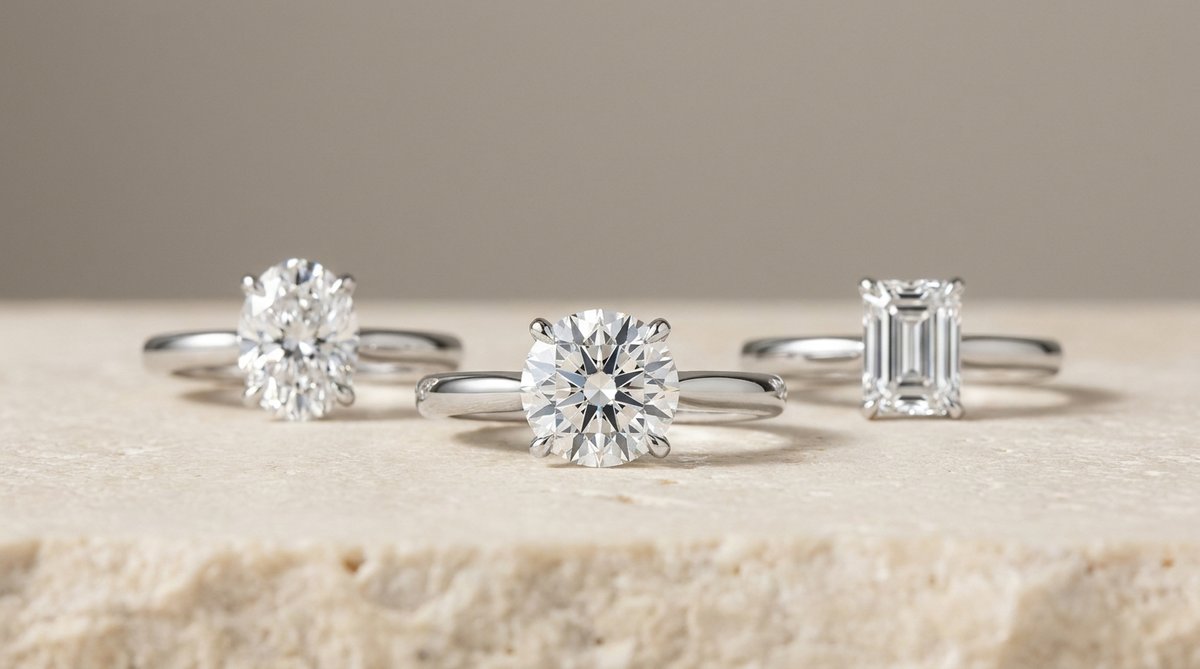
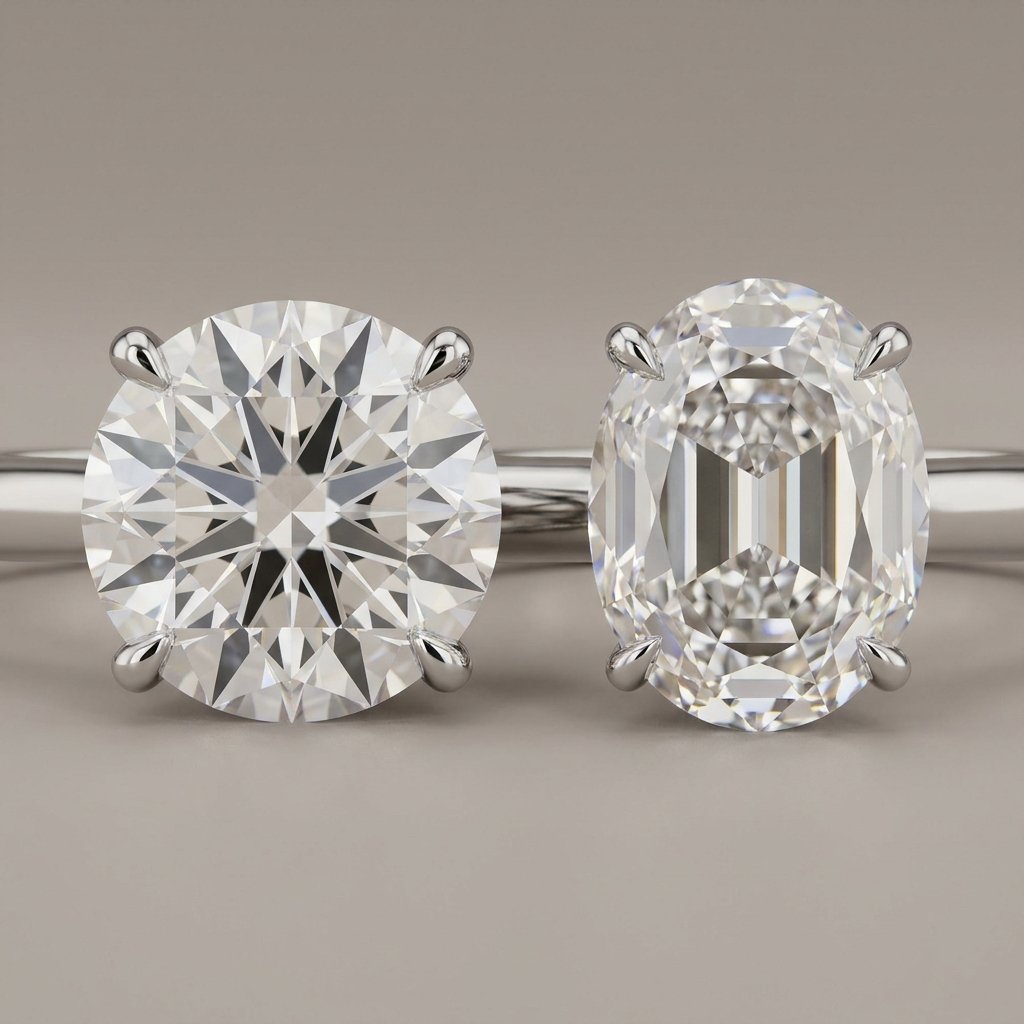
Carat weight and millimeter size do not always align. Two diamonds of the same carat can look different in size.
Carat Weight vs Diamond Size: The Key Difference
Metric
Carat Weight
Diamond Size (mm)
What it measures
Mass / weight
Physical dimensions
Unit
Carats (1 ct = 200 mg)
Millimeters
What affects it
Diamond’s actual weight
Shape, cut depth, proportions
Visible size indicator?
Not directly
Yes — tells you how large it looks
Compare across shapes?
No — same carat = different size by shape
Yes — compare mm directly
A diamond’s carat weight does not directly tell you its millimeter size. Always check the actual dimensions.
Why the Difference Matters
Understanding the difference between carat weight and diamond size helps you make smarter buying decisions. A well-cut 0.90 carat diamond with ideal proportions can face up as large as a poorly-cut 1.00 carat diamond — and cost significantly less. Similarly, choosing an elongated shape like oval or pear gives you more millimeter length per carat than a round diamond.
This does not mean carat weight is irrelevant. Carat still affects price, prestige, and rarity. But for visible size, millimeters matter more than carats. Learn more about diamond measurements.
When comparing diamonds, check the mm measurements on the certificate rather than relying on carat weight alone.
Buyer Decision Box
If visible size is your priority: prioritize mm measurements over carat weight. Choose elongated shapes.
If prestige and resale matter: carat weight still carries weight. Round diamonds have the strongest resale.
Best strategy: find a well-cut diamond in an elongated shape with good mm dimensions. You get the visual size of a higher carat without paying for it.
Treating carat weight and diamond size as the same thing.
Choosing a higher carat diamond without checking its mm measurements.
Ignoring cut depth — a deep diamond faces up smaller than its carat suggests.
Assuming round diamonds offer the best size — they actually have less face-up size per carat than elongated shapes.
Myth vs Fact
Myth
Fact
Carat weight tells you how large a diamond looks.
Carat measures weight. Millimeter measurements tell you the actual visible size.
A 1 carat diamond always has the same dimensions.
A 1 carat round is ~6.5 mm. A 1 carat oval can be 7.5 × 5.5 mm.
Higher carat always means a bigger-looking diamond.
A well-cut 0.90 carat can look as large as a deep-cut 1.00 carat.
FAQ
What is the difference between carat weight and diamond size?
Carat weight measures mass. Diamond size refers to millimeter dimensions. They are related but not the same.
Does higher carat always mean a larger-looking diamond?
No. Cut quality, shape, and depth affect visible size more than carat weight alone.
How can I get a larger-looking diamond without paying for higher carat?
Choose an elongated shape (oval, pear, marquise) with ideal cut proportions. You get more mm per carat.
Should I prioritize carat or mm when shopping?
If visible size matters most, prioritize mm measurements. If prestige matters, carat still counts.
Do all 1 carat diamonds have the same dimensions?
No. Shape and cut depth cause significant variation in millimeter dimensions at the same carat weight.
Final Buying Note
Carat weight and diamond size are related but different. Carat tells you the weight. Millimeters tell you the visible size. By prioritizing cut quality, shape choice, and actual dimensions, you can find a diamond that looks larger than its carat weight suggests — and avoid overpaying for a heavy stone that faces up small.
This guide explains the difference between carat weight and diamond size and how to use both when shopping.
Quick Answer:
Carat weight measures a diamond’s mass (1 carat = 200 mg). Diamond size refers to its physical dimensions in millimeters. Two diamonds of the same carat weight can have different millimeter sizes depending on cut depth and shape. A well-cut diamond with ideal proportions will face up larger than a deep-cut diamond of the same carat weight.
Carat weight and millimeter size do not always align. Two diamonds of the same carat can look different in size.
Carat Weight vs Diamond Size: The Key Difference
Metric
Carat Weight
Diamond Size (mm)
What it measures
Mass / weight
Physical dimensions
Unit
Carats (1 ct = 200 mg)
Millimeters
What affects it
Diamond’s actual weight
Shape, cut depth, proportions
Visible size indicator?
Not directly
Yes — tells you how large it looks
Compare across shapes?
No — same carat = different size by shape
Yes — compare mm directly
A diamond’s carat weight does not directly tell you its millimeter size. Always check the actual dimensions.
Why the Difference Matters
Understanding the difference between carat weight and diamond size helps you make smarter buying decisions. A well-cut 0.90 carat diamond with ideal proportions can face up as large as a poorly-cut 1.00 carat diamond — and cost significantly less. Similarly, choosing an elongated shape like oval or pear gives you more millimeter length per carat than a round diamond.
This does not mean carat weight is irrelevant. Carat still affects price, prestige, and rarity. But for visible size, millimeters matter more than carats. Learn more about diamond measurements.
When comparing diamonds, check the mm measurements on the certificate rather than relying on carat weight alone.
Buyer Decision Box
If visible size is your priority: prioritize mm measurements over carat weight. Choose elongated shapes.
If prestige and resale matter: carat weight still carries weight. Round diamonds have the strongest resale.
Best strategy: find a well-cut diamond in an elongated shape with good mm dimensions. You get the visual size of a higher carat without paying for it.
Treating carat weight and diamond size as the same thing.
Choosing a higher carat diamond without checking its mm measurements.
Ignoring cut depth — a deep diamond faces up smaller than its carat suggests.
Assuming round diamonds offer the best size — they actually have less face-up size per carat than elongated shapes.
Myth vs Fact
Myth
Fact
Carat weight tells you how large a diamond looks.
Carat measures weight. Millimeter measurements tell you the actual visible size.
A 1 carat diamond always has the same dimensions.
A 1 carat round is ~6.5 mm. A 1 carat oval can be 7.5 × 5.5 mm.
Higher carat always means a bigger-looking diamond.
A well-cut 0.90 carat can look as large as a deep-cut 1.00 carat.
FAQ
What is the difference between carat weight and diamond size?
Carat weight measures mass. Diamond size refers to millimeter dimensions. They are related but not the same.
Does higher carat always mean a larger-looking diamond?
No. Cut quality, shape, and depth affect visible size more than carat weight alone.
How can I get a larger-looking diamond without paying for higher carat?
Choose an elongated shape (oval, pear, marquise) with ideal cut proportions. You get more mm per carat.
Should I prioritize carat or mm when shopping?
If visible size matters most, prioritize mm measurements. If prestige matters, carat still counts.
Do all 1 carat diamonds have the same dimensions?
No. Shape and cut depth cause significant variation in millimeter dimensions at the same carat weight.
Final Buying Note
Carat weight and diamond size are related but different. Carat tells you the weight. Millimeters tell you the visible size. By prioritizing cut quality, shape choice, and actual dimensions, you can find a diamond that looks larger than its carat weight suggests — and avoid overpaying for a heavy stone that faces up small.
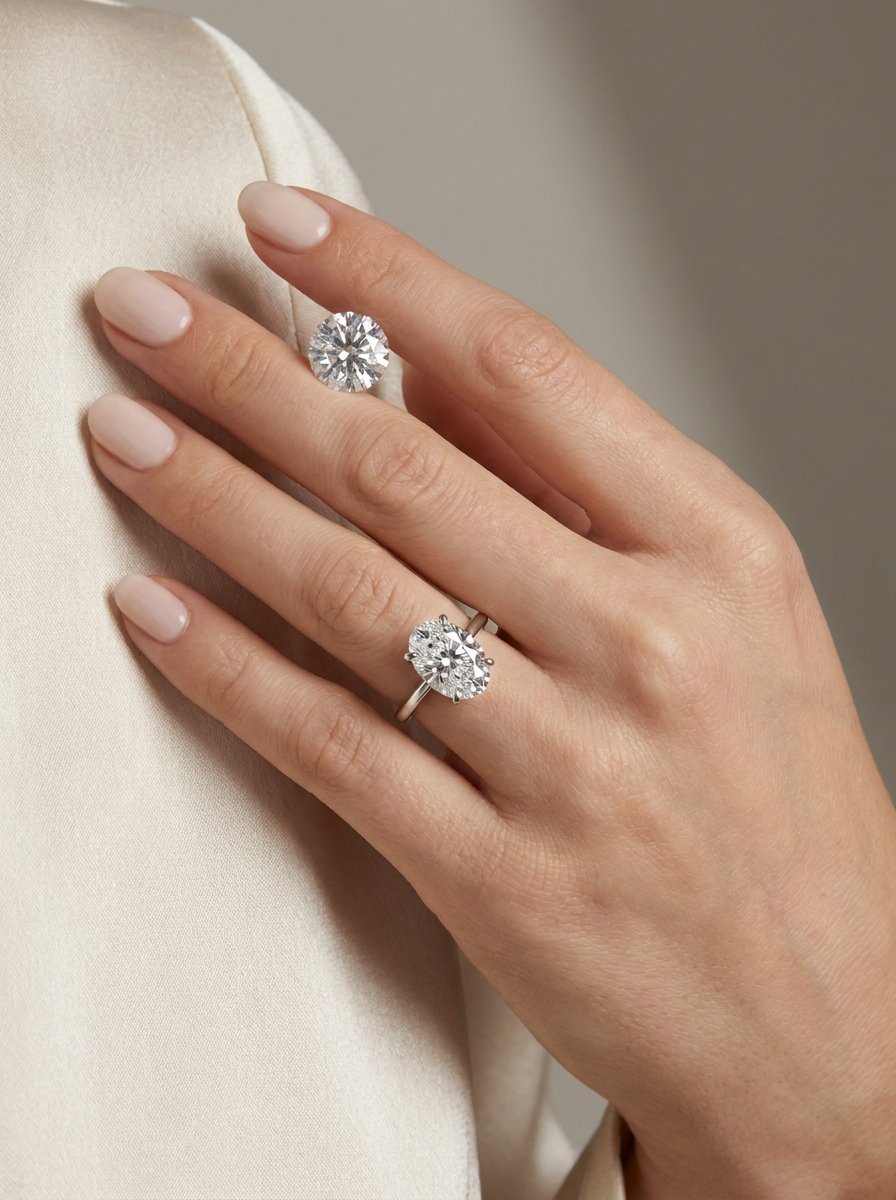
Carat weight and diamond size are two different things that buyers often treat as the same. Carat measures how much a diamond weighs. Size — measured in millimeters — tells you how large it actually looks on the finger. Understanding the difference can save you money and help you choose a diamond that looks bigger than its weight suggests.
This guide explains the difference between carat weight and diamond size and how to use both when shopping.
Quick Answer:
Carat weight measures a diamond’s mass (1 carat = 200 mg). Diamond size refers to its physical dimensions in millimeters. Two diamonds of the same carat weight can have different millimeter sizes depending on cut depth and shape. A well-cut diamond with ideal proportions will face up larger than a deep-cut diamond of the same carat weight.
Carat weight and millimeter size do not always align. Two diamonds of the same carat can look different in size.
Carat Weight vs Diamond Size: The Key Difference
Metric
Carat Weight
Diamond Size (mm)
What it measures
Mass / weight
Physical dimensions
Unit
Carats (1 ct = 200 mg)
Millimeters
What affects it
Diamond’s actual weight
Shape, cut depth, proportions
Visible size indicator?
Not directly
Yes — tells you how large it looks
Compare across shapes?
No — same carat = different size by shape
Yes — compare mm directly
A diamond’s carat weight does not directly tell you its millimeter size. Always check the actual dimensions.
Why the Difference Matters
Understanding the difference between carat weight and diamond size helps you make smarter buying decisions. A well-cut 0.90 carat diamond with ideal proportions can face up as large as a poorly-cut 1.00 carat diamond — and cost significantly less. Similarly, choosing an elongated shape like oval or pear gives you more millimeter length per carat than a round diamond.
This does not mean carat weight is irrelevant. Carat still affects price, prestige, and rarity. But for visible size, millimeters matter more than carats. Learn more about diamond measurements.
When comparing diamonds, check the mm measurements on the certificate rather than relying on carat weight alone.
Buyer Decision Box
If visible size is your priority: prioritize mm measurements over carat weight. Choose elongated shapes.
If prestige and resale matter: carat weight still carries weight. Round diamonds have the strongest resale.
Best strategy: find a well-cut diamond in an elongated shape with good mm dimensions. You get the visual size of a higher carat without paying for it.
Treating carat weight and diamond size as the same thing.
Choosing a higher carat diamond without checking its mm measurements.
Ignoring cut depth — a deep diamond faces up smaller than its carat suggests.
Assuming round diamonds offer the best size — they actually have less face-up size per carat than elongated shapes.
Myth vs Fact
Myth
Fact
Carat weight tells you how large a diamond looks.
Carat measures weight. Millimeter measurements tell you the actual visible size.
A 1 carat diamond always has the same dimensions.
A 1 carat round is ~6.5 mm. A 1 carat oval can be 7.5 × 5.5 mm.
Higher carat always means a bigger-looking diamond.
A well-cut 0.90 carat can look as large as a deep-cut 1.00 carat.
FAQ
What is the difference between carat weight and diamond size?
Carat weight measures mass. Diamond size refers to millimeter dimensions. They are related but not the same.
Does higher carat always mean a larger-looking diamond?
No. Cut quality, shape, and depth affect visible size more than carat weight alone.
How can I get a larger-looking diamond without paying for higher carat?
Choose an elongated shape (oval, pear, marquise) with ideal cut proportions. You get more mm per carat.
Should I prioritize carat or mm when shopping?
If visible size matters most, prioritize mm measurements. If prestige matters, carat still counts.
Do all 1 carat diamonds have the same dimensions?
No. Shape and cut depth cause significant variation in millimeter dimensions at the same carat weight.
Final Buying Note
Carat weight and diamond size are related but different. Carat tells you the weight. Millimeters tell you the visible size. By prioritizing cut quality, shape choice, and actual dimensions, you can find a diamond that looks larger than its carat weight suggests — and avoid overpaying for a heavy stone that faces up small.
Carat weight and diamond size are two different things that buyers often treat as the same. Carat measures how much a diamond weighs. Size — measured in millimeters — tells you how large it actually looks on the finger. Understanding the difference can save you money and help you choose a diamond that looks bigger than its weight suggests.
This guide explains the difference between carat weight and diamond size and how to use both when shopping.
Quick Answer:
Carat weight measures a diamond’s mass (1 carat = 200 mg). Diamond size refers to its physical dimensions in millimeters. Two diamonds of the same carat weight can have different millimeter sizes depending on cut depth and shape. A well-cut diamond with ideal proportions will face up larger than a deep-cut diamond of the same carat weight.
Carat weight and millimeter size do not always align. Two diamonds of the same carat can look different in size.
Carat Weight vs Diamond Size: The Key Difference
Metric
Carat Weight
Diamond Size (mm)
What it measures
Mass / weight
Physical dimensions
Unit
Carats (1 ct = 200 mg)
Millimeters
What affects it
Diamond’s actual weight
Shape, cut depth, proportions
Visible size indicator?
Not directly
Yes — tells you how large it looks
Compare across shapes?
No — same carat = different size by shape
Yes — compare mm directly
A diamond’s carat weight does not directly tell you its millimeter size. Always check the actual dimensions.
Why the Difference Matters
Understanding the difference between carat weight and diamond size helps you make smarter buying decisions. A well-cut 0.90 carat diamond with ideal proportions can face up as large as a poorly-cut 1.00 carat diamond — and cost significantly less. Similarly, choosing an elongated shape like oval or pear gives you more millimeter length per carat than a round diamond.
This does not mean carat weight is irrelevant. Carat still affects price, prestige, and rarity. But for visible size, millimeters matter more than carats. Learn more about diamond measurements.
When comparing diamonds, check the mm measurements on the certificate rather than relying on carat weight alone.
Buyer Decision Box
If visible size is your priority: prioritize mm measurements over carat weight. Choose elongated shapes.
If prestige and resale matter: carat weight still carries weight. Round diamonds have the strongest resale.
Best strategy: find a well-cut diamond in an elongated shape with good mm dimensions. You get the visual size of a higher carat without paying for it.
Treating carat weight and diamond size as the same thing.
Choosing a higher carat diamond without checking its mm measurements.
Ignoring cut depth — a deep diamond faces up smaller than its carat suggests.
Assuming round diamonds offer the best size — they actually have less face-up size per carat than elongated shapes.
Myth vs Fact
Myth
Fact
Carat weight tells you how large a diamond looks.
Carat measures weight. Millimeter measurements tell you the actual visible size.
A 1 carat diamond always has the same dimensions.
A 1 carat round is ~6.5 mm. A 1 carat oval can be 7.5 × 5.5 mm.
Higher carat always means a bigger-looking diamond.
A well-cut 0.90 carat can look as large as a deep-cut 1.00 carat.
FAQ
What is the difference between carat weight and diamond size?
Carat weight measures mass. Diamond size refers to millimeter dimensions. They are related but not the same.
Does higher carat always mean a larger-looking diamond?
No. Cut quality, shape, and depth affect visible size more than carat weight alone.
How can I get a larger-looking diamond without paying for higher carat?
Choose an elongated shape (oval, pear, marquise) with ideal cut proportions. You get more mm per carat.
Should I prioritize carat or mm when shopping?
If visible size matters most, prioritize mm measurements. If prestige matters, carat still counts.
Do all 1 carat diamonds have the same dimensions?
No. Shape and cut depth cause significant variation in millimeter dimensions at the same carat weight.
Final Buying Note
Carat weight and diamond size are related but different. Carat tells you the weight. Millimeters tell you the visible size. By prioritizing cut quality, shape choice, and actual dimensions, you can find a diamond that looks larger than its carat weight suggests — and avoid overpaying for a heavy stone that faces up small.
Carat weight and diamond size are two different things that buyers often treat as the same. Carat measures how much a diamond weighs. Size — measured in millimeters — tells you how large it actually looks on the finger. Understanding the difference can save you money and help you choose a diamond that looks bigger than its weight suggests.
This guide explains the difference between carat weight and diamond size and how to use both when shopping.
Quick Answer:
Carat weight measures a diamond’s mass (1 carat = 200 mg). Diamond size refers to its physical dimensions in millimeters. Two diamonds of the same carat weight can have different millimeter sizes depending on cut depth and shape. A well-cut diamond with ideal proportions will face up larger than a deep-cut diamond of the same carat weight.
Carat weight and millimeter size do not always align. Two diamonds of the same carat can look different in size.
Carat Weight vs Diamond Size: The Key Difference
Metric
Carat Weight
Diamond Size (mm)
What it measures
Mass / weight
Physical dimensions
Unit
Carats (1 ct = 200 mg)
Millimeters
What affects it
Diamond’s actual weight
Shape, cut depth, proportions
Visible size indicator?
Not directly
Yes — tells you how large it looks
Compare across shapes?
No — same carat = different size by shape
Yes — compare mm directly
A diamond’s carat weight does not directly tell you its millimeter size. Always check the actual dimensions.
Why the Difference Matters
Understanding the difference between carat weight and diamond size helps you make smarter buying decisions. A well-cut 0.90 carat diamond with ideal proportions can face up as large as a poorly-cut 1.00 carat diamond — and cost significantly less. Similarly, choosing an elongated shape like oval or pear gives you more millimeter length per carat than a round diamond.
This does not mean carat weight is irrelevant. Carat still affects price, prestige, and rarity. But for visible size, millimeters matter more than carats. Learn more about diamond measurements.
When comparing diamonds, check the mm measurements on the certificate rather than relying on carat weight alone.
Buyer Decision Box
If visible size is your priority: prioritize mm measurements over carat weight. Choose elongated shapes.
If prestige and resale matter: carat weight still carries weight. Round diamonds have the strongest resale.
Best strategy: find a well-cut diamond in an elongated shape with good mm dimensions. You get the visual size of a higher carat without paying for it.
Treating carat weight and diamond size as the same thing.
Choosing a higher carat diamond without checking its mm measurements.
Ignoring cut depth — a deep diamond faces up smaller than its carat suggests.
Assuming round diamonds offer the best size — they actually have less face-up size per carat than elongated shapes.
Myth vs Fact
Myth
Fact
Carat weight tells you how large a diamond looks.
Carat measures weight. Millimeter measurements tell you the actual visible size.
A 1 carat diamond always has the same dimensions.
A 1 carat round is ~6.5 mm. A 1 carat oval can be 7.5 × 5.5 mm.
Higher carat always means a bigger-looking diamond.
A well-cut 0.90 carat can look as large as a deep-cut 1.00 carat.
FAQ
What is the difference between carat weight and diamond size?
Carat weight measures mass. Diamond size refers to millimeter dimensions. They are related but not the same.
Does higher carat always mean a larger-looking diamond?
No. Cut quality, shape, and depth affect visible size more than carat weight alone.
How can I get a larger-looking diamond without paying for higher carat?
Choose an elongated shape (oval, pear, marquise) with ideal cut proportions. You get more mm per carat.
Should I prioritize carat or mm when shopping?
If visible size matters most, prioritize mm measurements. If prestige matters, carat still counts.
Do all 1 carat diamonds have the same dimensions?
No. Shape and cut depth cause significant variation in millimeter dimensions at the same carat weight.
Final Buying Note
Carat weight and diamond size are related but different. Carat tells you the weight. Millimeters tell you the visible size. By prioritizing cut quality, shape choice, and actual dimensions, you can find a diamond that looks larger than its carat weight suggests — and avoid overpaying for a heavy stone that faces up small.