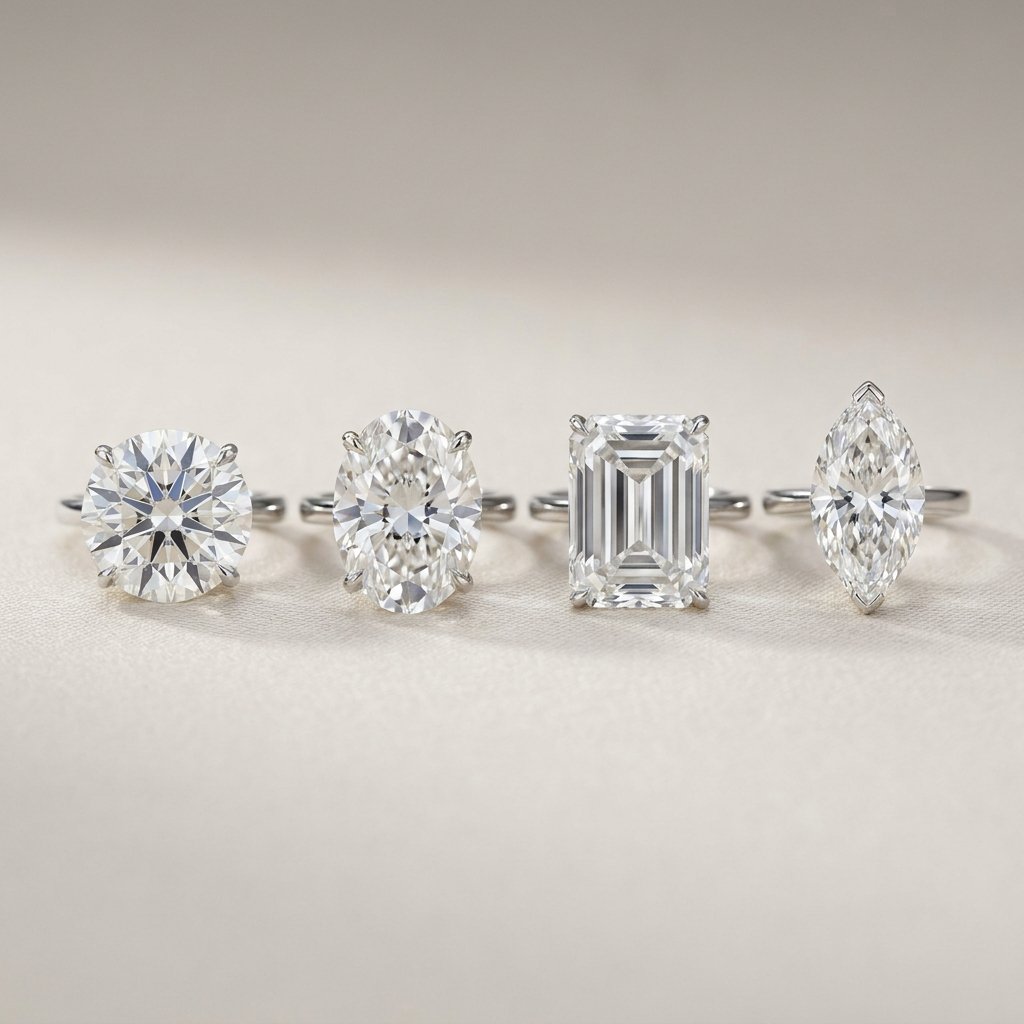
Face-up size is one of the most useful concepts for getting the best visual value from your diamond budget. By choosing an elongated shape, checking millimeter measurements, and avoiding overly deep cuts, you can maximize the visible size of your diamond without upgrading to a higher carat weight. Always compare actual dimensions — not just the number on the scale.
Face-up size is one of the most useful concepts for getting the best visual value from your diamond budget. By choosing an elongated shape, checking millimeter measurements, and avoiding overly deep cuts, you can maximize the visible size of your diamond without upgrading to a higher carat weight. Always compare actual dimensions — not just the number on the scale.
If visible size matters to you, face-up size is more useful than carat weight for comparing diamonds.
Final Buying Note
Face-up size is one of the most useful concepts for getting the best visual value from your diamond budget. By choosing an elongated shape, checking millimeter measurements, and avoiding overly deep cuts, you can maximize the visible size of your diamond without upgrading to a higher carat weight. Always compare actual dimensions — not just the number on the scale.
Compare the length and width in millimeters from the certificate. Ignore carat weight for the size comparison.
Is face-up size more important than carat?
If visible size matters to you, face-up size is more useful than carat weight for comparing diamonds.
Final Buying Note
Face-up size is one of the most useful concepts for getting the best visual value from your diamond budget. By choosing an elongated shape, checking millimeter measurements, and avoiding overly deep cuts, you can maximize the visible size of your diamond without upgrading to a higher carat weight. Always compare actual dimensions — not just the number on the scale.
How do I compare face-up size between two diamonds?
Compare the length and width in millimeters from the certificate. Ignore carat weight for the size comparison.
Is face-up size more important than carat?
If visible size matters to you, face-up size is more useful than carat weight for comparing diamonds.
Final Buying Note
Face-up size is one of the most useful concepts for getting the best visual value from your diamond budget. By choosing an elongated shape, checking millimeter measurements, and avoiding overly deep cuts, you can maximize the visible size of your diamond without upgrading to a higher carat weight. Always compare actual dimensions — not just the number on the scale.
Yes. A shallow-cut diamond faces up larger. A deep-cut diamond faces up smaller at the same carat weight.
How do I compare face-up size between two diamonds?
Compare the length and width in millimeters from the certificate. Ignore carat weight for the size comparison.
Is face-up size more important than carat?
If visible size matters to you, face-up size is more useful than carat weight for comparing diamonds.
Final Buying Note
Face-up size is one of the most useful concepts for getting the best visual value from your diamond budget. By choosing an elongated shape, checking millimeter measurements, and avoiding overly deep cuts, you can maximize the visible size of your diamond without upgrading to a higher carat weight. Always compare actual dimensions — not just the number on the scale.
Yes. A shallow-cut diamond faces up larger. A deep-cut diamond faces up smaller at the same carat weight.
How do I compare face-up size between two diamonds?
Compare the length and width in millimeters from the certificate. Ignore carat weight for the size comparison.
Is face-up size more important than carat?
If visible size matters to you, face-up size is more useful than carat weight for comparing diamonds.
Final Buying Note
Face-up size is one of the most useful concepts for getting the best visual value from your diamond budget. By choosing an elongated shape, checking millimeter measurements, and avoiding overly deep cuts, you can maximize the visible size of your diamond without upgrading to a higher carat weight. Always compare actual dimensions — not just the number on the scale.
Marquise, oval, and pear diamonds offer the best face-up size per carat because of their elongated shape.
Does cut affect face-up size?
Yes. A shallow-cut diamond faces up larger. A deep-cut diamond faces up smaller at the same carat weight.
How do I compare face-up size between two diamonds?
Compare the length and width in millimeters from the certificate. Ignore carat weight for the size comparison.
Is face-up size more important than carat?
If visible size matters to you, face-up size is more useful than carat weight for comparing diamonds.
Final Buying Note
Face-up size is one of the most useful concepts for getting the best visual value from your diamond budget. By choosing an elongated shape, checking millimeter measurements, and avoiding overly deep cuts, you can maximize the visible size of your diamond without upgrading to a higher carat weight. Always compare actual dimensions — not just the number on the scale.
Marquise, oval, and pear diamonds offer the best face-up size per carat because of their elongated shape.
Does cut affect face-up size?
Yes. A shallow-cut diamond faces up larger. A deep-cut diamond faces up smaller at the same carat weight.
How do I compare face-up size between two diamonds?
Compare the length and width in millimeters from the certificate. Ignore carat weight for the size comparison.
Is face-up size more important than carat?
If visible size matters to you, face-up size is more useful than carat weight for comparing diamonds.
Final Buying Note
Face-up size is one of the most useful concepts for getting the best visual value from your diamond budget. By choosing an elongated shape, checking millimeter measurements, and avoiding overly deep cuts, you can maximize the visible size of your diamond without upgrading to a higher carat weight. Always compare actual dimensions — not just the number on the scale.
Face-up size is the visible surface area of a diamond when viewed from above, measured in millimeters.
Which diamond shape has the best face-up size?
Marquise, oval, and pear diamonds offer the best face-up size per carat because of their elongated shape.
Does cut affect face-up size?
Yes. A shallow-cut diamond faces up larger. A deep-cut diamond faces up smaller at the same carat weight.
How do I compare face-up size between two diamonds?
Compare the length and width in millimeters from the certificate. Ignore carat weight for the size comparison.
Is face-up size more important than carat?
If visible size matters to you, face-up size is more useful than carat weight for comparing diamonds.
Final Buying Note
Face-up size is one of the most useful concepts for getting the best visual value from your diamond budget. By choosing an elongated shape, checking millimeter measurements, and avoiding overly deep cuts, you can maximize the visible size of your diamond without upgrading to a higher carat weight. Always compare actual dimensions — not just the number on the scale.
Face-up size is the visible surface area of a diamond when viewed from above, measured in millimeters.
Which diamond shape has the best face-up size?
Marquise, oval, and pear diamonds offer the best face-up size per carat because of their elongated shape.
Does cut affect face-up size?
Yes. A shallow-cut diamond faces up larger. A deep-cut diamond faces up smaller at the same carat weight.
How do I compare face-up size between two diamonds?
Compare the length and width in millimeters from the certificate. Ignore carat weight for the size comparison.
Is face-up size more important than carat?
If visible size matters to you, face-up size is more useful than carat weight for comparing diamonds.
Final Buying Note
Face-up size is one of the most useful concepts for getting the best visual value from your diamond budget. By choosing an elongated shape, checking millimeter measurements, and avoiding overly deep cuts, you can maximize the visible size of your diamond without upgrading to a higher carat weight. Always compare actual dimensions — not just the number on the scale.
Face-up size is the visible surface area of a diamond when viewed from above, measured in millimeters.
Which diamond shape has the best face-up size?
Marquise, oval, and pear diamonds offer the best face-up size per carat because of their elongated shape.
Does cut affect face-up size?
Yes. A shallow-cut diamond faces up larger. A deep-cut diamond faces up smaller at the same carat weight.
How do I compare face-up size between two diamonds?
Compare the length and width in millimeters from the certificate. Ignore carat weight for the size comparison.
Is face-up size more important than carat?
If visible size matters to you, face-up size is more useful than carat weight for comparing diamonds.
Final Buying Note
Face-up size is one of the most useful concepts for getting the best visual value from your diamond budget. By choosing an elongated shape, checking millimeter measurements, and avoiding overly deep cuts, you can maximize the visible size of your diamond without upgrading to a higher carat weight. Always compare actual dimensions — not just the number on the scale.
Face-up size is the visible surface area of a diamond when viewed from above, measured in millimeters.
Which diamond shape has the best face-up size?
Marquise, oval, and pear diamonds offer the best face-up size per carat because of their elongated shape.
Does cut affect face-up size?
Yes. A shallow-cut diamond faces up larger. A deep-cut diamond faces up smaller at the same carat weight.
How do I compare face-up size between two diamonds?
Compare the length and width in millimeters from the certificate. Ignore carat weight for the size comparison.
Is face-up size more important than carat?
If visible size matters to you, face-up size is more useful than carat weight for comparing diamonds.
Final Buying Note
Face-up size is one of the most useful concepts for getting the best visual value from your diamond budget. By choosing an elongated shape, checking millimeter measurements, and avoiding overly deep cuts, you can maximize the visible size of your diamond without upgrading to a higher carat weight. Always compare actual dimensions — not just the number on the scale.
Face-up size is the visible surface area of a diamond when viewed from above, measured in millimeters.
Which diamond shape has the best face-up size?
Marquise, oval, and pear diamonds offer the best face-up size per carat because of their elongated shape.
Does cut affect face-up size?
Yes. A shallow-cut diamond faces up larger. A deep-cut diamond faces up smaller at the same carat weight.
How do I compare face-up size between two diamonds?
Compare the length and width in millimeters from the certificate. Ignore carat weight for the size comparison.
Is face-up size more important than carat?
If visible size matters to you, face-up size is more useful than carat weight for comparing diamonds.
Final Buying Note
Face-up size is one of the most useful concepts for getting the best visual value from your diamond budget. By choosing an elongated shape, checking millimeter measurements, and avoiding overly deep cuts, you can maximize the visible size of your diamond without upgrading to a higher carat weight. Always compare actual dimensions — not just the number on the scale.
Face-up size is the visible surface area of a diamond when viewed from above, measured in millimeters.
Which diamond shape has the best face-up size?
Marquise, oval, and pear diamonds offer the best face-up size per carat because of their elongated shape.
Does cut affect face-up size?
Yes. A shallow-cut diamond faces up larger. A deep-cut diamond faces up smaller at the same carat weight.
How do I compare face-up size between two diamonds?
Compare the length and width in millimeters from the certificate. Ignore carat weight for the size comparison.
Is face-up size more important than carat?
If visible size matters to you, face-up size is more useful than carat weight for comparing diamonds.
Final Buying Note
Face-up size is one of the most useful concepts for getting the best visual value from your diamond budget. By choosing an elongated shape, checking millimeter measurements, and avoiding overly deep cuts, you can maximize the visible size of your diamond without upgrading to a higher carat weight. Always compare actual dimensions — not just the number on the scale.
Face-up size is the visible surface area of a diamond when viewed from above, measured in millimeters.
Which diamond shape has the best face-up size?
Marquise, oval, and pear diamonds offer the best face-up size per carat because of their elongated shape.
Does cut affect face-up size?
Yes. A shallow-cut diamond faces up larger. A deep-cut diamond faces up smaller at the same carat weight.
How do I compare face-up size between two diamonds?
Compare the length and width in millimeters from the certificate. Ignore carat weight for the size comparison.
Is face-up size more important than carat?
If visible size matters to you, face-up size is more useful than carat weight for comparing diamonds.
Final Buying Note
Face-up size is one of the most useful concepts for getting the best visual value from your diamond budget. By choosing an elongated shape, checking millimeter measurements, and avoiding overly deep cuts, you can maximize the visible size of your diamond without upgrading to a higher carat weight. Always compare actual dimensions — not just the number on the scale.
Face-up size is the visible surface area of a diamond when viewed from above, measured in millimeters.
Which diamond shape has the best face-up size?
Marquise, oval, and pear diamonds offer the best face-up size per carat because of their elongated shape.
Does cut affect face-up size?
Yes. A shallow-cut diamond faces up larger. A deep-cut diamond faces up smaller at the same carat weight.
How do I compare face-up size between two diamonds?
Compare the length and width in millimeters from the certificate. Ignore carat weight for the size comparison.
Is face-up size more important than carat?
If visible size matters to you, face-up size is more useful than carat weight for comparing diamonds.
Final Buying Note
Face-up size is one of the most useful concepts for getting the best visual value from your diamond budget. By choosing an elongated shape, checking millimeter measurements, and avoiding overly deep cuts, you can maximize the visible size of your diamond without upgrading to a higher carat weight. Always compare actual dimensions — not just the number on the scale.
Face-up size is the visible surface area of a diamond when viewed from above, measured in millimeters.
Which diamond shape has the best face-up size?
Marquise, oval, and pear diamonds offer the best face-up size per carat because of their elongated shape.
Does cut affect face-up size?
Yes. A shallow-cut diamond faces up larger. A deep-cut diamond faces up smaller at the same carat weight.
How do I compare face-up size between two diamonds?
Compare the length and width in millimeters from the certificate. Ignore carat weight for the size comparison.
Is face-up size more important than carat?
If visible size matters to you, face-up size is more useful than carat weight for comparing diamonds.
Final Buying Note
Face-up size is one of the most useful concepts for getting the best visual value from your diamond budget. By choosing an elongated shape, checking millimeter measurements, and avoiding overly deep cuts, you can maximize the visible size of your diamond without upgrading to a higher carat weight. Always compare actual dimensions — not just the number on the scale.
Face-up size is the visible surface area of a diamond when viewed from above, measured in millimeters.
Which diamond shape has the best face-up size?
Marquise, oval, and pear diamonds offer the best face-up size per carat because of their elongated shape.
Does cut affect face-up size?
Yes. A shallow-cut diamond faces up larger. A deep-cut diamond faces up smaller at the same carat weight.
How do I compare face-up size between two diamonds?
Compare the length and width in millimeters from the certificate. Ignore carat weight for the size comparison.
Is face-up size more important than carat?
If visible size matters to you, face-up size is more useful than carat weight for comparing diamonds.
Final Buying Note
Face-up size is one of the most useful concepts for getting the best visual value from your diamond budget. By choosing an elongated shape, checking millimeter measurements, and avoiding overly deep cuts, you can maximize the visible size of your diamond without upgrading to a higher carat weight. Always compare actual dimensions — not just the number on the scale.
A diamond with a shallow cut spreads its weight across a wider area, creating a larger face-up size. A diamond with a deep cut concentrates weight downward, making it appear smaller from above. This is why two 1 carat diamonds can look different in size.
Face-up size depends on cut depth and shape. A shallow diamond faces up larger than a deep diamond of the same carat.
Which Shapes Offer the Best Face-Up Size?
Shape
Face-Up Size per Carat
Why
Marquise
Excellent
Extreme elongation creates maximum finger coverage
Face-up size is the visible surface area of a diamond when viewed from above, measured in millimeters.
Which diamond shape has the best face-up size?
Marquise, oval, and pear diamonds offer the best face-up size per carat because of their elongated shape.
Does cut affect face-up size?
Yes. A shallow-cut diamond faces up larger. A deep-cut diamond faces up smaller at the same carat weight.
How do I compare face-up size between two diamonds?
Compare the length and width in millimeters from the certificate. Ignore carat weight for the size comparison.
Is face-up size more important than carat?
If visible size matters to you, face-up size is more useful than carat weight for comparing diamonds.
Final Buying Note
Face-up size is one of the most useful concepts for getting the best visual value from your diamond budget. By choosing an elongated shape, checking millimeter measurements, and avoiding overly deep cuts, you can maximize the visible size of your diamond without upgrading to a higher carat weight. Always compare actual dimensions — not just the number on the scale.
Face-up size refers to the visible surface area of a diamond when you look at it directly from above. It is measured by the diamond’s width and length in millimeters. Carat weight tells you how much the diamond weighs. Face-up size tells you how large it actually looks.
A diamond with a shallow cut spreads its weight across a wider area, creating a larger face-up size. A diamond with a deep cut concentrates weight downward, making it appear smaller from above. This is why two 1 carat diamonds can look different in size.
Face-up size depends on cut depth and shape. A shallow diamond faces up larger than a deep diamond of the same carat.
Which Shapes Offer the Best Face-Up Size?
Shape
Face-Up Size per Carat
Why
Marquise
Excellent
Extreme elongation creates maximum finger coverage
Face-up size is the visible surface area of a diamond when viewed from above, measured in millimeters.
Which diamond shape has the best face-up size?
Marquise, oval, and pear diamonds offer the best face-up size per carat because of their elongated shape.
Does cut affect face-up size?
Yes. A shallow-cut diamond faces up larger. A deep-cut diamond faces up smaller at the same carat weight.
How do I compare face-up size between two diamonds?
Compare the length and width in millimeters from the certificate. Ignore carat weight for the size comparison.
Is face-up size more important than carat?
If visible size matters to you, face-up size is more useful than carat weight for comparing diamonds.
Final Buying Note
Face-up size is one of the most useful concepts for getting the best visual value from your diamond budget. By choosing an elongated shape, checking millimeter measurements, and avoiding overly deep cuts, you can maximize the visible size of your diamond without upgrading to a higher carat weight. Always compare actual dimensions — not just the number on the scale.
Face-up size refers to the visible surface area of a diamond when you look at it directly from above. It is measured by the diamond’s width and length in millimeters. Carat weight tells you how much the diamond weighs. Face-up size tells you how large it actually looks.
A diamond with a shallow cut spreads its weight across a wider area, creating a larger face-up size. A diamond with a deep cut concentrates weight downward, making it appear smaller from above. This is why two 1 carat diamonds can look different in size.
Face-up size depends on cut depth and shape. A shallow diamond faces up larger than a deep diamond of the same carat.
Which Shapes Offer the Best Face-Up Size?
Shape
Face-Up Size per Carat
Why
Marquise
Excellent
Extreme elongation creates maximum finger coverage
Face-up size is the visible surface area of a diamond when viewed from above, measured in millimeters.
Which diamond shape has the best face-up size?
Marquise, oval, and pear diamonds offer the best face-up size per carat because of their elongated shape.
Does cut affect face-up size?
Yes. A shallow-cut diamond faces up larger. A deep-cut diamond faces up smaller at the same carat weight.
How do I compare face-up size between two diamonds?
Compare the length and width in millimeters from the certificate. Ignore carat weight for the size comparison.
Is face-up size more important than carat?
If visible size matters to you, face-up size is more useful than carat weight for comparing diamonds.
Final Buying Note
Face-up size is one of the most useful concepts for getting the best visual value from your diamond budget. By choosing an elongated shape, checking millimeter measurements, and avoiding overly deep cuts, you can maximize the visible size of your diamond without upgrading to a higher carat weight. Always compare actual dimensions — not just the number on the scale.
Face-up size is the visible surface area of a diamond when viewed from above. It depends on the diamond’s shape, cut proportions, and depth — not just carat weight. Two diamonds of the same carat can have different face-up sizes. Elongated shapes like oval and marquise offer more face-up size per carat than round or cushion shapes.
Face-up size varies by shape and cut. Elongated diamonds usually offer more visible surface area per carat.
What Is Face-Up Size?
Face-up size refers to the visible surface area of a diamond when you look at it directly from above. It is measured by the diamond’s width and length in millimeters. Carat weight tells you how much the diamond weighs. Face-up size tells you how large it actually looks.
A diamond with a shallow cut spreads its weight across a wider area, creating a larger face-up size. A diamond with a deep cut concentrates weight downward, making it appear smaller from above. This is why two 1 carat diamonds can look different in size.
Face-up size depends on cut depth and shape. A shallow diamond faces up larger than a deep diamond of the same carat.
Which Shapes Offer the Best Face-Up Size?
Shape
Face-Up Size per Carat
Why
Marquise
Excellent
Extreme elongation creates maximum finger coverage
Face-up size is the visible surface area of a diamond when viewed from above, measured in millimeters.
Which diamond shape has the best face-up size?
Marquise, oval, and pear diamonds offer the best face-up size per carat because of their elongated shape.
Does cut affect face-up size?
Yes. A shallow-cut diamond faces up larger. A deep-cut diamond faces up smaller at the same carat weight.
How do I compare face-up size between two diamonds?
Compare the length and width in millimeters from the certificate. Ignore carat weight for the size comparison.
Is face-up size more important than carat?
If visible size matters to you, face-up size is more useful than carat weight for comparing diamonds.
Final Buying Note
Face-up size is one of the most useful concepts for getting the best visual value from your diamond budget. By choosing an elongated shape, checking millimeter measurements, and avoiding overly deep cuts, you can maximize the visible size of your diamond without upgrading to a higher carat weight. Always compare actual dimensions — not just the number on the scale.
This guide explains what face-up size is, why it matters, and how to use it when comparing diamonds.
Quick Answer:
Face-up size is the visible surface area of a diamond when viewed from above. It depends on the diamond’s shape, cut proportions, and depth — not just carat weight. Two diamonds of the same carat can have different face-up sizes. Elongated shapes like oval and marquise offer more face-up size per carat than round or cushion shapes.
Face-up size varies by shape and cut. Elongated diamonds usually offer more visible surface area per carat.
What Is Face-Up Size?
Face-up size refers to the visible surface area of a diamond when you look at it directly from above. It is measured by the diamond’s width and length in millimeters. Carat weight tells you how much the diamond weighs. Face-up size tells you how large it actually looks.
A diamond with a shallow cut spreads its weight across a wider area, creating a larger face-up size. A diamond with a deep cut concentrates weight downward, making it appear smaller from above. This is why two 1 carat diamonds can look different in size.
Face-up size depends on cut depth and shape. A shallow diamond faces up larger than a deep diamond of the same carat.
Which Shapes Offer the Best Face-Up Size?
Shape
Face-Up Size per Carat
Why
Marquise
Excellent
Extreme elongation creates maximum finger coverage
Face-up size is the visible surface area of a diamond when viewed from above, measured in millimeters.
Which diamond shape has the best face-up size?
Marquise, oval, and pear diamonds offer the best face-up size per carat because of their elongated shape.
Does cut affect face-up size?
Yes. A shallow-cut diamond faces up larger. A deep-cut diamond faces up smaller at the same carat weight.
How do I compare face-up size between two diamonds?
Compare the length and width in millimeters from the certificate. Ignore carat weight for the size comparison.
Is face-up size more important than carat?
If visible size matters to you, face-up size is more useful than carat weight for comparing diamonds.
Final Buying Note
Face-up size is one of the most useful concepts for getting the best visual value from your diamond budget. By choosing an elongated shape, checking millimeter measurements, and avoiding overly deep cuts, you can maximize the visible size of your diamond without upgrading to a higher carat weight. Always compare actual dimensions — not just the number on the scale.
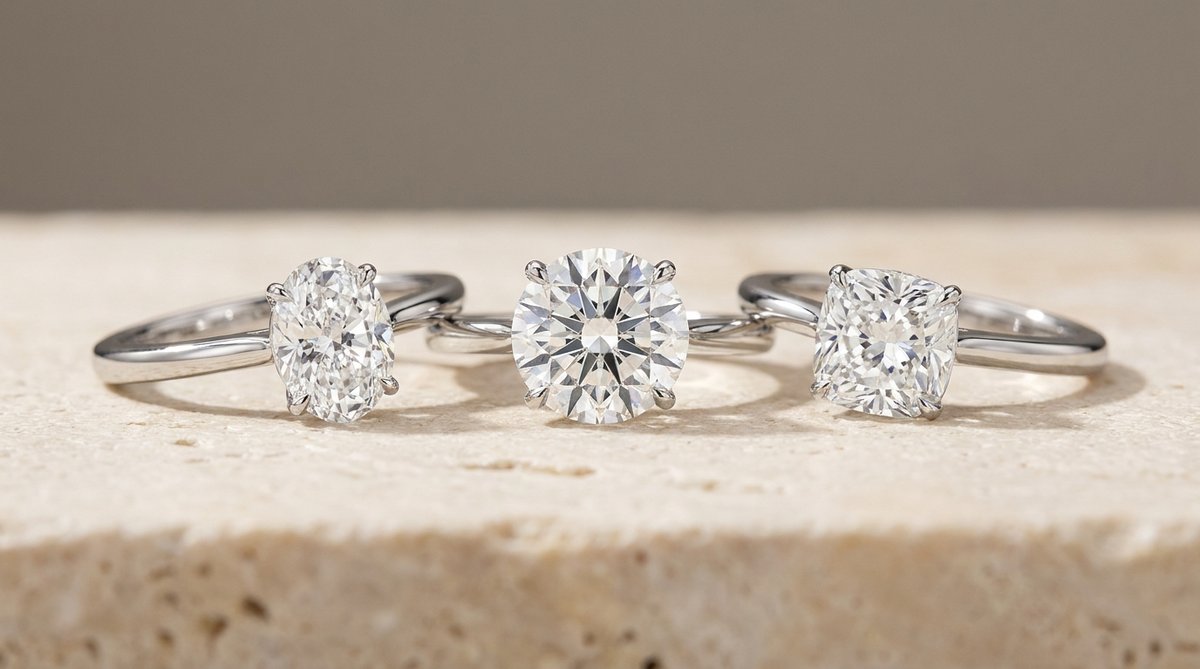
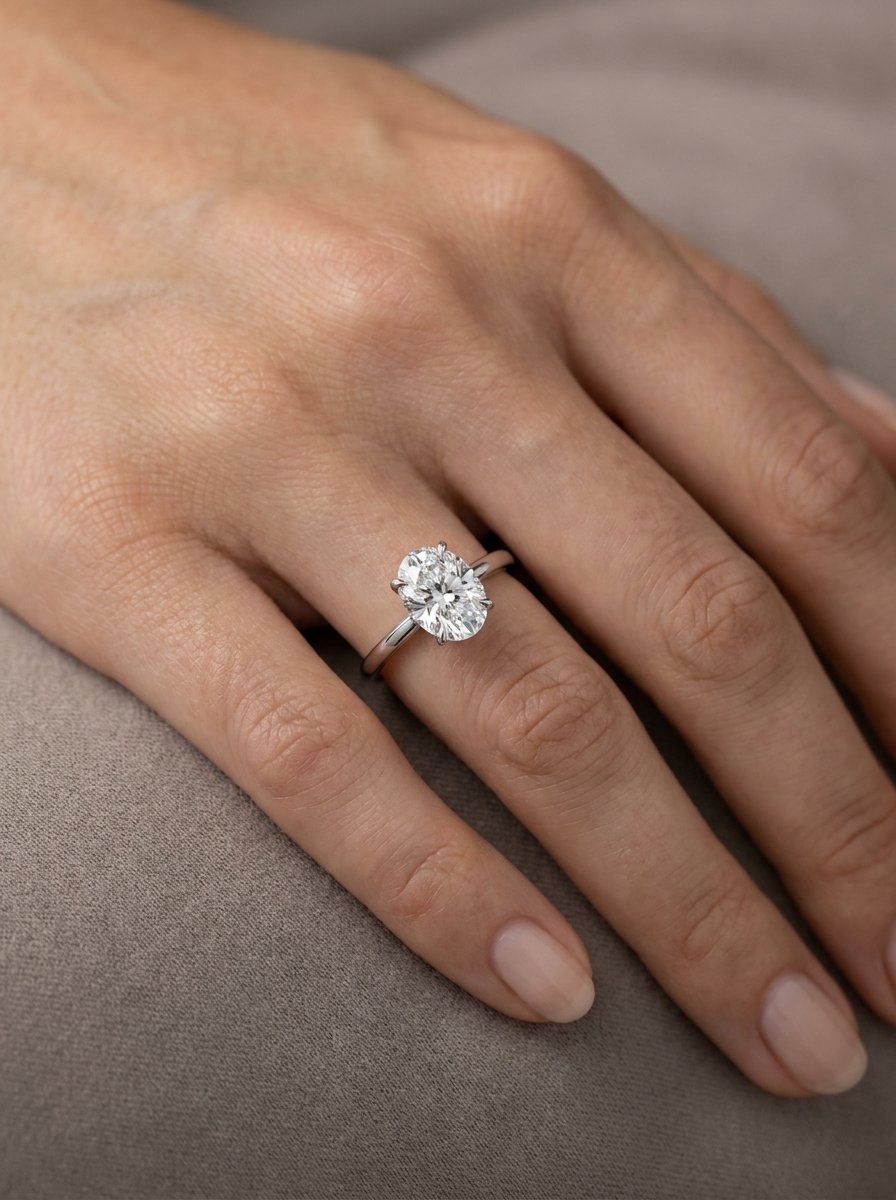
Two diamonds weigh exactly the same, but one looks noticeably larger on the finger. The difference is face-up size — the visible surface area when you look at the diamond from above. Understanding face-up size is the key to getting the most visual impact for your budget.
This guide explains what face-up size is, why it matters, and how to use it when comparing diamonds.
Quick Answer:
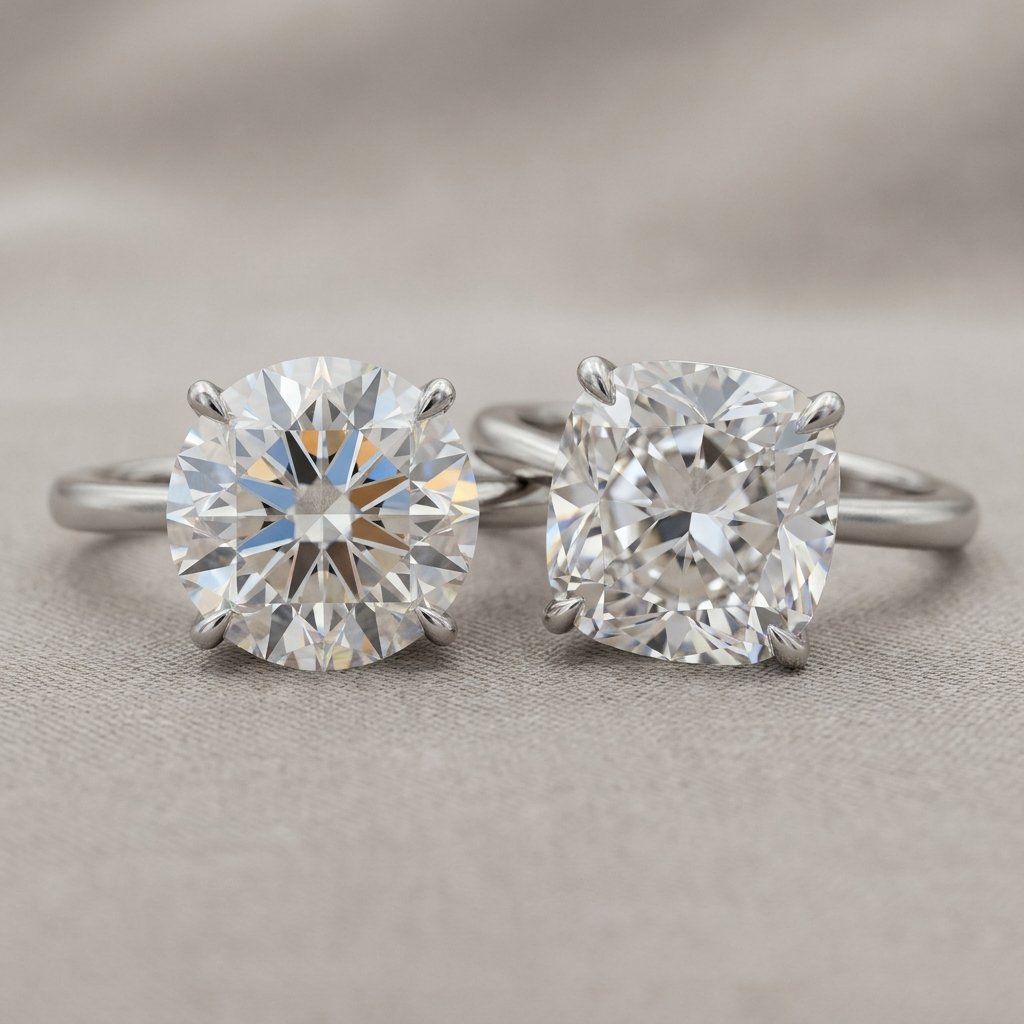
Face-up size is the visible surface area of a diamond when viewed from above. It depends on the diamond’s shape, cut proportions, and depth — not just carat weight. Two diamonds of the same carat can have different face-up sizes. Elongated shapes like oval and marquise offer more face-up size per carat than round or cushion shapes.
Face-up size varies by shape and cut. Elongated diamonds usually offer more visible surface area per carat.
What Is Face-Up Size?
Face-up size refers to the visible surface area of a diamond when you look at it directly from above. It is measured by the diamond’s width and length in millimeters. Carat weight tells you how much the diamond weighs. Face-up size tells you how large it actually looks.
A diamond with a shallow cut spreads its weight across a wider area, creating a larger face-up size. A diamond with a deep cut concentrates weight downward, making it appear smaller from above. This is why two 1 carat diamonds can look different in size.
Face-up size depends on cut depth and shape. A shallow diamond faces up larger than a deep diamond of the same carat.
Which Shapes Offer the Best Face-Up Size?
Shape
Face-Up Size per Carat
Why
Marquise
Excellent
Extreme elongation creates maximum finger coverage
Face-up size is the visible surface area of a diamond when viewed from above, measured in millimeters.
Which diamond shape has the best face-up size?
Marquise, oval, and pear diamonds offer the best face-up size per carat because of their elongated shape.
Does cut affect face-up size?
Yes. A shallow-cut diamond faces up larger. A deep-cut diamond faces up smaller at the same carat weight.
How do I compare face-up size between two diamonds?
Compare the length and width in millimeters from the certificate. Ignore carat weight for the size comparison.
Is face-up size more important than carat?
If visible size matters to you, face-up size is more useful than carat weight for comparing diamonds.
Final Buying Note
Face-up size is one of the most useful concepts for getting the best visual value from your diamond budget. By choosing an elongated shape, checking millimeter measurements, and avoiding overly deep cuts, you can maximize the visible size of your diamond without upgrading to a higher carat weight. Always compare actual dimensions — not just the number on the scale.
Two diamonds weigh exactly the same, but one looks noticeably larger on the finger. The difference is face-up size — the visible surface area when you look at the diamond from above. Understanding face-up size is the key to getting the most visual impact for your budget.
This guide explains what face-up size is, why it matters, and how to use it when comparing diamonds.
Quick Answer:
Face-up size is the visible surface area of a diamond when viewed from above. It depends on the diamond’s shape, cut proportions, and depth — not just carat weight. Two diamonds of the same carat can have different face-up sizes. Elongated shapes like oval and marquise offer more face-up size per carat than round or cushion shapes.
Face-up size varies by shape and cut. Elongated diamonds usually offer more visible surface area per carat.
What Is Face-Up Size?
Face-up size refers to the visible surface area of a diamond when you look at it directly from above. It is measured by the diamond’s width and length in millimeters. Carat weight tells you how much the diamond weighs. Face-up size tells you how large it actually looks.
A diamond with a shallow cut spreads its weight across a wider area, creating a larger face-up size. A diamond with a deep cut concentrates weight downward, making it appear smaller from above. This is why two 1 carat diamonds can look different in size.
Face-up size depends on cut depth and shape. A shallow diamond faces up larger than a deep diamond of the same carat.
Which Shapes Offer the Best Face-Up Size?
Shape
Face-Up Size per Carat
Why
Marquise
Excellent
Extreme elongation creates maximum finger coverage
Face-up size is the visible surface area of a diamond when viewed from above, measured in millimeters.
Which diamond shape has the best face-up size?
Marquise, oval, and pear diamonds offer the best face-up size per carat because of their elongated shape.
Does cut affect face-up size?
Yes. A shallow-cut diamond faces up larger. A deep-cut diamond faces up smaller at the same carat weight.
How do I compare face-up size between two diamonds?
Compare the length and width in millimeters from the certificate. Ignore carat weight for the size comparison.
Is face-up size more important than carat?
If visible size matters to you, face-up size is more useful than carat weight for comparing diamonds.
Final Buying Note
Face-up size is one of the most useful concepts for getting the best visual value from your diamond budget. By choosing an elongated shape, checking millimeter measurements, and avoiding overly deep cuts, you can maximize the visible size of your diamond without upgrading to a higher carat weight. Always compare actual dimensions — not just the number on the scale.
Two diamonds weigh exactly the same, but one looks noticeably larger on the finger. The difference is face-up size — the visible surface area when you look at the diamond from above. Understanding face-up size is the key to getting the most visual impact for your budget.
This guide explains what face-up size is, why it matters, and how to use it when comparing diamonds.
Quick Answer:
Face-up size is the visible surface area of a diamond when viewed from above. It depends on the diamond’s shape, cut proportions, and depth — not just carat weight. Two diamonds of the same carat can have different face-up sizes. Elongated shapes like oval and marquise offer more face-up size per carat than round or cushion shapes.
Face-up size varies by shape and cut. Elongated diamonds usually offer more visible surface area per carat.
What Is Face-Up Size?
Face-up size refers to the visible surface area of a diamond when you look at it directly from above. It is measured by the diamond’s width and length in millimeters. Carat weight tells you how much the diamond weighs. Face-up size tells you how large it actually looks.
A diamond with a shallow cut spreads its weight across a wider area, creating a larger face-up size. A diamond with a deep cut concentrates weight downward, making it appear smaller from above. This is why two 1 carat diamonds can look different in size.
Face-up size depends on cut depth and shape. A shallow diamond faces up larger than a deep diamond of the same carat.
Which Shapes Offer the Best Face-Up Size?
Shape
Face-Up Size per Carat
Why
Marquise
Excellent
Extreme elongation creates maximum finger coverage
Face-up size is the visible surface area of a diamond when viewed from above, measured in millimeters.
Which diamond shape has the best face-up size?
Marquise, oval, and pear diamonds offer the best face-up size per carat because of their elongated shape.
Does cut affect face-up size?
Yes. A shallow-cut diamond faces up larger. A deep-cut diamond faces up smaller at the same carat weight.
How do I compare face-up size between two diamonds?
Compare the length and width in millimeters from the certificate. Ignore carat weight for the size comparison.
Is face-up size more important than carat?
If visible size matters to you, face-up size is more useful than carat weight for comparing diamonds.
Final Buying Note
Face-up size is one of the most useful concepts for getting the best visual value from your diamond budget. By choosing an elongated shape, checking millimeter measurements, and avoiding overly deep cuts, you can maximize the visible size of your diamond without upgrading to a higher carat weight. Always compare actual dimensions — not just the number on the scale.