
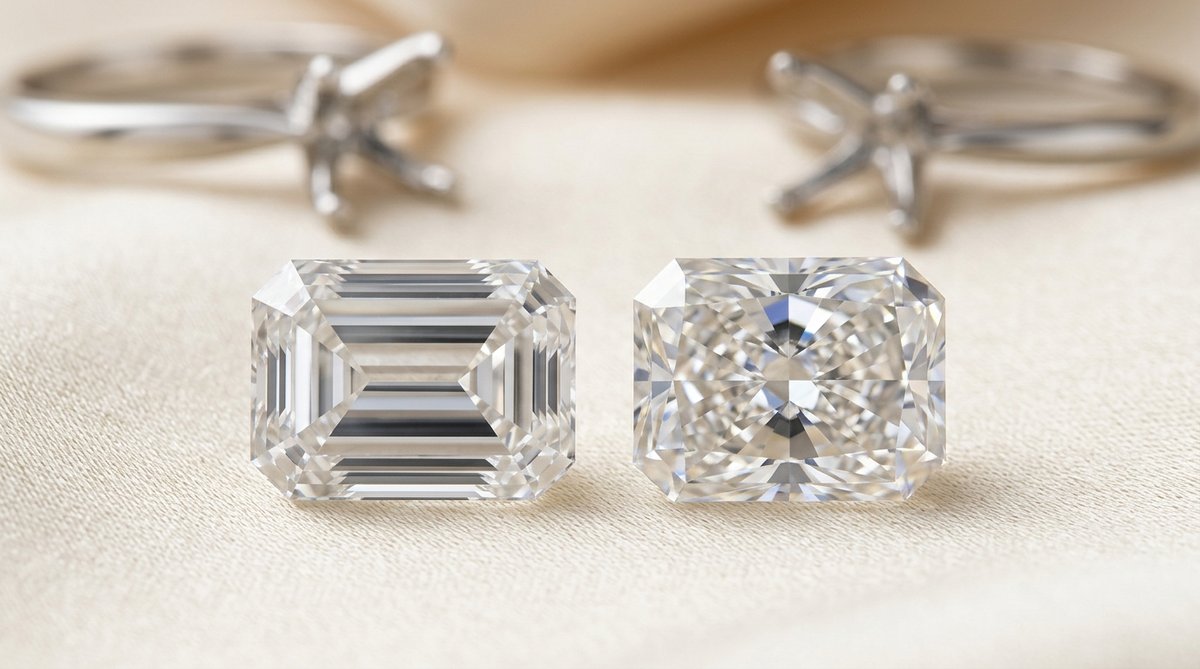
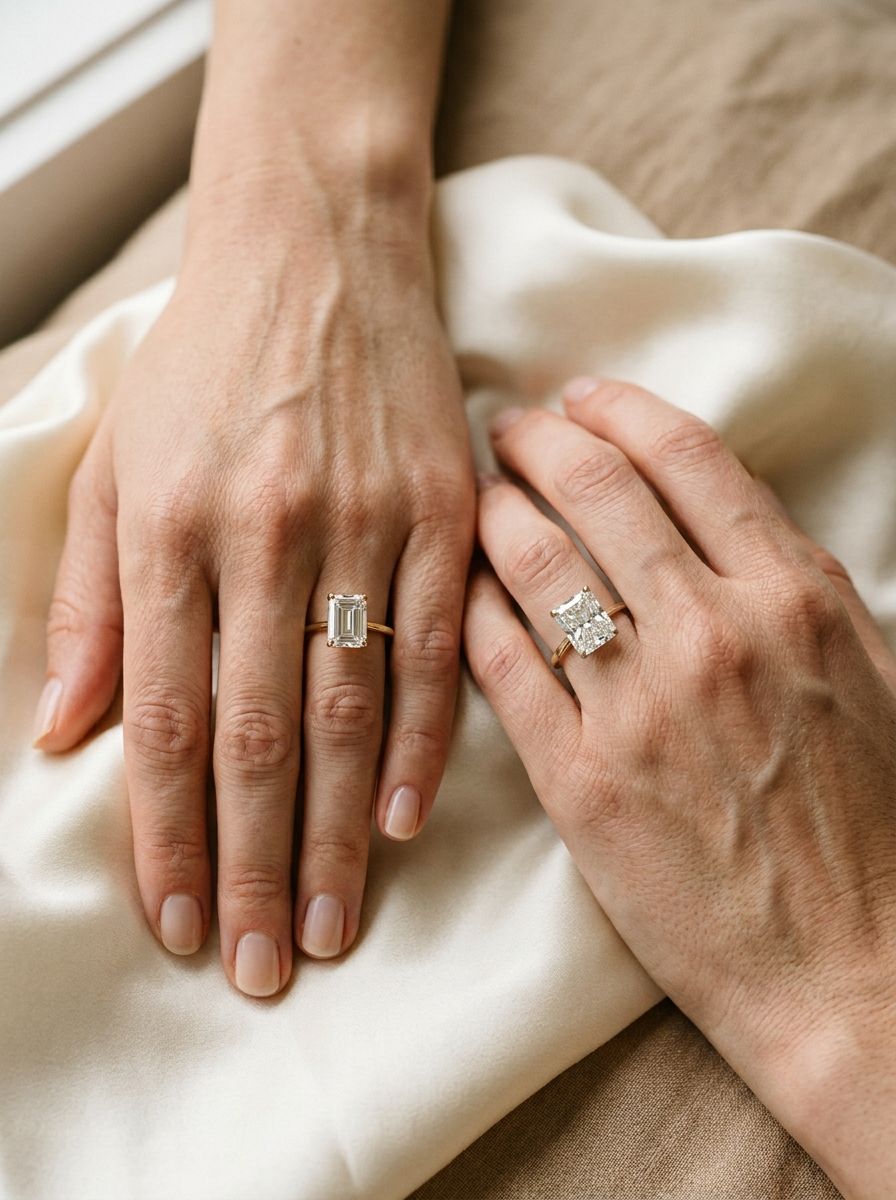
Two rectangular diamonds. One is calm, clear, and architectural. The other is bright, lively, and full of fire. They sit next to each other in every jewelry display case, and buyers who walk in thinking they want a rectangle often leave confused about which one actually suits them.
Emerald cut and radiant cut diamonds look similar at a glance. Both have trimmed corners and an elongated outline. But the way they behave — how they sparkle, how they hide flaws, how they feel on the hand — is almost opposite. The choice is not about which is better. It is about what matters more to you.
This guide compares them side by side so you can decide with confidence.
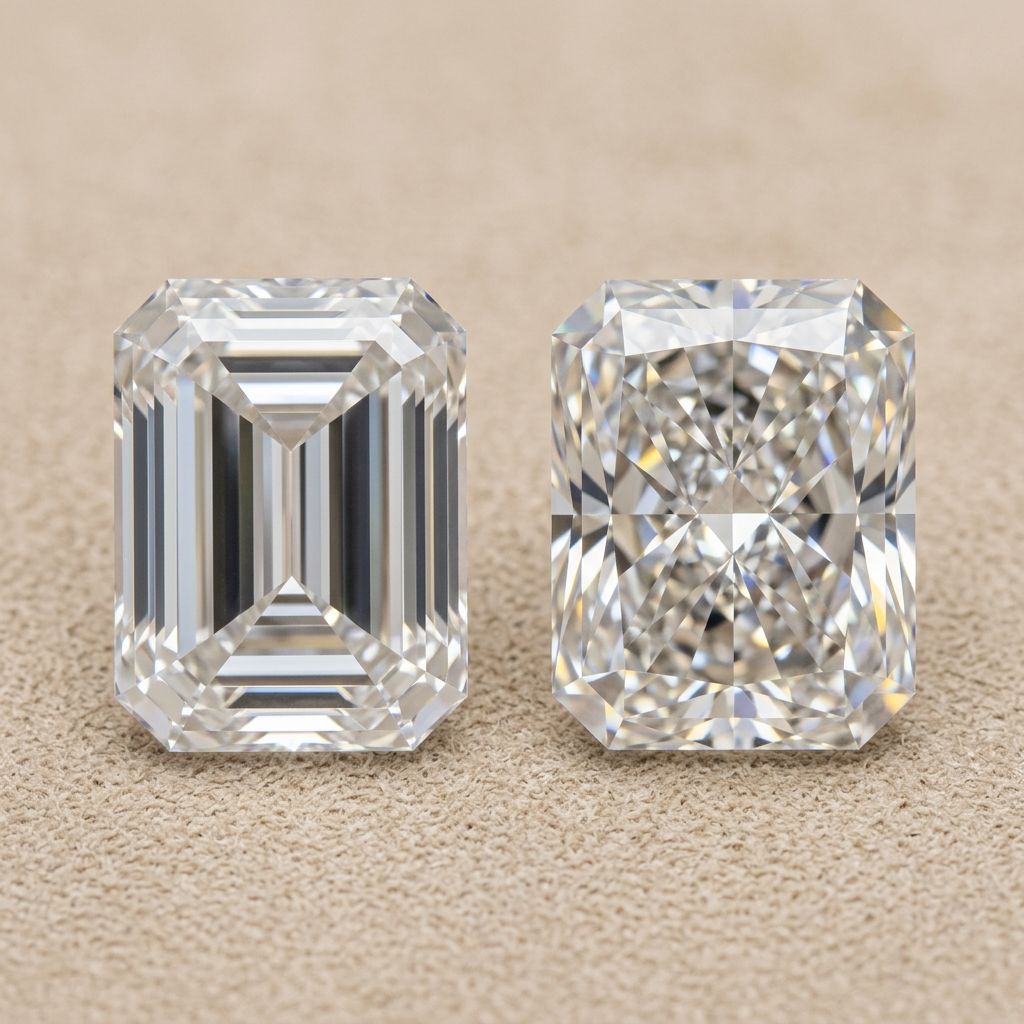
An emerald cut is a step-cut diamond with long, mirror-like facets and a clean, elegant look. A radiant cut is a brilliant-style diamond with more facets and stronger sparkle. Emerald is best for buyers who want a refined, architectural style. Radiant is best for buyers who want a rectangular diamond with maximum brilliance.
What Is an Emerald Cut Diamond?
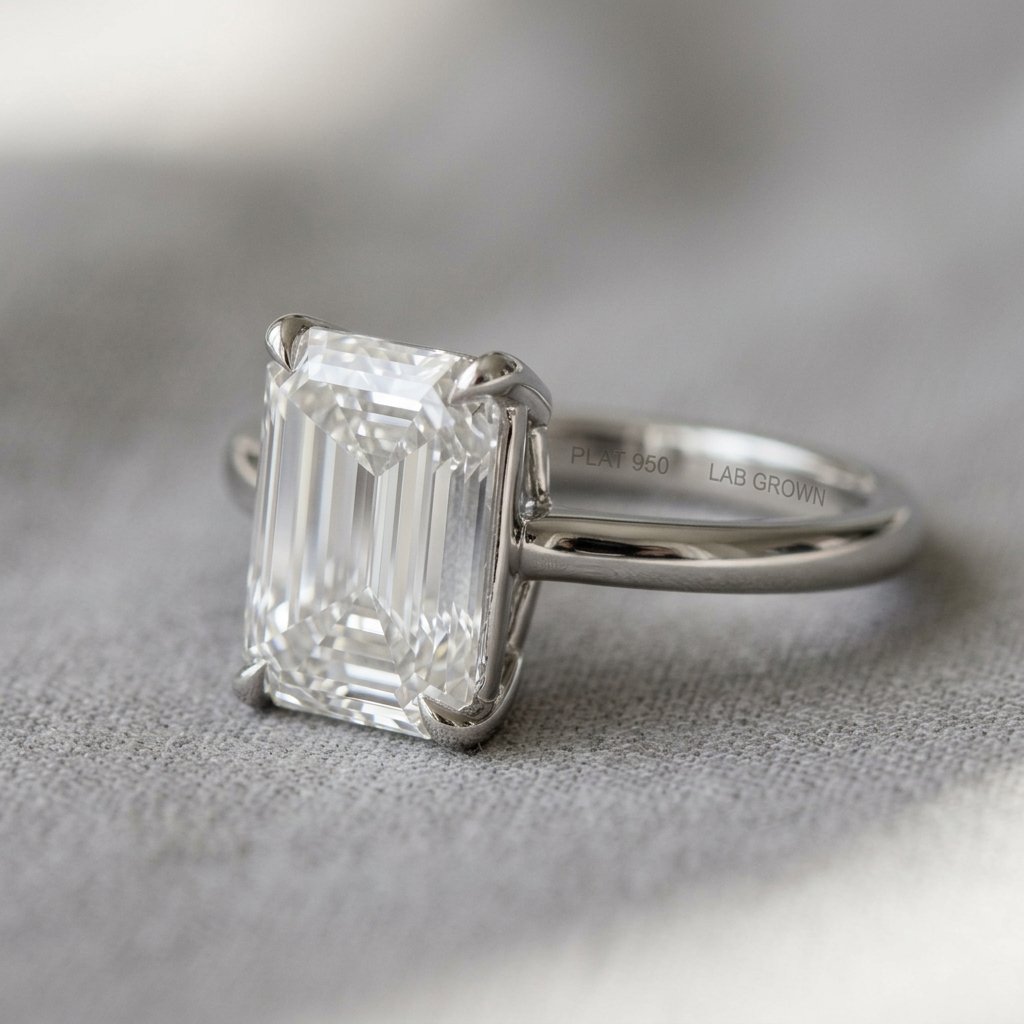
An emerald cut diamond is defined by its step-cut faceting. Instead of the triangular and kite-shaped facets of a brilliant cut, the emerald cut uses long, rectangular facets arranged in parallel rows. The result is a diamond that looks like a hall of mirrors — light bounces off broad, open planes rather than scattering into tiny flashes.
The silhouette is rectangular with cropped corners. The length-to-width ratio typically falls between 1.30 and 1.50, giving it a clean, elongated profile. Because the facets are open and transparent, emerald cuts tend to show clarity characteristics and body color more readily than brilliant cuts. This means buyers should pay close attention to clarity and color grades when choosing an emerald cut lab grown diamond.
What Is a Radiant Cut Diamond?
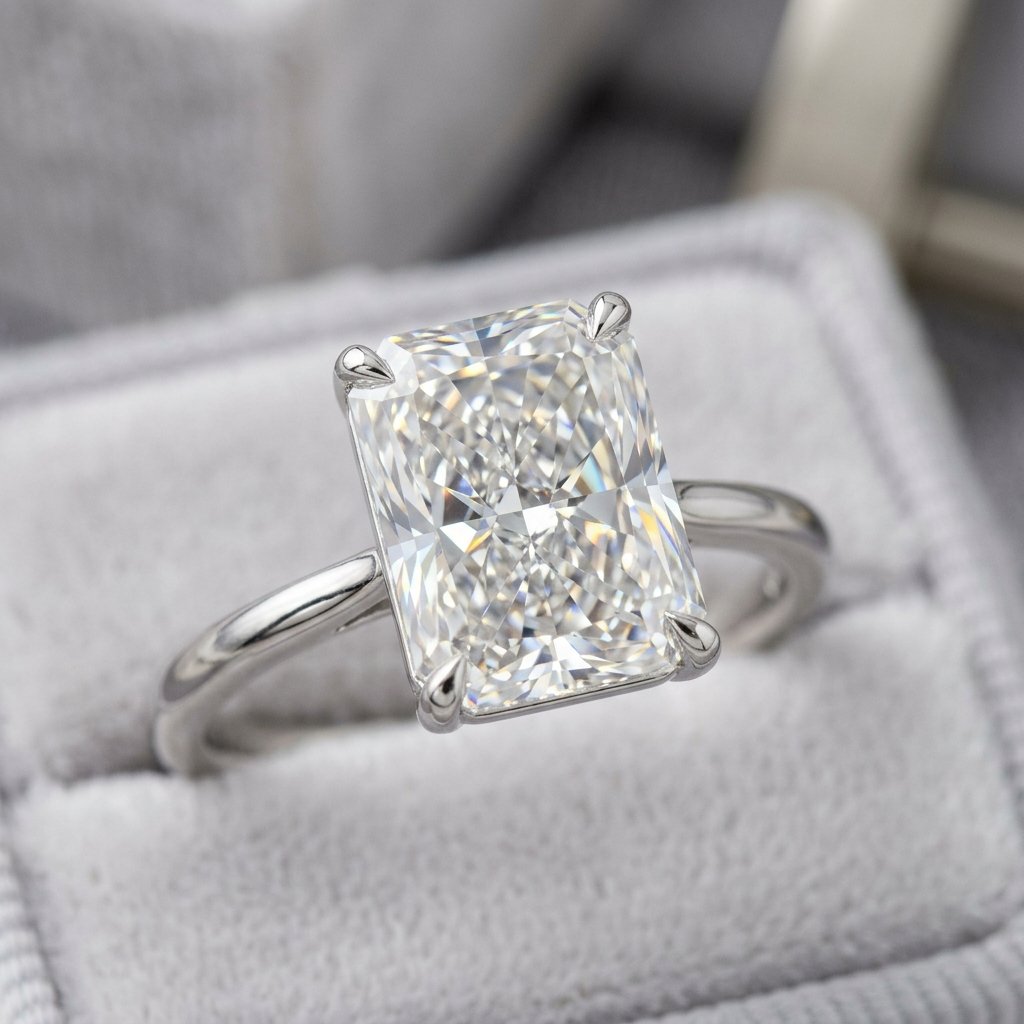
A radiant cut diamond is a rectangular or square brilliant cut with trimmed corners. Unlike the emerald cut’s calm facets, the radiant cut uses a mixed faceting pattern — typically a brilliant-style crown with a modified brilliant or step-cut pavilion. This creates far more sparkle, with dozens of small flashes rather than broad panes of light.
The radiant cut was created in the 1970s specifically to combine the rectangular outline of the emerald cut with the brilliance of a round diamond. It succeeded. A well-cut radiant diamond has more sparkle than any other rectangular diamond shape. The busier facet pattern also makes the radiant cut more forgiving of inclusions and color — small imperfections are harder to spot through the scattering of light.
Emerald Cut vs Radiant Cut: Main Differences
| Aspect | Emerald Cut | Radiant Cut |
|---|---|---|
| Facet style | Step cut — long, parallel rows | Brilliant cut — many small facets |
| Sparkle | Broad, calm flashes | Bright, lively, scattered |
| Clarity visibility | Shows inclusions more easily | Hides inclusions well |
| Color visibility | Shows body color more | Hides warm tints |
| Style mood | Clean, architectural, vintage | Bright, modern, lively |
| Best settings | Solitaire, bezel, three-stone with baguettes | Solitaire, hidden halo, halo, pavé |
| Maintenance | Easy to clean | More crevices |
| Best buyer | Loves clean lines and refined elegance | Wants sparkle in a rectangular shape |
Which One Looks Bigger?
At the same carat weight, face-up size depends on the specific measurements of each stone rather than the shape alone. Both emerald and radiant cuts can have shallow or deep proportions that affect how large they appear. Generally, emerald cuts with a longer ratio may appear to spread more across the finger, while radiant cuts with their busier facet pattern may appear more filled with light. Always compare the actual length and width measurements, not just the carat weight. Understanding diamond measurements will help you evaluate face-up size accurately.
Which One Hides Inclusions Better?
The radiant cut wins this category by a wide margin. Its brilliant faceting scatters light in many directions, which makes small inclusions difficult to spot. The emerald cut’s open step facets act like windows — anything inside the diamond is visible, including inclusions that would be invisible in a brilliant cut. Buyers choosing an emerald cut should prioritize clarity (VS2 or higher) and carefully review IGI certificate details. Our IGI certificate guide explains what to check.
Best Settings for Emerald and Radiant Cuts
Emerald cuts pair beautifully with clean, architectural settings that match their refined character. Solitaire, bezel, and three-stone settings with tapered baguette side stones are classic choices. Cathedral settings also complement the elongated silhouette.
Radiant cuts are more versatile. They work well with solitaire, hidden halo, halo, pavé, and three-stone settings. The extra sparkle from a diamond-set band complements the radiant cut’s bright personality without overwhelming it.
Browse our lab grown diamond ring styles or request a custom design for either shape.
Buyer Decision Box
Choose an emerald cut if: you love clean, architectural elegance. You prefer broad, calm flashes over scattered sparkle. You are willing to select higher clarity. You appreciate Art Deco and vintage-inspired style.
Choose a radiant cut if: you want a rectangular diamond with strong brilliance. You prefer a bright, lively look. You want a shape that hides inclusions well. You like modern, versatile settings.
Common Mistakes
- Choosing an emerald cut with too low clarity — inclusions are visible through the open facets.
- Assuming radiant cut is the same as princess cut — they have different shapes and faceting.
- Choosing only by carat weight without checking length and width measurements.
- Ignoring the length-to-width ratio, which affects how the diamond looks on the finger.
- Choosing a setting that does not fit the specific shape — emerald cuts need protective corners.
Myth vs Fact
| Myth | Fact |
|---|---|
| Emerald cuts have no sparkle. | Emerald cuts have a different, quieter sparkle — broad flashes rather than scattered brilliance. |
| Radiant cuts are just square emeralds. | Radiant cuts use brilliant faceting and are much sparklier than emerald cuts. |
| Emerald cuts always look bigger than radiants. | Face-up size depends on specific measurements, not just the shape name. |
| Radiant cuts hide all imperfections. | Radiant cuts hide many inclusions but large or dark ones may still be visible. |
FAQ
Which sparkles more, emerald or radiant cut?
Radiant cut diamonds sparkle significantly more due to their brilliant-style faceting. Emerald cuts produce broader, calmer flashes rather than the scattered brilliance of a radiant.
Which is more expensive, emerald or radiant cut?
Prices vary by individual quality, but emerald cuts are often slightly less expensive per carat because the step-cut retains more rough during cutting. Radiant cuts require more precision in faceting, which can increase cost.
Which hides inclusions better?
Radiant cuts hide inclusions much better because the busy facet pattern scatters light and obscures internal characteristics. Emerald cuts act like windows — inclusions are easily visible.
Which looks bigger on the finger?
This depends on the specific length and width measurements. An emerald cut with an elongated ratio can appear larger. A radiant cut may appear brighter. Compare actual dimensions, not carat weight.
Is emerald cut good for an engagement ring?
Yes. Emerald cut diamonds are a classic choice for engagement rings, especially for buyers who value elegance and clean lines over maximum sparkle. Choose a higher clarity grade to avoid visible inclusions.
Is radiant cut good for an engagement ring?
Yes. Radiant cut engagement rings are popular for buyers who want a rectangular diamond with strong brilliance. The shape works with many setting styles and hides minor inclusions well.
Which is better for lab grown diamonds?
Both shapes are excellent for lab grown diamonds. Lab grown emerald cuts benefit from the higher clarity available at lower prices. Lab grown radiant cuts offer exceptional sparkle at a fraction of natural diamond prices.
What setting works best for an emerald cut?
Solitaire, bezel, three-stone with baguette side stones, and cathedral settings all complement emerald cuts. The cropped corners should be protected by the setting, especially in prong styles.
What setting works best for a radiant cut?
Radiant cuts are versatile. Solitaire, hidden halo, halo, pavé, and three-stone settings all work well. The brilliant faceting pairs nicely with diamond-set bands for extra sparkle.
Final Buying Note
Emerald cut and radiant cut diamonds serve different priorities. One offers calm, architectural elegance. The other delivers bright, lively sparkle in a rectangular shape. Neither is objectively better — the right choice depends on whether you value clean sophistication or brilliant fire. Compare available lab grown diamonds, check the measurements, and choose the setting that makes you want to wear it every day.
Browse our lab grown diamond inventory, explore ring styles, or request a custom design.
© VANTYRE Jewelry Guide