
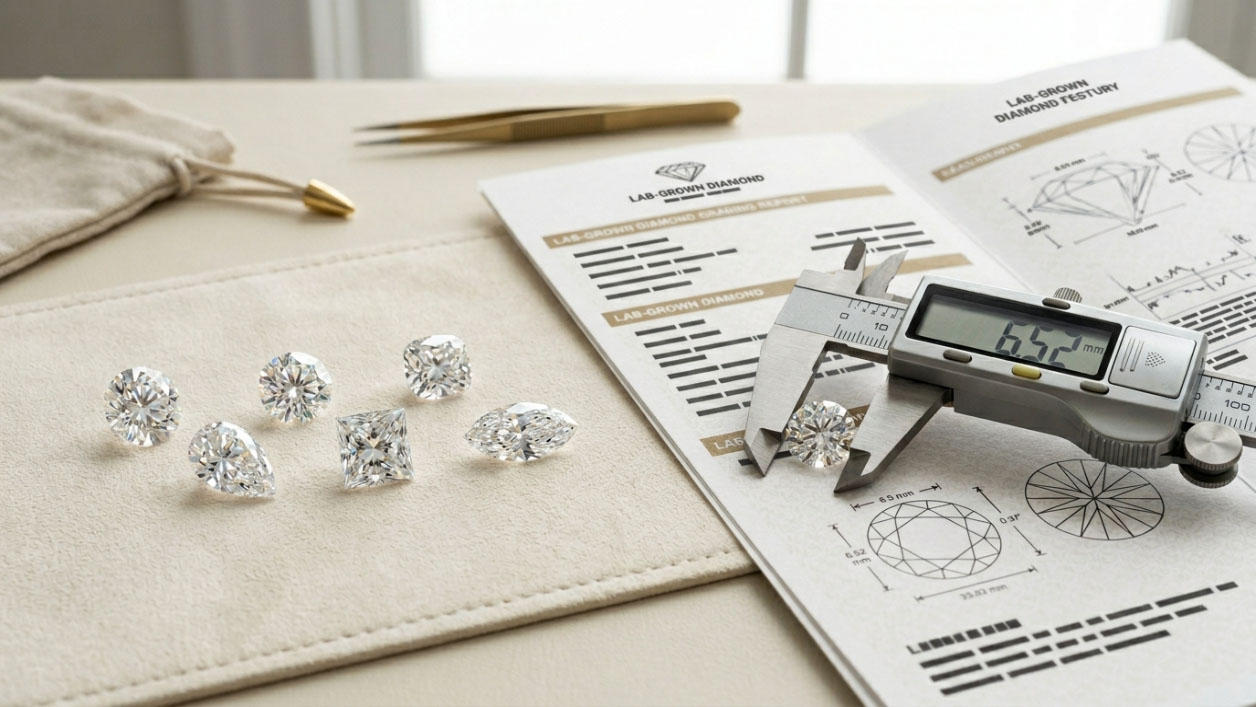
Many buyers compare diamonds by carat weight first, but carat does not always show how large a diamond looks on the hand. A 1 carat oval diamond, a 1 carat round diamond, and a 1 carat emerald cut diamond can all look different because their measurements, shape, depth, and proportions are different.
Diamond measurements show the actual length, width, and depth of a diamond in millimeters. Carat weight tells you how much a diamond weighs, but it does not always show how large the diamond looks. Two 1 carat diamonds can appear different in size because of shape, depth, proportions, and how the weight is distributed.
What Are Diamond Measurements?
Diamond measurements are the millimeter dimensions of a diamond, usually shown as length × width × depth. These numbers help buyers understand the diamond’s actual physical size, not just its weight.
For round diamonds, measurements are often shown as minimum diameter – maximum diameter × depth. For fancy shapes such as oval, pear, emerald, radiant, cushion, and marquise, measurements are usually shown as length × width × depth.
Measurements are especially important when buying a lab grown diamond online because they help explain how large the stone may appear from the top view. If you are comparing stones online, you can check measurements in our lab grown diamond inventory.
Carat Weight vs Diamond Size: What Is the Difference?
Carat is weight, while size is how large the diamond appears face-up. This is one of the most important differences to understand before choosing a diamond.
A diamond can have a higher carat weight but still look smaller if more of the weight is hidden in the depth. Another diamond with the same carat weight may look larger if its weight is spread more across the top view.
This is why two diamonds with the same carat weight can have different visible sizes. Carat affects price and weight category, but measurements help explain what the eye actually sees.
| Compare | What It Means | Why It Matters |
|---|---|---|
| Carat | Diamond weight | Affects price and weight category |
| Measurements | Length, width, and depth in mm | Helps show visible size |
| Shape | Round, oval, emerald, pear, and more | Changes face-up appearance |
| Depth | Top-to-bottom height | Can make a diamond look smaller or larger face-up |
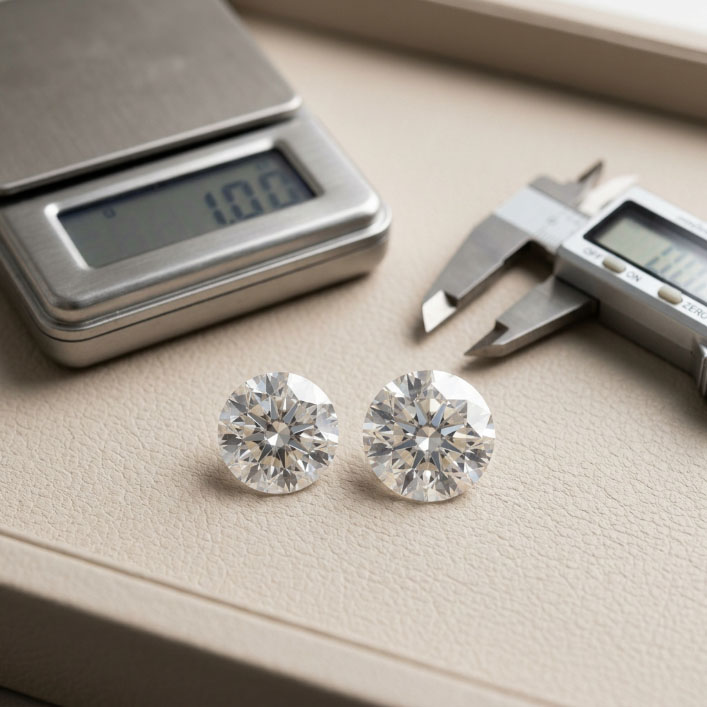
Carat weight alone does not always show how large a diamond appears. When comparing stones online, review the measurements in our lab grown diamond inventory.
Why Two 1 Carat Diamonds Can Look Different Sizes
Two 1 carat diamonds can look different because the weight may be distributed differently across length, width, and depth. This is especially noticeable when comparing different shapes.
- Shape: Oval, pear, and marquise diamonds can look longer than round diamonds of similar weight.
- Length-to-width ratio: Fancy shapes can appear slim, wide, long, or balanced depending on their proportions.
- Depth: A deeper diamond may carry more weight below the top view, making it look smaller face-up.
- Cut quality: A well-cut diamond can look brighter and more visually present.
- Setting style: Prong style, halo design, and band width can change how large the diamond appears.
- Finger size: The same diamond may look larger on a smaller finger and more balanced on a larger finger.
When comparing two diamonds with similar carat weight, do not choose only by price. Check the length and width first, then compare depth, shape, and real photos or videos.
How Diamond Shape Changes Visual Size
Some diamond shapes look larger face-up because they spread more of their weight across the top view. This does not always mean they are better, but it does affect how they appear in a ring.
- Round: Classic and balanced, but not always the largest-looking shape at the same carat weight.
- Oval: Often appears longer and larger face-up, especially in engagement rings.
- Pear: Creates a lengthening effect and can make the finger look more slender.
- Marquise: Has strong visual length and often looks large for its carat weight.
- Emerald: Elegant and clean, but step-cut brilliance is different from round or radiant cuts.
- Radiant: Can look bright and lively, but visual size depends strongly on proportions.
- Cushion: Some cushions are more square and deep, while others are longer and more spread out.
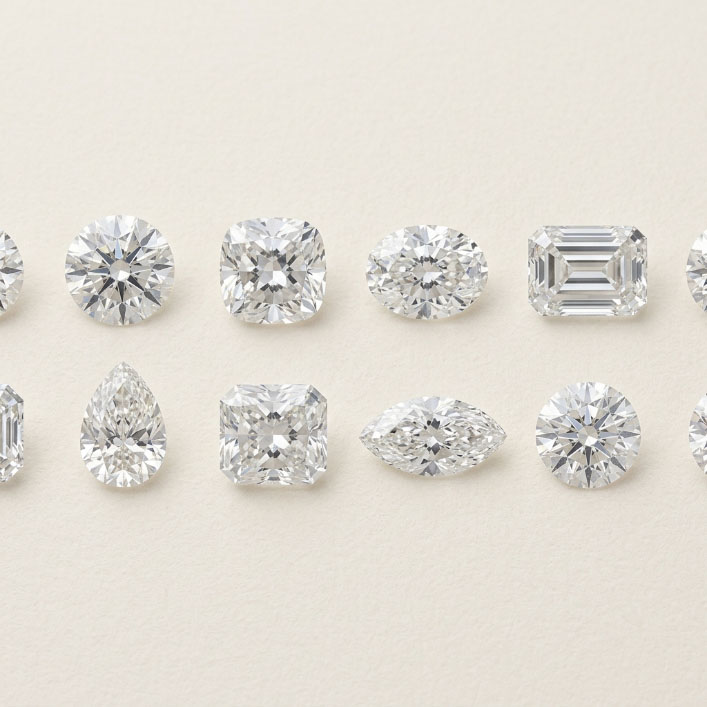
Different shapes can create different face-up impressions even at the same carat weight. You can compare available shapes in our lab grown diamond inventory.
Length, Width, and Depth Explained
Length and width affect face-up size, while depth shows how tall the diamond is from top to bottom. These three numbers work together to explain how a diamond carries its weight.
Length is usually the longest side of the diamond. Width is usually the shorter side. Depth is the height from the top of the diamond to the bottom point.
For fancy shapes such as oval, pear, emerald, and marquise, length and width can strongly affect visual size. A longer oval may look larger on the hand than a deeper oval with the same carat weight.
Measurements also matter for ring settings. If a setting is designed for a certain shape and size range, the diamond should be checked carefully before production.
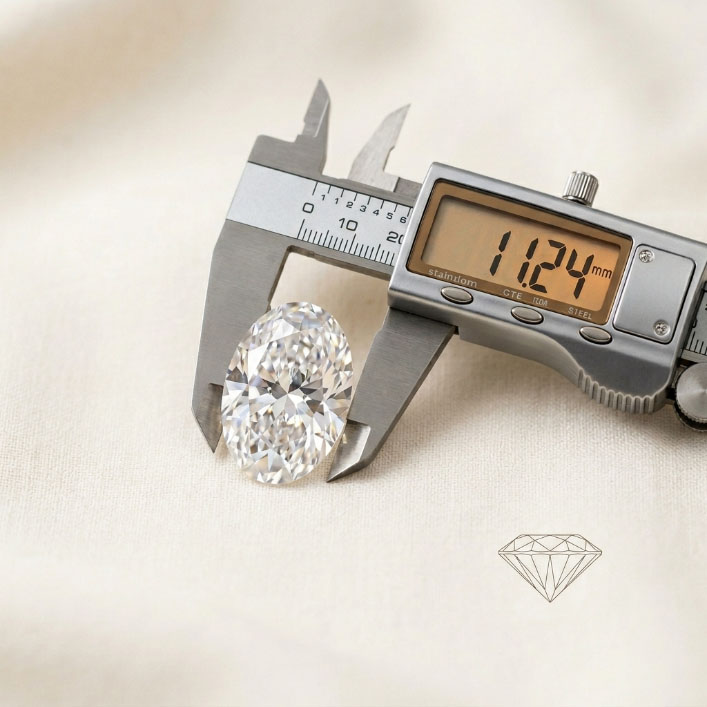
For fancy shapes such as oval, pear, emerald, and marquise, length and width can strongly affect how large the diamond looks. If you are pairing a stone with a setting, explore our ring styles.
What Is Face-Up Size?
Face-up size means how large the diamond looks when viewed from the top. This is the view most people notice when the diamond is set in a ring.
Buyers often talk about carat weight, but the eye usually sees face-up size first. A diamond with more surface spread may look larger than another diamond with the same carat weight but more depth.
This is why measurements, shape, and real photos or videos are important. A grading report gives useful data, but the final visual effect also depends on how the diamond looks from the top.
Are Bigger Measurements Always Better?
Bigger measurements are not always better if the diamond loses brilliance, balance, or setting fit. A diamond that looks large on paper may not be the best choice if the proportions are not attractive.
A very shallow diamond may look larger face-up but may not return light well. A very deep diamond may carry weight below the surface and look smaller. A very long fancy shape may look dramatic, but it may not suit every setting or finger.
The better approach is to balance measurements with shape, cut quality, brightness, and the jewelry design. The goal is not simply the largest number. The goal is a diamond that looks beautiful, balanced, and suitable for the setting.
How to Use Measurements When Buying a Lab Grown Diamond Online
Use measurements together with carat, shape, cut, and certificate details before choosing a diamond. This helps you avoid buying only by carat weight.
- Choose the diamond shape first.
- Compare carat weight.
- Check length and width in millimeters.
- Review the depth measurement.
- Compare real photos or videos when available.
- Confirm the diamond fits the ring setting.
- Verify the certificate number and grading details.
If you are still learning how to read the certificate itself, see our guide on how to read an IGI certificate for lab grown diamonds.
Common Mistakes When Comparing Diamond Measurements
- Only comparing carat weight.
- Ignoring length and width.
- Ignoring depth.
- Thinking all 1 carat diamonds look the same.
- Choosing the longest diamond without checking balance.
- Ignoring setting compatibility.
- Buying only by certificate data without checking real visual appearance.
Buyer Decision Box: What to Check Before Choosing a Lab Grown Diamond
- Check carat weight, but do not stop there.
- Check measurements in millimeters, especially length and width.
- Compare face-up size, not just total weight.
- Consider the diamond shape and length-to-width balance.
- Make sure the diamond fits the ring setting before production.
- Compare certificate data with real photos or videos when available.
Browse lab grown diamonds or explore ring styles.
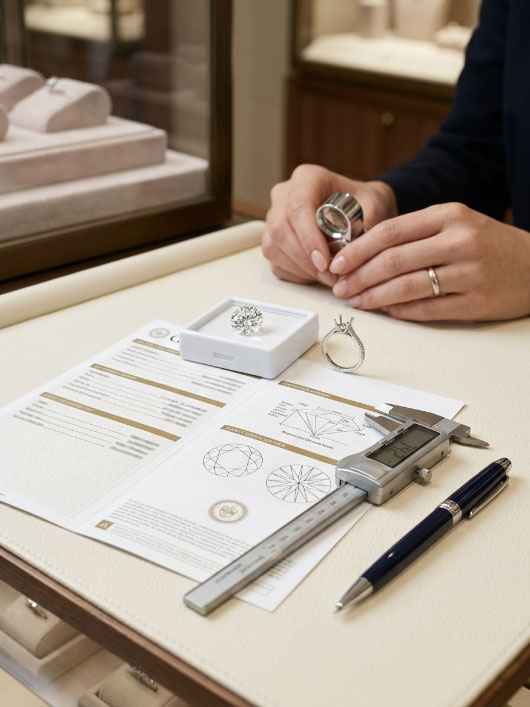
Before choosing a lab grown diamond, compare measurements, certificate details, and how the stone will fit the jewelry design. For made-to-order pieces, our custom jewelry service can help match the diamond and setting.
Myth vs Fact
| Myth | Fact |
|---|---|
| Carat tells you the diamond size. | Carat tells weight, not exact visible size. |
| All 1 carat diamonds look the same. | Shape, depth, and measurements can change appearance. |
| Bigger measurements are always better. | Balance, brilliance, and setting fit also matter. |
| Oval diamonds are always better than round diamonds. | Oval can look larger, but shape preference and proportions matter. |
| A certificate is enough to choose a diamond. | Photos, videos, measurements, and setting fit also matter. |
FAQ
What do diamond measurements mean?
Diamond measurements are the physical dimensions of a diamond in millimeters, usually shown as length × width × depth.
Is carat the same as diamond size?
No. Carat measures weight, while size describes how large the diamond appears. Measurements help explain visible size more clearly.
Why do two 1 carat diamonds look different?
Two 1 carat diamonds can look different because of shape, depth, length-to-width ratio, and how the weight is distributed.
What does length × width × depth mean on a diamond certificate?
Length is the longest side, width is the shorter side, and depth is the top-to-bottom height of the diamond.
Which diamond shape looks biggest?
Shapes such as oval, pear, and marquise can often look larger face-up because they spread weight across more length.
Do oval diamonds look bigger than round diamonds?
Oval diamonds often look larger than round diamonds of similar carat weight because their elongated shape creates more visible spread.
Are diamond measurements shown on IGI certificates?
Yes. IGI reports usually show diamond measurements in millimeters, along with carat weight, color, clarity, cut information, and other details.
Should I choose a diamond by carat or measurements?
You should consider both. Carat tells weight, while measurements help show visible size and setting compatibility.
Can a diamond look smaller if it is too deep?
Yes. If too much weight is carried in the depth, a diamond may look smaller from the top than another diamond with similar carat weight.
What measurements should I check for a lab grown diamond ring?
Check length, width, depth, shape, and whether the diamond fits the ring setting you want to use.
Final Buying Note
Diamond measurements help you understand how a diamond may look in real life, but they should not be used alone. The best choice depends on carat weight, shape, cut, measurements, visual appearance, and the jewelry setting.
If you are choosing a lab grown diamond for a ring, compare the certificate details with real photos or videos before making the final decision. You can browse our lab grown diamond inventory, explore ring styles, or request help through our custom jewelry service.
© VANTYRE Jewelry Guide