
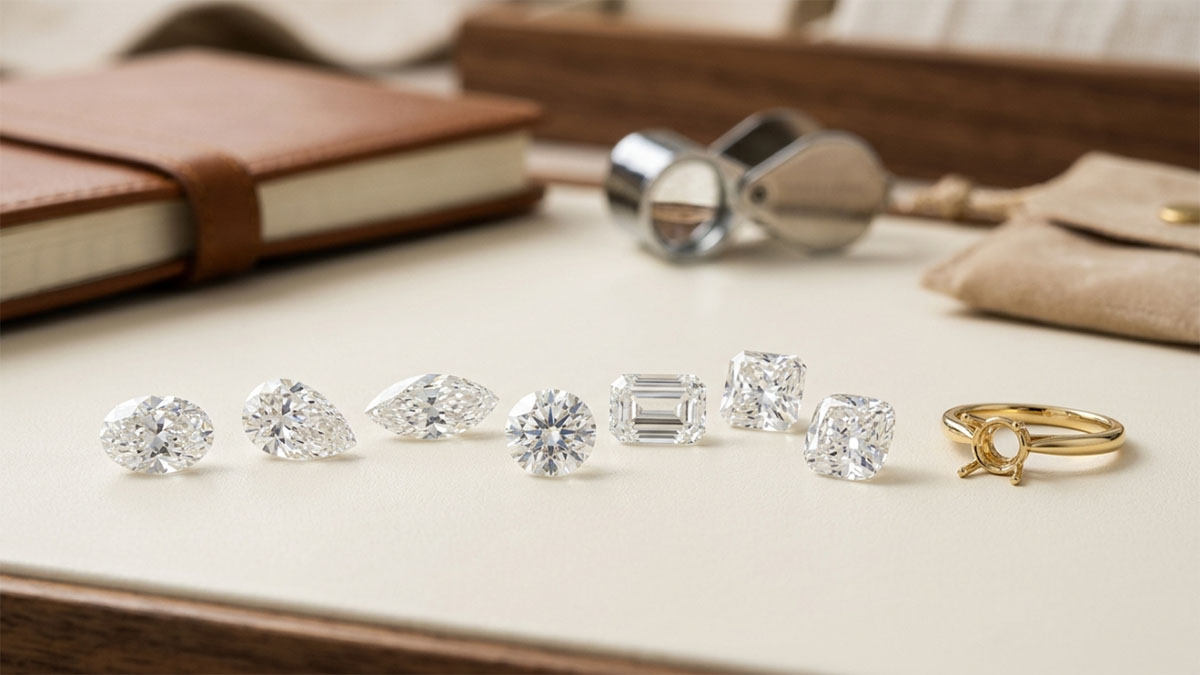
Many buyers ask the same question when comparing diamonds: which shape looks the biggest? The answer is not only about carat weight. Diamond shape, length, width, depth, proportions, and setting style can all change how large a diamond appears on the hand.
Some elongated shapes, such as oval, pear, and marquise, often look larger face-up than round diamonds of the same carat weight. But the largest-looking shape is not always the best choice. Balance, sparkle, finger coverage, and setting fit all matter.
Elongated diamond shapes such as oval, pear, and marquise often look bigger face-up than round diamonds of the same carat weight because more of their weight is spread across length. However, the biggest-looking shape is not always the best choice. Balance, brilliance, length-to-width ratio, setting style, and personal preference all matter.
Does Diamond Shape Affect How Big a Diamond Looks?
Yes. Diamond shape affects face-up size, finger coverage, and how large the diamond appears from the top view. Two diamonds can have the same carat weight but look different because their weight is distributed differently.
A round diamond has a balanced, classic outline. An oval diamond spreads more length across the finger. A marquise diamond can look very long and dramatic. A pear shape creates a soft point and a lengthening effect. These visual differences can make one diamond look larger than another, even when the carat weight is similar.
That is why carat weight should not be the only number you compare. Measurements, shape, and proportions matter. If you want to understand this in more detail, read our diamond measurements guide.
Which Diamond Shapes Usually Look Biggest?
Elongated shapes usually look larger because they spread more visible surface area across the top view. The table below gives a practical comparison for buyers choosing a lab grown diamond.
| シェイプ | Visual Size | Best For |
|---|---|---|
| Marquise | Very large-looking | Dramatic length and finger elongation |
| Oval | Large-looking | Elegant everyday engagement rings |
| Pear | Large-looking | Soft, elongated, feminine look |
| Emerald | Long visual outline | Elegant, clean, step-cut style |
| Radiant | Balanced sparkle and size | Bright look with modern shape |
| Cushion | Varies by proportion | Soft, romantic style |
| Round | Classic but not always largest-looking | Maximum traditional sparkle |
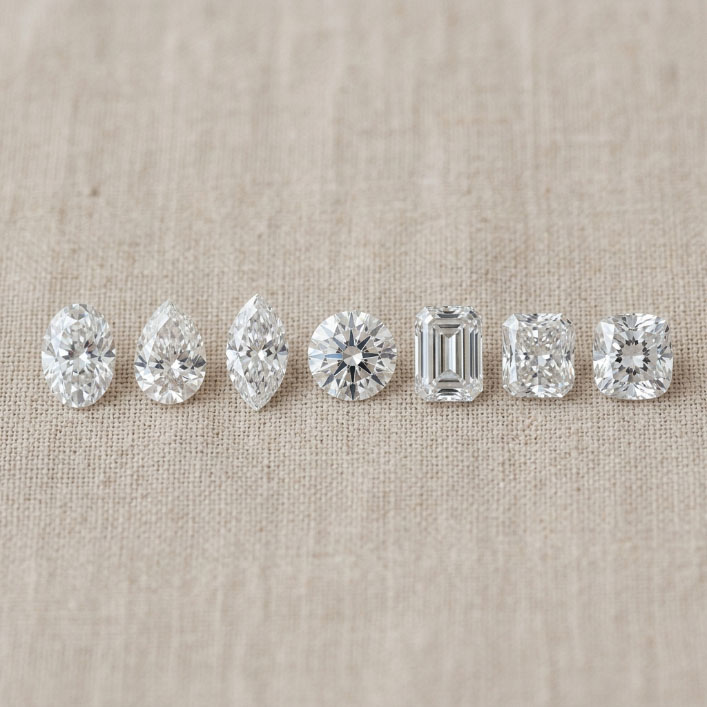
Different diamond shapes can create different face-up impressions even at the same carat weight. You can compare available shapes in our lab grown diamond inventory.
Why Oval Diamonds Look Bigger Than Round Diamonds
Oval diamonds often look larger because their elongated shape spreads more surface area across the finger. A round diamond may have classic brightness and symmetry, while an oval can create a longer face-up outline at a similar carat weight.
This is one reason oval lab grown diamonds are popular for engagement rings. They can feel elegant, modern, and visually larger without necessarily increasing carat weight.
Still, oval diamonds should not be chosen by outline alone. Proportion matters. If an oval is too short, it may look closer to a round shape. If it is too long, it may look narrow or unbalanced. Bow-tie effect, symmetry, and real photos or videos should also be checked.
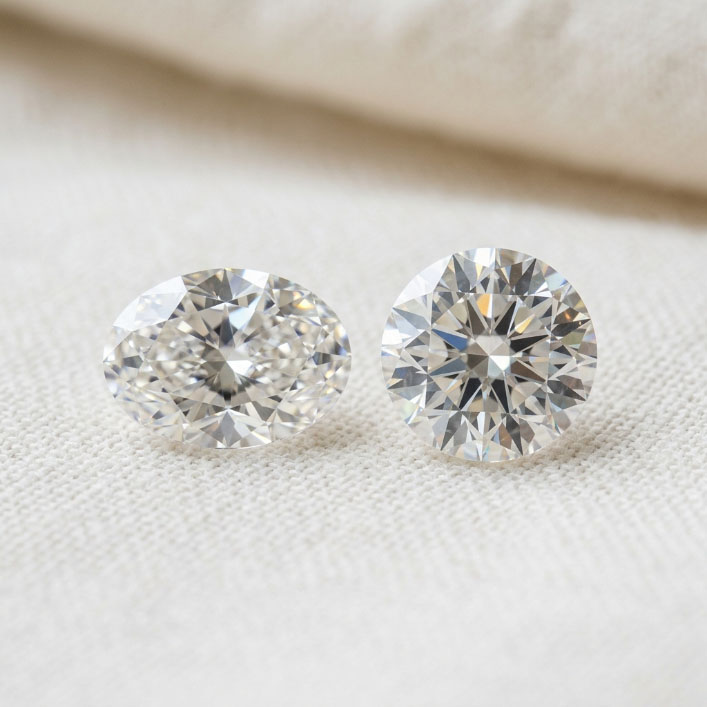
Oval diamonds can create a larger-looking impression than round diamonds of similar carat weight, but proportions still matter. If you are choosing a setting, browse our lab grown diamond ring styles.
Marquise and Pear Diamonds: Maximum Length Effect
Marquise and pear shapes can create a strong length effect, which often makes the diamond look larger for its carat weight. These shapes are especially useful for buyers who want more finger coverage and a more distinctive design.
A marquise diamond has pointed ends and a long outline. It can look very large from the top view. A pear diamond has one rounded end and one pointed end, creating a softer elongated look.
Both shapes need careful setting design. The pointed ends should be protected, and the shape should be checked for symmetry. Oval, pear, and marquise diamonds can also show a bow-tie effect, so visual inspection is important.
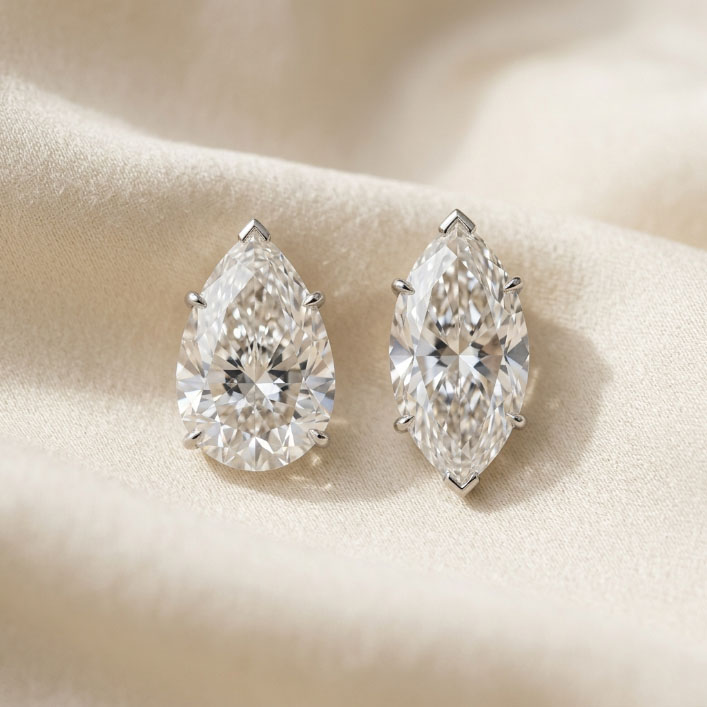
Pear and marquise shapes can be excellent choices for buyers who want more visual length. For made-to-order designs, our custom jewelry service can help match the stone shape with the setting.
Emerald, Radiant, and Cushion: Not Just About Size
Emerald, radiant, and cushion diamonds can look very different even at the same carat weight because their proportions and faceting styles vary.
Emerald cut diamonds have long, clean lines and a step-cut style. They can look elegant and larger in outline, but their sparkle pattern is different from brilliant cuts. Because the facets are broad and open, clarity and visual cleanliness matter more.
Radiant cut diamonds combine a rectangular or square outline with a brighter faceting style. They can offer a modern look with strong sparkle, but face-up size still depends on proportions.
Cushion cut diamonds vary a lot. Some cushions are deep and square, while others are more elongated and spread out. This is why cushion diamonds should be compared by measurements and real appearance, not only by carat weight.
Round Diamonds: Classic, Bright, but Not Always Biggest-Looking
Round diamonds are classic and bright, but they may not look as large face-up as elongated shapes with the same carat weight. Many buyers still choose round diamonds because of their timeless look, strong symmetry, and traditional sparkle.
If your priority is maximum classic brilliance, round can still be a strong choice. If your priority is visual length and finger coverage, oval, pear, or marquise may create a larger-looking effect.
Is the Biggest-Looking Shape Always the Best Choice?
No. The biggest-looking shape is not always the best choice if the proportions, sparkle, setting fit, or personal style do not match.
A very long shape may look dramatic but may not suit every hand. A diamond that looks large on paper may not look balanced in the setting. A shallow diamond may appear spread out but may lose light performance. A visible bow-tie can also affect the overall appearance of oval, pear, or marquise diamonds.
The better goal is not simply to choose the shape that looks biggest. The better goal is to choose a shape that looks balanced, bright, comfortable, and suitable for the ring design.
Best Diamond Shapes for Different Goals
Buyer Decision Box: Which Diamond Shape Should You Choose?
- If you want the largest visual size: consider marquise, oval, or pear.
- If you want classic sparkle: choose round.
- If you want elegant clean lines: consider emerald.
- If you want sparkle with a modern outline: consider radiant.
- If you want a soft romantic style: consider cushion.
- If you want a custom design: choose shape based on setting style and finger proportion.
You can browse our lab grown diamond inventory, explore ring styles, or request a custom jewelry service.
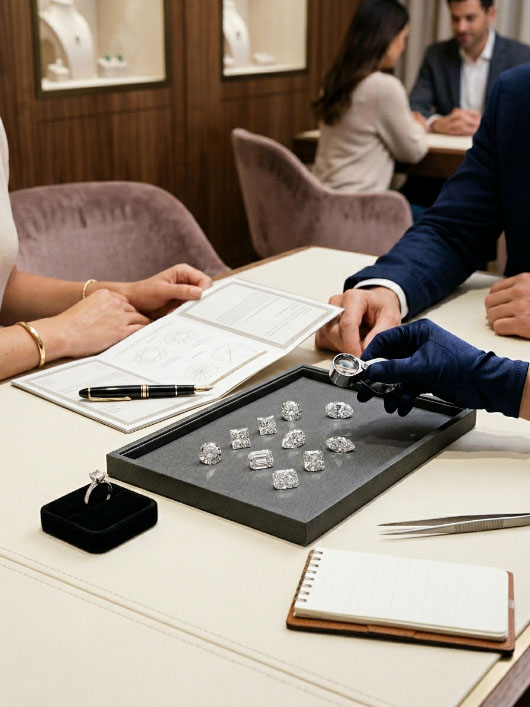
Before choosing a diamond shape, compare face-up size, proportions, and setting compatibility. You can start with our lab grown diamond inventory and then match the stone with a suitable ring style.
Common Mistakes When Choosing Diamond Shape
- Choosing only by carat weight.
- Choosing only the shape that looks biggest.
- Ignoring length-to-width ratio.
- Ignoring bow-tie effect in oval, pear, and marquise diamonds.
- Ignoring setting compatibility.
- Ignoring finger size and hand shape.
- Comparing shapes without looking at real photos or videos.
Myth vs Fact
| Myth | Fact |
|---|---|
| The largest-looking shape is always best. | Balance, setting fit, and personal style matter too. |
| Oval always looks better than round. | Oval may look larger, but round has classic brilliance. |
| Marquise always looks huge. | Poor proportions can make it look awkward. |
| Emerald cuts hide inclusions well. | Step cuts can make inclusions easier to see. |
| All cushion diamonds look the same. | Cushion proportions vary a lot. |
よくある質問
Which diamond shape looks biggest?
Marquise, oval, and pear diamonds often look biggest because their elongated shapes create more visible length and finger coverage.
Do oval diamonds look bigger than round diamonds?
Oval diamonds often look larger than round diamonds of similar carat weight because the elongated shape spreads more visible surface area across the finger.
Which diamond shape gives the most finger coverage?
Marquise, oval, and pear shapes usually give strong finger coverage because they create more visual length.
Does marquise look bigger than oval?
Marquise diamonds often look longer and more dramatic than oval diamonds, but the best choice depends on proportions, style, and setting design.
Are pear diamonds good for engagement rings?
Yes. Pear diamonds can be beautiful for engagement rings because they offer a soft elongated look. The pointed end should be protected by the setting.
Do emerald cut diamonds look big?
Emerald cut diamonds can look large because of their long outline, but they have a different sparkle style and often show clarity characteristics more easily.
Which diamond shape is best for small hands?
Oval, pear, and marquise diamonds can create a lengthening effect on the finger. However, the best choice also depends on personal style and setting design.
Which diamond shape is best for lab grown diamonds?
There is no single best shape for lab grown diamonds. Oval, round, pear, radiant, emerald, cushion, and marquise can all work well when the proportions and visual appearance are right.
Should I choose diamond shape by carat or measurements?
You should consider both. Carat tells weight, while measurements and shape help explain how large the diamond looks face-up.
What diamond shape is best for a custom ring?
The best shape for a custom ring depends on the setting, finger proportion, design style, and the visual effect you want.
Final Buying Note
The diamond shape that looks biggest is not always the shape you should choose. Oval, pear, and marquise diamonds often give strong visual size, but the best choice depends on measurements, proportions, sparkle, setting style, and personal preference.
If you are choosing a lab grown diamond for a ring, compare shape, carat, measurements, and real visual appearance before making the final decision. You can browse our lab grown diamond inventory, explore ring styles, or request a custom jewelry service.
© VANTYRE Jewelry Guide