
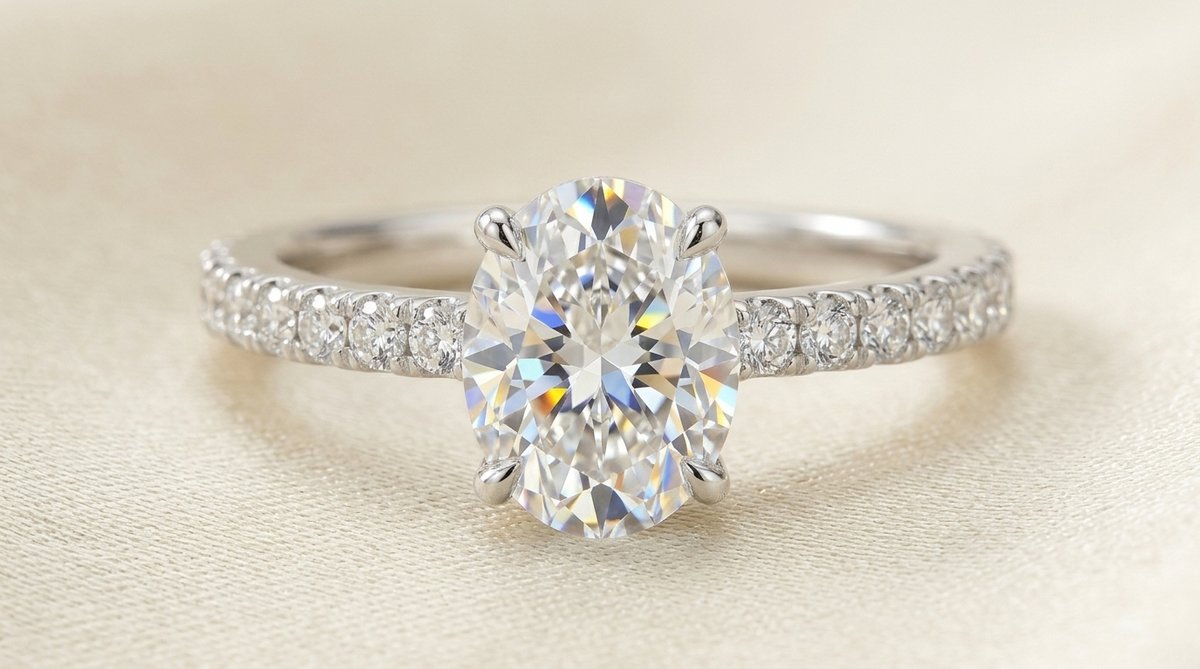
Some engagement rings sparkle because of the center diamond. Others sparkle because of everything around it. A pavé setting belongs to the second group — the band itself is lined with tiny diamonds that catch light from every direction, making the whole ring glow rather than just the center stone.
Pavé (pronounced pah-VAY) is a French word meaning “paved,” and that is exactly what this setting does. Small diamonds are set closely together along the band, creating a surface that looks like it is paved with gemstones. It is one of the most popular ways to add sparkle to an engagement ring without increasing the center stone size.
Here is what pavé settings actually look like, how they differ from other diamond band styles, and what you need to know before buying one.
A pavé setting uses small diamonds set closely together along the band to create a continuous sparkling surface. It adds significant sparkle without increasing the center diamond size. Micro pavé uses smaller diamonds for a smoother look. Standard pavé uses slightly larger diamonds for more individual sparkle. Both require regular maintenance to keep the small stones secure.
What Is a Pavé Setting?
A pavé setting covers the band of a ring with small diamonds set closely together. The diamonds are held in place by tiny metal beads or prongs that are nearly invisible. The result looks like a band paved with diamonds — a continuous, seamless line of sparkle running around the finger.
The technique requires precision. Each small diamond must be cut to a uniform size and set at the same depth so the surface feels smooth and the sparkle is consistent. It is more labor-intensive than setting a single center stone, which is why pavé rings tend to cost more than plain band rings even when the total diamond weight is small.
Micro Pavé vs Standard Pavé
The main difference is diamond size.
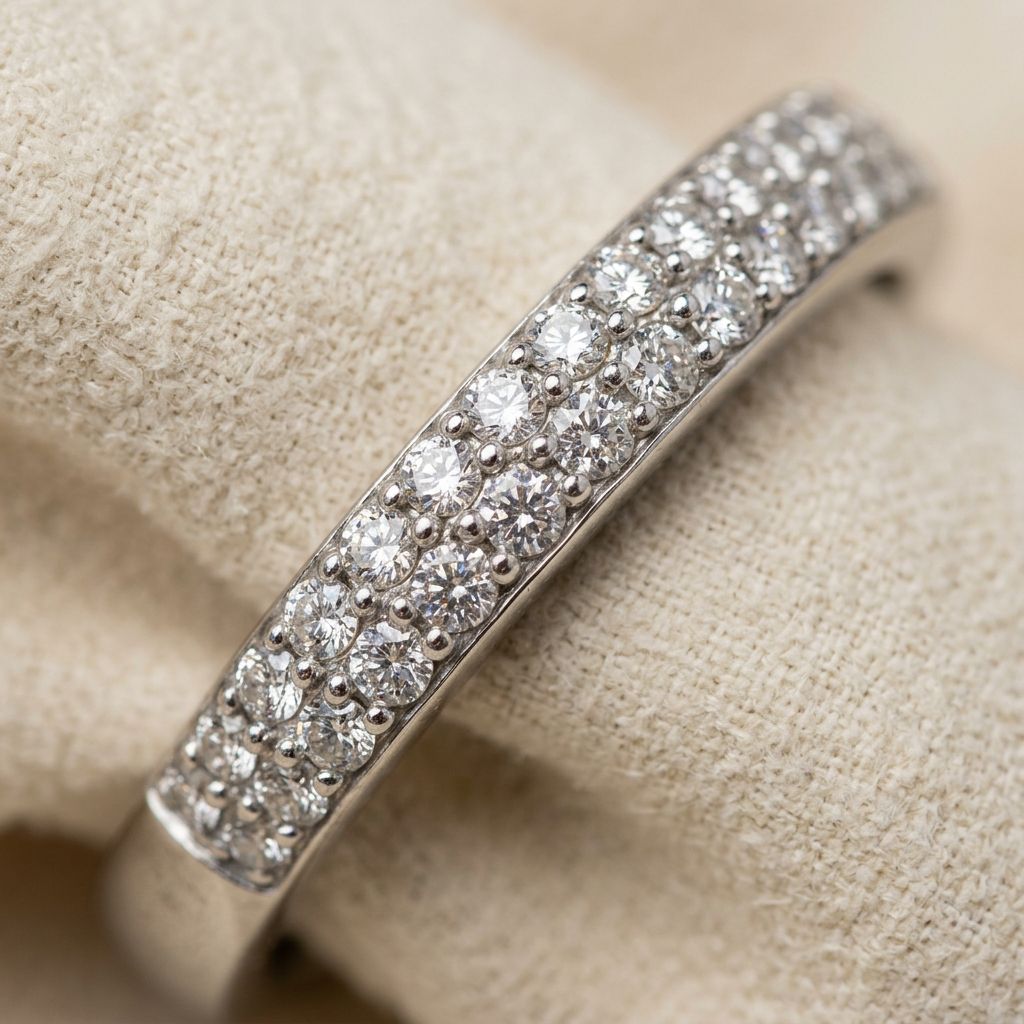
Standard pavé uses melee diamonds between 0.01 and 0.02 carats each. The individual diamonds are visible to the naked eye, and there are small gaps between them. The result has more visible sparkle points and feels slightly more textured.
Micro pavé uses diamonds smaller than 0.01 carats each, set so tightly that the individual stones are hard to distinguish without magnification. The surface looks smoother and more continuous — almost like a diamond-encrusted tube rather than individual stones. Micro pavé is more delicate and requires more skill to set.
Micro pavé offers a more refined, seamless look. Standard pavé offers more individual sparkle and is slightly more durable. Both are widely available.
Pavé Setting Variations
Beyond diamond size, pavé settings differ in how the diamonds are set into the band:
- French pavé: The diamonds are set into V-shaped grooves cut into the metal. This creates a clean, uniform look with minimal metal visible between stones.
- Pavé with prongs: Each small diamond has its own tiny metal prongs. More metal is visible, but each diamond is more secure.
- Shared prong pavé: Adjacent diamonds share the same prong between them. This reduces visible metal and creates a more continuous sparkle line.
- U-cut pavé: U-shaped cuts in the metal hold the diamonds. A modern variation that combines security with reduced metal visibility.
Pavé vs Other Diamond Band Styles
| Style | Diamond Coverage | Metal Visible | Security | Sparkle |
|---|---|---|---|---|
| Pavé | Partial or full band | Minimal | Moderate | High |
| Channel set | Diamonds in metal channels | More | High | Moderate |
| Bezel set band | Each stone individually bezeled | Moderate | Very high | Moderate |
| Prong set band | Each stone has separate prongs | More | Moderate | High |
Maintenance and Durability
Pavé settings require more maintenance than plain bands. The small diamonds are held by tiny beads or prongs that can wear down over time. A lost melee diamond is common in pavé rings that have been worn daily for several years without inspection.
Most jewelers recommend checking pavé settings once a year. If a small diamond is loose or missing, it should be replaced quickly — a gap in the pavé line allows adjacent stones to shift, which can lead to more losses. Replacement is usually straightforward and costs less than you might expect for such tiny diamonds.
Micro pavé is more delicate than standard pavé. The smaller beads holding micro pavé diamonds are more prone to wear. If you work with your hands or plan to wear the ring daily for decades without removing it, standard pavé or a channel-set band may be a better choice.
Do Pavé Bands Scratch or Wear Down?
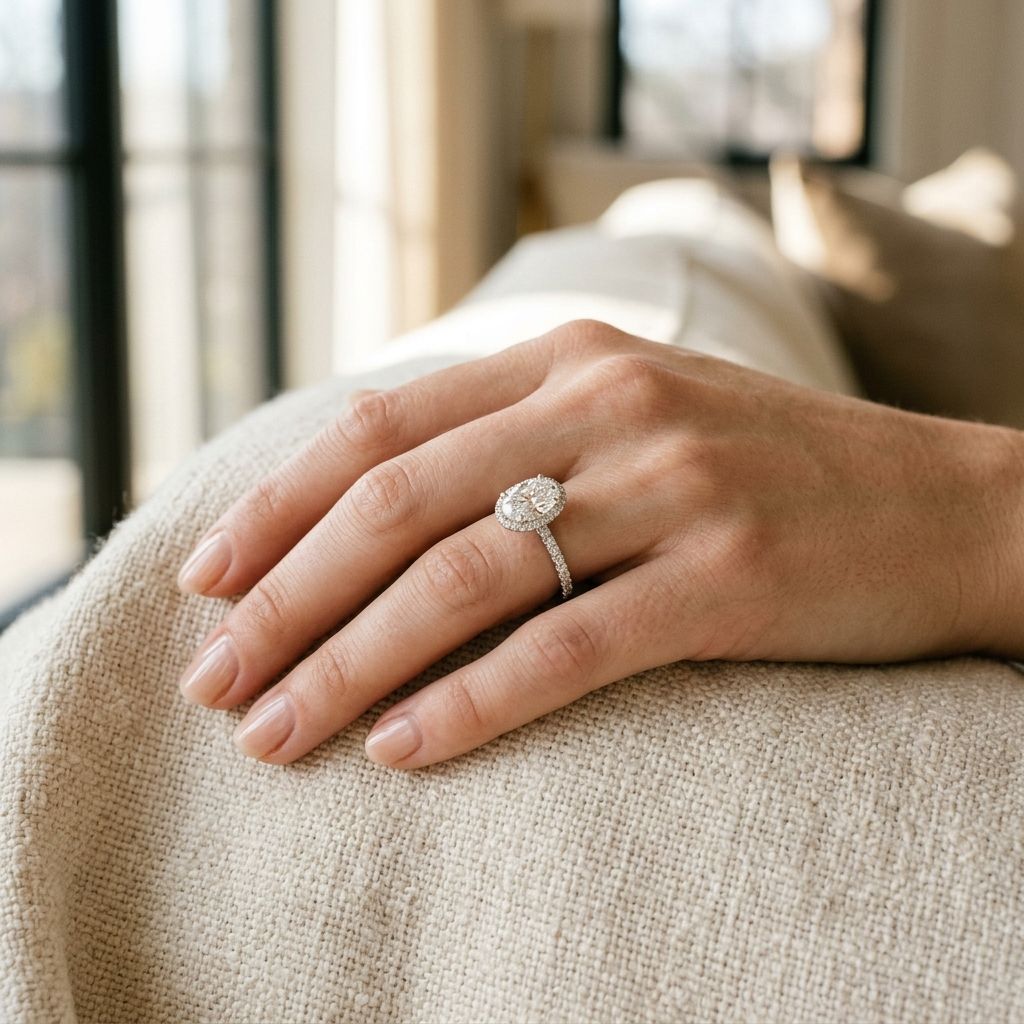
The metal between and around pavé diamonds can show wear over time. Everyday contact with surfaces, other rings, and even hand lotion can dull the metal finish around the small stones. This is normal and can be addressed during routine jewelry maintenance and polishing.
The diamonds themselves are extremely hard and will not scratch. What you may notice is that the setting around them loses its bright polish. A quick professional cleaning and rhodium plating (for white gold) restores the original look.
Pavé and Wedding Bands
Pavé engagement rings pair best with plain or channel-set wedding bands. Stacking a pavé band directly against another pavé band can cause the diamonds to rub against each other, which may loosen the settings over time. A plain metal spacer band between two pavé rings solves this problem and adds a nice layered look.
Pros and Cons
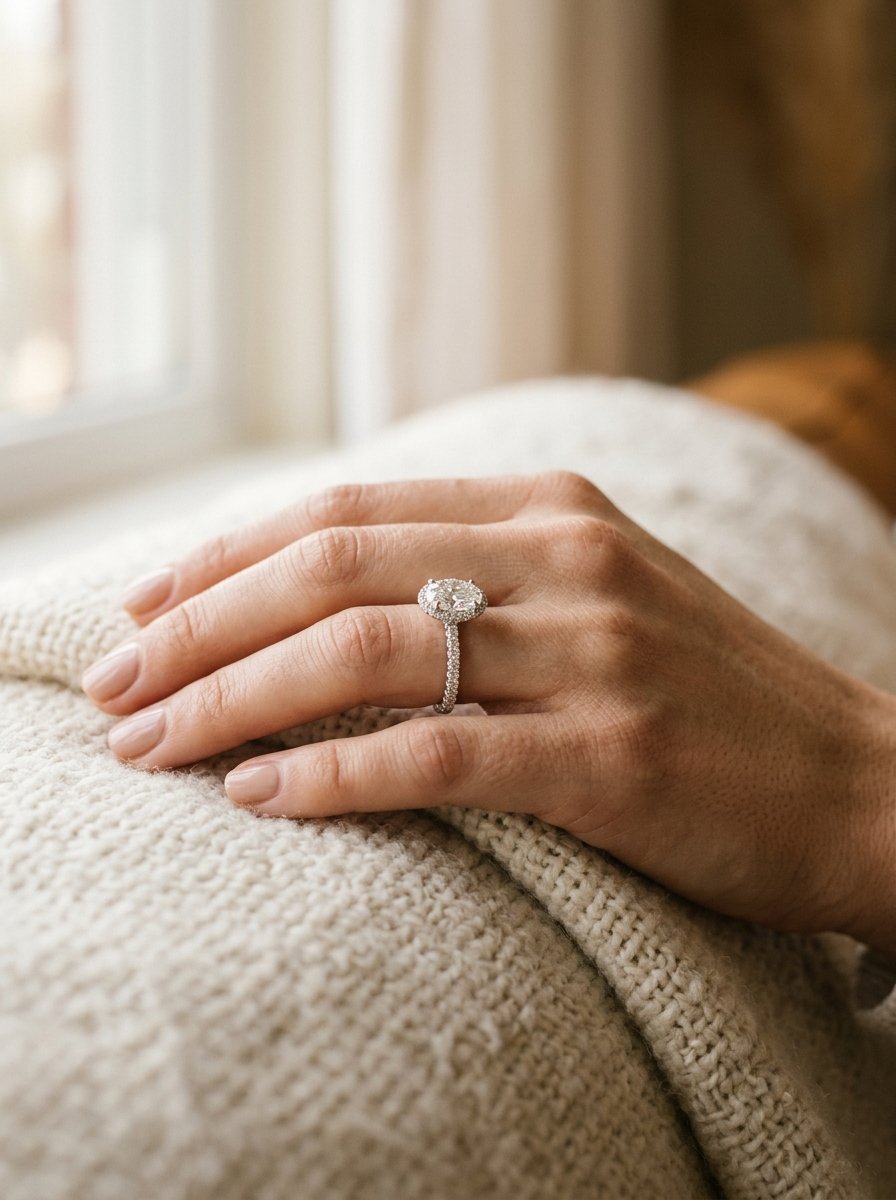
Cons: Requires annual maintenance. Small diamonds can loosen or fall out over time. Micro pavé is delicate and not ideal for heavy daily wear. More expensive than a plain band. Harder to resize than plain bands.
Myth vs Fact
| Myth | Fact |
|---|---|
| Common misconception. | The actual truth. |
Buyer Decision Box
Make your choice based on your lifestyle and preferences.
よくある質問
How long do pavé diamonds last?
With proper care, pavé diamonds can last decades. The key is annual inspections and prompt replacement of any loose stones. Neglected pavé settings can lose multiple diamonds over time.
Can a pavé ring be resized?
Yes, but it is more complicated than resizing a plain band. Full pavé bands must be resized carefully to avoid damaging the diamond settings along the shank. Some jewelers may recommend against resizing full pavé rings by more than one or two sizes.
Is micro pavé or standard pavé more secure?
Standard pavé is more secure because the beads holding the diamonds are larger and more durable. Micro pavé is more delicate and requires more careful handling.
Does pavé make the center diamond look bigger?
Not directly. Pavé adds sparkle around the band, not around the center stone. It makes the whole ring look more brilliant, which can draw more attention to the ring overall, but it does not visually enlarge the center diamond the way a halo setting does.
Can you wear a pavé ring every day?
Yes, but you need to be more careful than with a plain band. Remove the ring during heavy lifting, gardening, or any activity that puts stress on the hands. Annual inspections are essential for daily-wear pavé rings.
Final Buying Note
Pavé settings are for people who want more sparkle than a single diamond can provide. The continuous line of small diamonds along the band creates a look that is hard to match with any other setting type. Just go in knowing that the small stones need attention — annual checks, careful wear, and occasional maintenance are part of owning a pavé ring.
Browse our lab grown diamond rings, compare lab grown diamonds, or read our prong vs bezel guide for more setting comparisons.
© VANTYRE Jewelry Guide