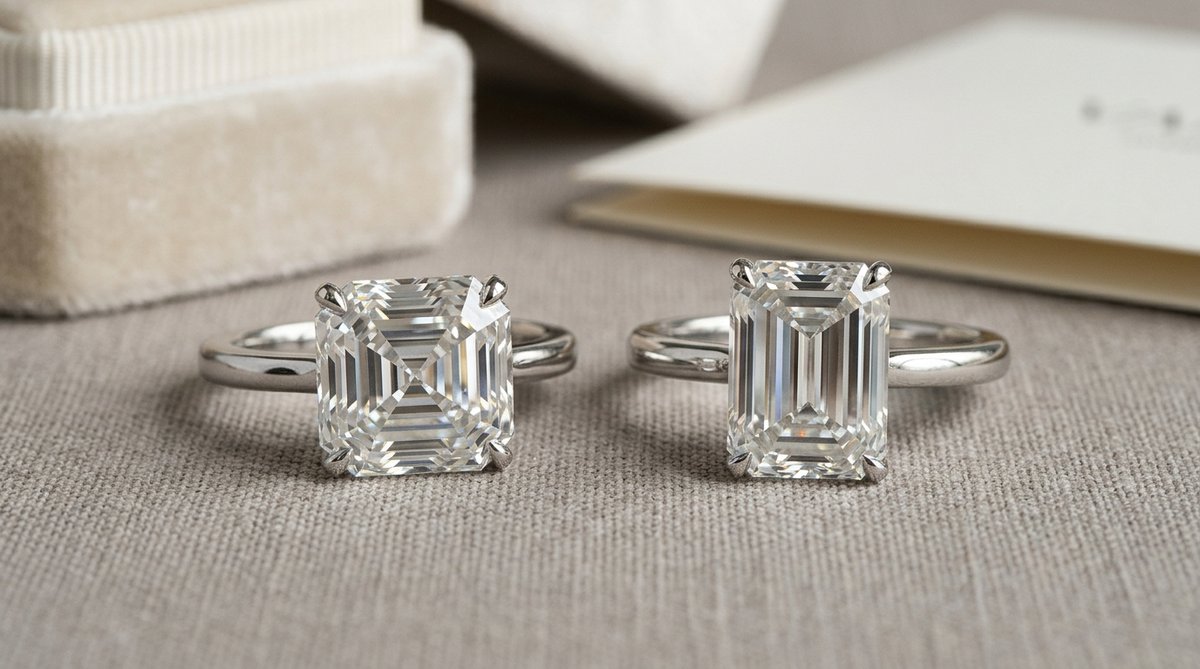
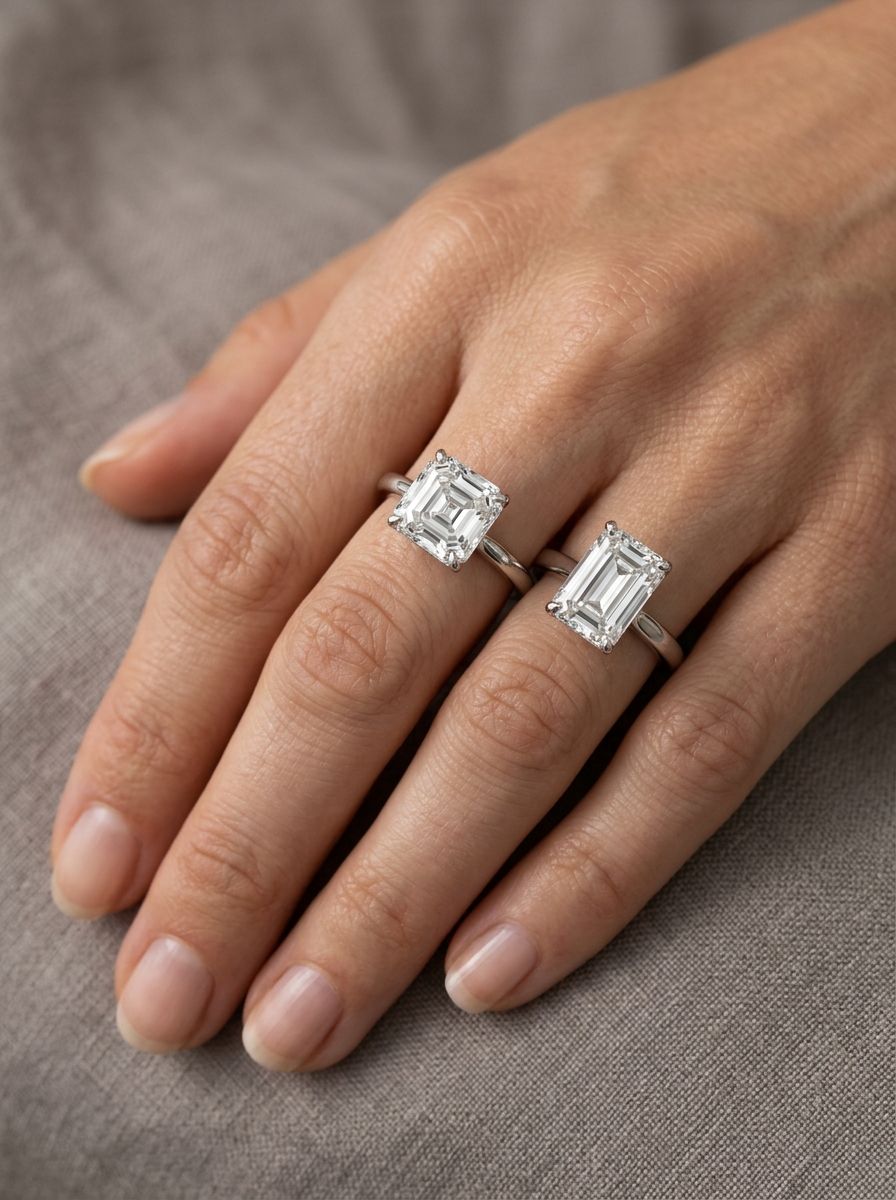
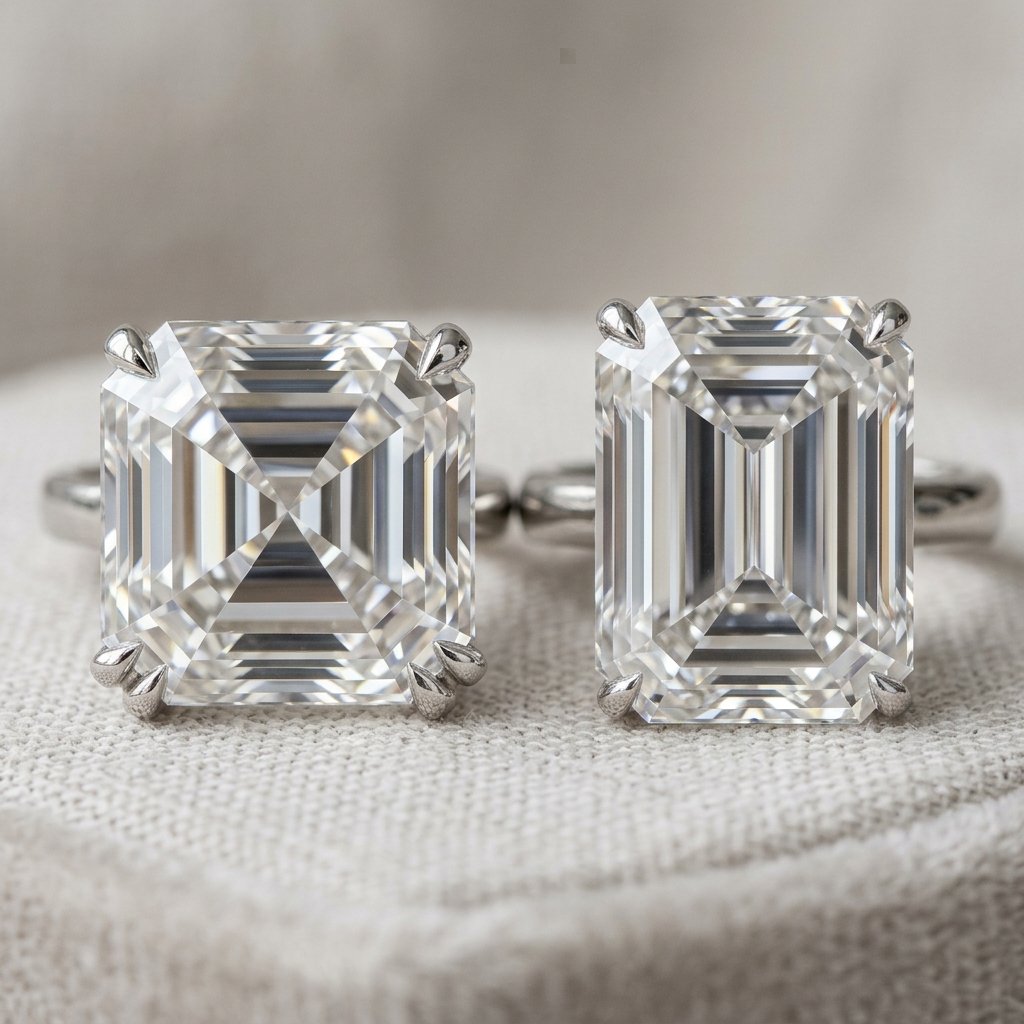
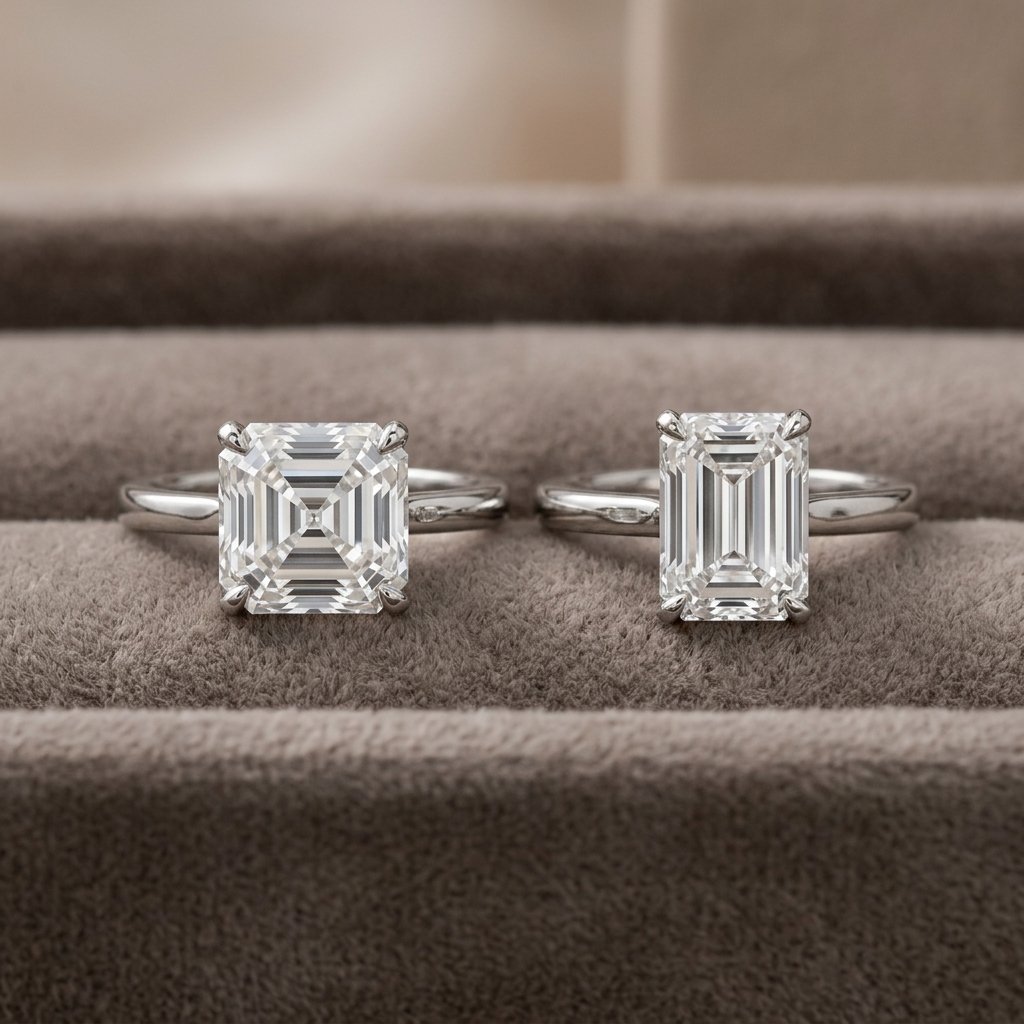
Asscher and emerald cuts share the same faceting style but create very different silhouettes. Asscher is square, compact, and vintage-inspired. Emerald is rectangular, elegant, and elongating. Choose based on whether you prefer a balanced square or an elongated rectangle — the rest of the ring will follow naturally.
Asscher and emerald cuts share the same faceting style but create very different silhouettes. Asscher is square, compact, and vintage-inspired. Emerald is rectangular, elegant, and elongating. Choose based on whether you prefer a balanced square or an elongated rectangle — the rest of the ring will follow naturally.
Yes, emerald cut engagement rings are a classic choice for buyers who value clean elegance.
Final Buying Note
Asscher and emerald cuts share the same faceting style but create very different silhouettes. Asscher is square, compact, and vintage-inspired. Emerald is rectangular, elegant, and elongating. Choose based on whether you prefer a balanced square or an elongated rectangle — the rest of the ring will follow naturally.
Yes, Asscher cuts are a distinctive choice for engagement rings, especially for buyers who love vintage style.
Is emerald cut good for engagement rings?
Yes, emerald cut engagement rings are a classic choice for buyers who value clean elegance.
Final Buying Note
Asscher and emerald cuts share the same faceting style but create very different silhouettes. Asscher is square, compact, and vintage-inspired. Emerald is rectangular, elegant, and elongating. Choose based on whether you prefer a balanced square or an elongated rectangle — the rest of the ring will follow naturally.
Yes, Asscher cuts are a distinctive choice for engagement rings, especially for buyers who love vintage style.
Is emerald cut good for engagement rings?
Yes, emerald cut engagement rings are a classic choice for buyers who value clean elegance.
Final Buying Note
Asscher and emerald cuts share the same faceting style but create very different silhouettes. Asscher is square, compact, and vintage-inspired. Emerald is rectangular, elegant, and elongating. Choose based on whether you prefer a balanced square or an elongated rectangle — the rest of the ring will follow naturally.
Both work well with solitaire, bezel, three-stone with baguettes, and cathedral settings.
Is Asscher good for engagement rings?
Yes, Asscher cuts are a distinctive choice for engagement rings, especially for buyers who love vintage style.
Is emerald cut good for engagement rings?
Yes, emerald cut engagement rings are a classic choice for buyers who value clean elegance.
Final Buying Note
Asscher and emerald cuts share the same faceting style but create very different silhouettes. Asscher is square, compact, and vintage-inspired. Emerald is rectangular, elegant, and elongating. Choose based on whether you prefer a balanced square or an elongated rectangle — the rest of the ring will follow naturally.
Both work well with solitaire, bezel, three-stone with baguettes, and cathedral settings.
Is Asscher good for engagement rings?
Yes, Asscher cuts are a distinctive choice for engagement rings, especially for buyers who love vintage style.
Is emerald cut good for engagement rings?
Yes, emerald cut engagement rings are a classic choice for buyers who value clean elegance.
Final Buying Note
Asscher and emerald cuts share the same faceting style but create very different silhouettes. Asscher is square, compact, and vintage-inspired. Emerald is rectangular, elegant, and elongating. Choose based on whether you prefer a balanced square or an elongated rectangle — the rest of the ring will follow naturally.
Emerald cuts appear larger because of the elongated rectangle. Asscher cuts are more compact.
What settings work best?
Both work well with solitaire, bezel, three-stone with baguettes, and cathedral settings.
Is Asscher good for engagement rings?
Yes, Asscher cuts are a distinctive choice for engagement rings, especially for buyers who love vintage style.
Is emerald cut good for engagement rings?
Yes, emerald cut engagement rings are a classic choice for buyers who value clean elegance.
Final Buying Note
Asscher and emerald cuts share the same faceting style but create very different silhouettes. Asscher is square, compact, and vintage-inspired. Emerald is rectangular, elegant, and elongating. Choose based on whether you prefer a balanced square or an elongated rectangle — the rest of the ring will follow naturally.
Emerald cuts appear larger because of the elongated rectangle. Asscher cuts are more compact.
What settings work best?
Both work well with solitaire, bezel, three-stone with baguettes, and cathedral settings.
Is Asscher good for engagement rings?
Yes, Asscher cuts are a distinctive choice for engagement rings, especially for buyers who love vintage style.
Is emerald cut good for engagement rings?
Yes, emerald cut engagement rings are a classic choice for buyers who value clean elegance.
Final Buying Note
Asscher and emerald cuts share the same faceting style but create very different silhouettes. Asscher is square, compact, and vintage-inspired. Emerald is rectangular, elegant, and elongating. Choose based on whether you prefer a balanced square or an elongated rectangle — the rest of the ring will follow naturally.
Neither hides inclusions well. Both step cuts show clarity characteristics clearly. Choose VS2 or higher.
Which looks bigger?
Emerald cuts appear larger because of the elongated rectangle. Asscher cuts are more compact.
What settings work best?
Both work well with solitaire, bezel, three-stone with baguettes, and cathedral settings.
Is Asscher good for engagement rings?
Yes, Asscher cuts are a distinctive choice for engagement rings, especially for buyers who love vintage style.
Is emerald cut good for engagement rings?
Yes, emerald cut engagement rings are a classic choice for buyers who value clean elegance.
Final Buying Note
Asscher and emerald cuts share the same faceting style but create very different silhouettes. Asscher is square, compact, and vintage-inspired. Emerald is rectangular, elegant, and elongating. Choose based on whether you prefer a balanced square or an elongated rectangle — the rest of the ring will follow naturally.
Neither hides inclusions well. Both step cuts show clarity characteristics clearly. Choose VS2 or higher.
Which looks bigger?
Emerald cuts appear larger because of the elongated rectangle. Asscher cuts are more compact.
What settings work best?
Both work well with solitaire, bezel, three-stone with baguettes, and cathedral settings.
Is Asscher good for engagement rings?
Yes, Asscher cuts are a distinctive choice for engagement rings, especially for buyers who love vintage style.
Is emerald cut good for engagement rings?
Yes, emerald cut engagement rings are a classic choice for buyers who value clean elegance.
Final Buying Note
Asscher and emerald cuts share the same faceting style but create very different silhouettes. Asscher is square, compact, and vintage-inspired. Emerald is rectangular, elegant, and elongating. Choose based on whether you prefer a balanced square or an elongated rectangle — the rest of the ring will follow naturally.
Prices are similar. Asscher is slightly less common, which can affect availability.
Which hides inclusions better?
Neither hides inclusions well. Both step cuts show clarity characteristics clearly. Choose VS2 or higher.
Which looks bigger?
Emerald cuts appear larger because of the elongated rectangle. Asscher cuts are more compact.
What settings work best?
Both work well with solitaire, bezel, three-stone with baguettes, and cathedral settings.
Is Asscher good for engagement rings?
Yes, Asscher cuts are a distinctive choice for engagement rings, especially for buyers who love vintage style.
Is emerald cut good for engagement rings?
Yes, emerald cut engagement rings are a classic choice for buyers who value clean elegance.
Final Buying Note
Asscher and emerald cuts share the same faceting style but create very different silhouettes. Asscher is square, compact, and vintage-inspired. Emerald is rectangular, elegant, and elongating. Choose based on whether you prefer a balanced square or an elongated rectangle — the rest of the ring will follow naturally.
Prices are similar. Asscher is slightly less common, which can affect availability.
Which hides inclusions better?
Neither hides inclusions well. Both step cuts show clarity characteristics clearly. Choose VS2 or higher.
Which looks bigger?
Emerald cuts appear larger because of the elongated rectangle. Asscher cuts are more compact.
What settings work best?
Both work well with solitaire, bezel, three-stone with baguettes, and cathedral settings.
Is Asscher good for engagement rings?
Yes, Asscher cuts are a distinctive choice for engagement rings, especially for buyers who love vintage style.
Is emerald cut good for engagement rings?
Yes, emerald cut engagement rings are a classic choice for buyers who value clean elegance.
Final Buying Note
Asscher and emerald cuts share the same faceting style but create very different silhouettes. Asscher is square, compact, and vintage-inspired. Emerald is rectangular, elegant, and elongating. Choose based on whether you prefer a balanced square or an elongated rectangle — the rest of the ring will follow naturally.
Both produce similar broad-flash sparkle. The difference is in the shape, not the brilliance.
Which is more expensive?
Prices are similar. Asscher is slightly less common, which can affect availability.
Which hides inclusions better?
Neither hides inclusions well. Both step cuts show clarity characteristics clearly. Choose VS2 or higher.
Which looks bigger?
Emerald cuts appear larger because of the elongated rectangle. Asscher cuts are more compact.
What settings work best?
Both work well with solitaire, bezel, three-stone with baguettes, and cathedral settings.
Is Asscher good for engagement rings?
Yes, Asscher cuts are a distinctive choice for engagement rings, especially for buyers who love vintage style.
Is emerald cut good for engagement rings?
Yes, emerald cut engagement rings are a classic choice for buyers who value clean elegance.
Final Buying Note
Asscher and emerald cuts share the same faceting style but create very different silhouettes. Asscher is square, compact, and vintage-inspired. Emerald is rectangular, elegant, and elongating. Choose based on whether you prefer a balanced square or an elongated rectangle — the rest of the ring will follow naturally.
Both produce similar broad-flash sparkle. The difference is in the shape, not the brilliance.
Which is more expensive?
Prices are similar. Asscher is slightly less common, which can affect availability.
Which hides inclusions better?
Neither hides inclusions well. Both step cuts show clarity characteristics clearly. Choose VS2 or higher.
Which looks bigger?
Emerald cuts appear larger because of the elongated rectangle. Asscher cuts are more compact.
What settings work best?
Both work well with solitaire, bezel, three-stone with baguettes, and cathedral settings.
Is Asscher good for engagement rings?
Yes, Asscher cuts are a distinctive choice for engagement rings, especially for buyers who love vintage style.
Is emerald cut good for engagement rings?
Yes, emerald cut engagement rings are a classic choice for buyers who value clean elegance.
Final Buying Note
Asscher and emerald cuts share the same faceting style but create very different silhouettes. Asscher is square, compact, and vintage-inspired. Emerald is rectangular, elegant, and elongating. Choose based on whether you prefer a balanced square or an elongated rectangle — the rest of the ring will follow naturally.
Asscher is square with deeply cropped corners. Emerald is rectangular with cropped corners. Both use step-cut faceting.
Which sparkles more?
Both produce similar broad-flash sparkle. The difference is in the shape, not the brilliance.
Which is more expensive?
Prices are similar. Asscher is slightly less common, which can affect availability.
Which hides inclusions better?
Neither hides inclusions well. Both step cuts show clarity characteristics clearly. Choose VS2 or higher.
Which looks bigger?
Emerald cuts appear larger because of the elongated rectangle. Asscher cuts are more compact.
What settings work best?
Both work well with solitaire, bezel, three-stone with baguettes, and cathedral settings.
Is Asscher good for engagement rings?
Yes, Asscher cuts are a distinctive choice for engagement rings, especially for buyers who love vintage style.
Is emerald cut good for engagement rings?
Yes, emerald cut engagement rings are a classic choice for buyers who value clean elegance.
Final Buying Note
Asscher and emerald cuts share the same faceting style but create very different silhouettes. Asscher is square, compact, and vintage-inspired. Emerald is rectangular, elegant, and elongating. Choose based on whether you prefer a balanced square or an elongated rectangle — the rest of the ring will follow naturally.
What is the difference between Asscher and emerald cut?
Asscher is square with deeply cropped corners. Emerald is rectangular with cropped corners. Both use step-cut faceting.
Which sparkles more?
Both produce similar broad-flash sparkle. The difference is in the shape, not the brilliance.
Which is more expensive?
Prices are similar. Asscher is slightly less common, which can affect availability.
Which hides inclusions better?
Neither hides inclusions well. Both step cuts show clarity characteristics clearly. Choose VS2 or higher.
Which looks bigger?
Emerald cuts appear larger because of the elongated rectangle. Asscher cuts are more compact.
What settings work best?
Both work well with solitaire, bezel, three-stone with baguettes, and cathedral settings.
Is Asscher good for engagement rings?
Yes, Asscher cuts are a distinctive choice for engagement rings, especially for buyers who love vintage style.
Is emerald cut good for engagement rings?
Yes, emerald cut engagement rings are a classic choice for buyers who value clean elegance.
Final Buying Note
Asscher and emerald cuts share the same faceting style but create very different silhouettes. Asscher is square, compact, and vintage-inspired. Emerald is rectangular, elegant, and elongating. Choose based on whether you prefer a balanced square or an elongated rectangle — the rest of the ring will follow naturally.
What is the difference between Asscher and emerald cut?
Asscher is square with deeply cropped corners. Emerald is rectangular with cropped corners. Both use step-cut faceting.
Which sparkles more?
Both produce similar broad-flash sparkle. The difference is in the shape, not the brilliance.
Which is more expensive?
Prices are similar. Asscher is slightly less common, which can affect availability.
Which hides inclusions better?
Neither hides inclusions well. Both step cuts show clarity characteristics clearly. Choose VS2 or higher.
Which looks bigger?
Emerald cuts appear larger because of the elongated rectangle. Asscher cuts are more compact.
What settings work best?
Both work well with solitaire, bezel, three-stone with baguettes, and cathedral settings.
Is Asscher good for engagement rings?
Yes, Asscher cuts are a distinctive choice for engagement rings, especially for buyers who love vintage style.
Is emerald cut good for engagement rings?
Yes, emerald cut engagement rings are a classic choice for buyers who value clean elegance.
Final Buying Note
Asscher and emerald cuts share the same faceting style but create very different silhouettes. Asscher is square, compact, and vintage-inspired. Emerald is rectangular, elegant, and elongating. Choose based on whether you prefer a balanced square or an elongated rectangle — the rest of the ring will follow naturally.
Asscher is square. Emerald is rectangular. They are different shapes.
Step cuts have no sparkle.
Step cuts have a quieter, elegant sparkle — broad flashes instead of scattered brilliance.
Asscher cuts are outdated.
Asscher cuts have remained popular since Art Deco and are a classic choice.
よくある質問
What is the difference between Asscher and emerald cut?
Asscher is square with deeply cropped corners. Emerald is rectangular with cropped corners. Both use step-cut faceting.
Which sparkles more?
Both produce similar broad-flash sparkle. The difference is in the shape, not the brilliance.
Which is more expensive?
Prices are similar. Asscher is slightly less common, which can affect availability.
Which hides inclusions better?
Neither hides inclusions well. Both step cuts show clarity characteristics clearly. Choose VS2 or higher.
Which looks bigger?
Emerald cuts appear larger because of the elongated rectangle. Asscher cuts are more compact.
What settings work best?
Both work well with solitaire, bezel, three-stone with baguettes, and cathedral settings.
Is Asscher good for engagement rings?
Yes, Asscher cuts are a distinctive choice for engagement rings, especially for buyers who love vintage style.
Is emerald cut good for engagement rings?
Yes, emerald cut engagement rings are a classic choice for buyers who value clean elegance.
Final Buying Note
Asscher and emerald cuts share the same faceting style but create very different silhouettes. Asscher is square, compact, and vintage-inspired. Emerald is rectangular, elegant, and elongating. Choose based on whether you prefer a balanced square or an elongated rectangle — the rest of the ring will follow naturally.
Asscher is square. Emerald is rectangular. They are different shapes.
Step cuts have no sparkle.
Step cuts have a quieter, elegant sparkle — broad flashes instead of scattered brilliance.
Asscher cuts are outdated.
Asscher cuts have remained popular since Art Deco and are a classic choice.
よくある質問
What is the difference between Asscher and emerald cut?
Asscher is square with deeply cropped corners. Emerald is rectangular with cropped corners. Both use step-cut faceting.
Which sparkles more?
Both produce similar broad-flash sparkle. The difference is in the shape, not the brilliance.
Which is more expensive?
Prices are similar. Asscher is slightly less common, which can affect availability.
Which hides inclusions better?
Neither hides inclusions well. Both step cuts show clarity characteristics clearly. Choose VS2 or higher.
Which looks bigger?
Emerald cuts appear larger because of the elongated rectangle. Asscher cuts are more compact.
What settings work best?
Both work well with solitaire, bezel, three-stone with baguettes, and cathedral settings.
Is Asscher good for engagement rings?
Yes, Asscher cuts are a distinctive choice for engagement rings, especially for buyers who love vintage style.
Is emerald cut good for engagement rings?
Yes, emerald cut engagement rings are a classic choice for buyers who value clean elegance.
Final Buying Note
Asscher and emerald cuts share the same faceting style but create very different silhouettes. Asscher is square, compact, and vintage-inspired. Emerald is rectangular, elegant, and elongating. Choose based on whether you prefer a balanced square or an elongated rectangle — the rest of the ring will follow naturally.
Assuming Asscher and emerald are interchangeable — the square vs rectangle difference affects the entire look.
Choosing too low clarity — both shapes show inclusions clearly.
Ignoring length-to-width ratio for emerald cuts — ratio changes how the diamond sits on the finger.
Choosing a setting that does not protect the cropped corners of either shape.
Myth vs Fact
Myth
Fact
Asscher and emerald are the same cut.
Asscher is square. Emerald is rectangular. They are different shapes.
Step cuts have no sparkle.
Step cuts have a quieter, elegant sparkle — broad flashes instead of scattered brilliance.
Asscher cuts are outdated.
Asscher cuts have remained popular since Art Deco and are a classic choice.
よくある質問
What is the difference between Asscher and emerald cut?
Asscher is square with deeply cropped corners. Emerald is rectangular with cropped corners. Both use step-cut faceting.
Which sparkles more?
Both produce similar broad-flash sparkle. The difference is in the shape, not the brilliance.
Which is more expensive?
Prices are similar. Asscher is slightly less common, which can affect availability.
Which hides inclusions better?
Neither hides inclusions well. Both step cuts show clarity characteristics clearly. Choose VS2 or higher.
Which looks bigger?
Emerald cuts appear larger because of the elongated rectangle. Asscher cuts are more compact.
What settings work best?
Both work well with solitaire, bezel, three-stone with baguettes, and cathedral settings.
Is Asscher good for engagement rings?
Yes, Asscher cuts are a distinctive choice for engagement rings, especially for buyers who love vintage style.
Is emerald cut good for engagement rings?
Yes, emerald cut engagement rings are a classic choice for buyers who value clean elegance.
Final Buying Note
Asscher and emerald cuts share the same faceting style but create very different silhouettes. Asscher is square, compact, and vintage-inspired. Emerald is rectangular, elegant, and elongating. Choose based on whether you prefer a balanced square or an elongated rectangle — the rest of the ring will follow naturally.
Assuming Asscher and emerald are interchangeable — the square vs rectangle difference affects the entire look.
Choosing too low clarity — both shapes show inclusions clearly.
Ignoring length-to-width ratio for emerald cuts — ratio changes how the diamond sits on the finger.
Choosing a setting that does not protect the cropped corners of either shape.
Myth vs Fact
Myth
Fact
Asscher and emerald are the same cut.
Asscher is square. Emerald is rectangular. They are different shapes.
Step cuts have no sparkle.
Step cuts have a quieter, elegant sparkle — broad flashes instead of scattered brilliance.
Asscher cuts are outdated.
Asscher cuts have remained popular since Art Deco and are a classic choice.
よくある質問
What is the difference between Asscher and emerald cut?
Asscher is square with deeply cropped corners. Emerald is rectangular with cropped corners. Both use step-cut faceting.
Which sparkles more?
Both produce similar broad-flash sparkle. The difference is in the shape, not the brilliance.
Which is more expensive?
Prices are similar. Asscher is slightly less common, which can affect availability.
Which hides inclusions better?
Neither hides inclusions well. Both step cuts show clarity characteristics clearly. Choose VS2 or higher.
Which looks bigger?
Emerald cuts appear larger because of the elongated rectangle. Asscher cuts are more compact.
What settings work best?
Both work well with solitaire, bezel, three-stone with baguettes, and cathedral settings.
Is Asscher good for engagement rings?
Yes, Asscher cuts are a distinctive choice for engagement rings, especially for buyers who love vintage style.
Is emerald cut good for engagement rings?
Yes, emerald cut engagement rings are a classic choice for buyers who value clean elegance.
Final Buying Note
Asscher and emerald cuts share the same faceting style but create very different silhouettes. Asscher is square, compact, and vintage-inspired. Emerald is rectangular, elegant, and elongating. Choose based on whether you prefer a balanced square or an elongated rectangle — the rest of the ring will follow naturally.
Emerald cuts work with solitaire, bezel, three-stone, and cathedral settings. The elongated shape benefits from settings that do not add unnecessary width. Browse our lab grown diamond ring styles or request a custom design.
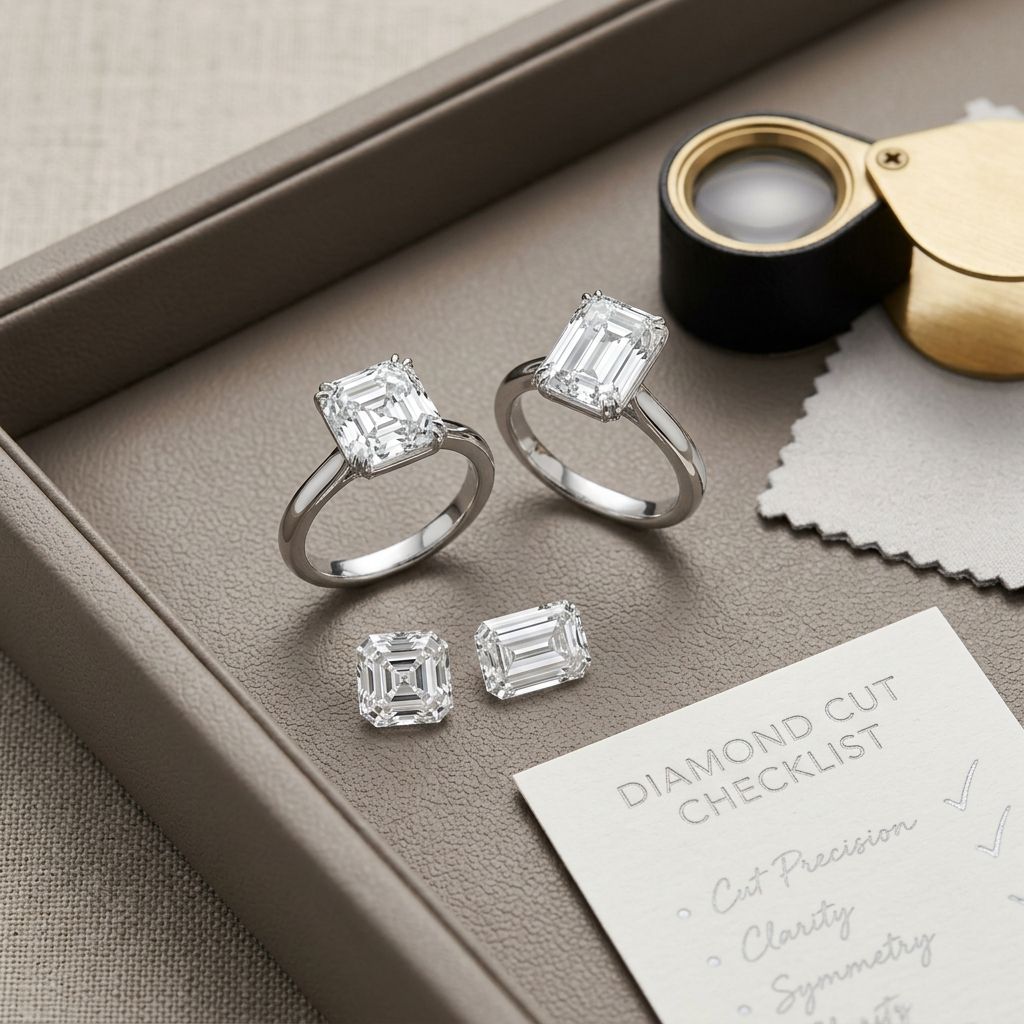
A checklist approach helps compare Asscher and emerald cuts based on shape, clarity needs, and setting style.
Buyer Decision Box
Choose Asscher if: you want a square, architectural step cut. You love Art Deco and vintage style. You prefer a compact, balanced silhouette.
Choose emerald if: you want a rectangular, elegant step cut. You prefer a longer, more elongated silhouette. You want a classic, refined look.
Assuming Asscher and emerald are interchangeable — the square vs rectangle difference affects the entire look.
Choosing too low clarity — both shapes show inclusions clearly.
Ignoring length-to-width ratio for emerald cuts — ratio changes how the diamond sits on the finger.
Choosing a setting that does not protect the cropped corners of either shape.
Myth vs Fact
Myth
Fact
Asscher and emerald are the same cut.
Asscher is square. Emerald is rectangular. They are different shapes.
Step cuts have no sparkle.
Step cuts have a quieter, elegant sparkle — broad flashes instead of scattered brilliance.
Asscher cuts are outdated.
Asscher cuts have remained popular since Art Deco and are a classic choice.
よくある質問
What is the difference between Asscher and emerald cut?
Asscher is square with deeply cropped corners. Emerald is rectangular with cropped corners. Both use step-cut faceting.
Which sparkles more?
Both produce similar broad-flash sparkle. The difference is in the shape, not the brilliance.
Which is more expensive?
Prices are similar. Asscher is slightly less common, which can affect availability.
Which hides inclusions better?
Neither hides inclusions well. Both step cuts show clarity characteristics clearly. Choose VS2 or higher.
Which looks bigger?
Emerald cuts appear larger because of the elongated rectangle. Asscher cuts are more compact.
What settings work best?
Both work well with solitaire, bezel, three-stone with baguettes, and cathedral settings.
Is Asscher good for engagement rings?
Yes, Asscher cuts are a distinctive choice for engagement rings, especially for buyers who love vintage style.
Is emerald cut good for engagement rings?
Yes, emerald cut engagement rings are a classic choice for buyers who value clean elegance.
Final Buying Note
Asscher and emerald cuts share the same faceting style but create very different silhouettes. Asscher is square, compact, and vintage-inspired. Emerald is rectangular, elegant, and elongating. Choose based on whether you prefer a balanced square or an elongated rectangle — the rest of the ring will follow naturally.
Asscher cuts pair beautifully with solitaire, bezel, and three-stone settings with tapered baguette side stones. The square shape suits symmetrical, balanced designs. Cathedral settings also complement the architectural character.
Emerald cuts work with solitaire, bezel, three-stone, and cathedral settings. The elongated shape benefits from settings that do not add unnecessary width. Browse our lab grown diamond ring styles or request a custom design.
A checklist approach helps compare Asscher and emerald cuts based on shape, clarity needs, and setting style.
Buyer Decision Box
Choose Asscher if: you want a square, architectural step cut. You love Art Deco and vintage style. You prefer a compact, balanced silhouette.
Choose emerald if: you want a rectangular, elegant step cut. You prefer a longer, more elongated silhouette. You want a classic, refined look.
Assuming Asscher and emerald are interchangeable — the square vs rectangle difference affects the entire look.
Choosing too low clarity — both shapes show inclusions clearly.
Ignoring length-to-width ratio for emerald cuts — ratio changes how the diamond sits on the finger.
Choosing a setting that does not protect the cropped corners of either shape.
Myth vs Fact
Myth
Fact
Asscher and emerald are the same cut.
Asscher is square. Emerald is rectangular. They are different shapes.
Step cuts have no sparkle.
Step cuts have a quieter, elegant sparkle — broad flashes instead of scattered brilliance.
Asscher cuts are outdated.
Asscher cuts have remained popular since Art Deco and are a classic choice.
よくある質問
What is the difference between Asscher and emerald cut?
Asscher is square with deeply cropped corners. Emerald is rectangular with cropped corners. Both use step-cut faceting.
Which sparkles more?
Both produce similar broad-flash sparkle. The difference is in the shape, not the brilliance.
Which is more expensive?
Prices are similar. Asscher is slightly less common, which can affect availability.
Which hides inclusions better?
Neither hides inclusions well. Both step cuts show clarity characteristics clearly. Choose VS2 or higher.
Which looks bigger?
Emerald cuts appear larger because of the elongated rectangle. Asscher cuts are more compact.
What settings work best?
Both work well with solitaire, bezel, three-stone with baguettes, and cathedral settings.
Is Asscher good for engagement rings?
Yes, Asscher cuts are a distinctive choice for engagement rings, especially for buyers who love vintage style.
Is emerald cut good for engagement rings?
Yes, emerald cut engagement rings are a classic choice for buyers who value clean elegance.
Final Buying Note
Asscher and emerald cuts share the same faceting style but create very different silhouettes. Asscher is square, compact, and vintage-inspired. Emerald is rectangular, elegant, and elongating. Choose based on whether you prefer a balanced square or an elongated rectangle — the rest of the ring will follow naturally.
Asscher cuts pair beautifully with solitaire, bezel, and three-stone settings with tapered baguette side stones. The square shape suits symmetrical, balanced designs. Cathedral settings also complement the architectural character.
Emerald cuts work with solitaire, bezel, three-stone, and cathedral settings. The elongated shape benefits from settings that do not add unnecessary width. Browse our lab grown diamond ring styles or request a custom design.
A checklist approach helps compare Asscher and emerald cuts based on shape, clarity needs, and setting style.
Buyer Decision Box
Choose Asscher if: you want a square, architectural step cut. You love Art Deco and vintage style. You prefer a compact, balanced silhouette.
Choose emerald if: you want a rectangular, elegant step cut. You prefer a longer, more elongated silhouette. You want a classic, refined look.
Assuming Asscher and emerald are interchangeable — the square vs rectangle difference affects the entire look.
Choosing too low clarity — both shapes show inclusions clearly.
Ignoring length-to-width ratio for emerald cuts — ratio changes how the diamond sits on the finger.
Choosing a setting that does not protect the cropped corners of either shape.
Myth vs Fact
Myth
Fact
Asscher and emerald are the same cut.
Asscher is square. Emerald is rectangular. They are different shapes.
Step cuts have no sparkle.
Step cuts have a quieter, elegant sparkle — broad flashes instead of scattered brilliance.
Asscher cuts are outdated.
Asscher cuts have remained popular since Art Deco and are a classic choice.
よくある質問
What is the difference between Asscher and emerald cut?
Asscher is square with deeply cropped corners. Emerald is rectangular with cropped corners. Both use step-cut faceting.
Which sparkles more?
Both produce similar broad-flash sparkle. The difference is in the shape, not the brilliance.
Which is more expensive?
Prices are similar. Asscher is slightly less common, which can affect availability.
Which hides inclusions better?
Neither hides inclusions well. Both step cuts show clarity characteristics clearly. Choose VS2 or higher.
Which looks bigger?
Emerald cuts appear larger because of the elongated rectangle. Asscher cuts are more compact.
What settings work best?
Both work well with solitaire, bezel, three-stone with baguettes, and cathedral settings.
Is Asscher good for engagement rings?
Yes, Asscher cuts are a distinctive choice for engagement rings, especially for buyers who love vintage style.
Is emerald cut good for engagement rings?
Yes, emerald cut engagement rings are a classic choice for buyers who value clean elegance.
Final Buying Note
Asscher and emerald cuts share the same faceting style but create very different silhouettes. Asscher is square, compact, and vintage-inspired. Emerald is rectangular, elegant, and elongating. Choose based on whether you prefer a balanced square or an elongated rectangle — the rest of the ring will follow naturally.
Both step cuts show clarity characteristics and body color more readily than brilliant cuts. The open facets act like windows — anything inside the diamond is visible. Buyers choosing either shape should prioritize VS2 clarity or higher and carefully review IGI certificate details. Our IGI certificate guide explains what to check.
Best Settings for Asscher and Emerald Cuts
Asscher cuts pair beautifully with solitaire, bezel, and three-stone settings with tapered baguette side stones. The square shape suits symmetrical, balanced designs. Cathedral settings also complement the architectural character.
Emerald cuts work with solitaire, bezel, three-stone, and cathedral settings. The elongated shape benefits from settings that do not add unnecessary width. Browse our lab grown diamond ring styles or request a custom design.
A checklist approach helps compare Asscher and emerald cuts based on shape, clarity needs, and setting style.
Buyer Decision Box
Choose Asscher if: you want a square, architectural step cut. You love Art Deco and vintage style. You prefer a compact, balanced silhouette.
Choose emerald if: you want a rectangular, elegant step cut. You prefer a longer, more elongated silhouette. You want a classic, refined look.
Assuming Asscher and emerald are interchangeable — the square vs rectangle difference affects the entire look.
Choosing too low clarity — both shapes show inclusions clearly.
Ignoring length-to-width ratio for emerald cuts — ratio changes how the diamond sits on the finger.
Choosing a setting that does not protect the cropped corners of either shape.
Myth vs Fact
Myth
Fact
Asscher and emerald are the same cut.
Asscher is square. Emerald is rectangular. They are different shapes.
Step cuts have no sparkle.
Step cuts have a quieter, elegant sparkle — broad flashes instead of scattered brilliance.
Asscher cuts are outdated.
Asscher cuts have remained popular since Art Deco and are a classic choice.
よくある質問
What is the difference between Asscher and emerald cut?
Asscher is square with deeply cropped corners. Emerald is rectangular with cropped corners. Both use step-cut faceting.
Which sparkles more?
Both produce similar broad-flash sparkle. The difference is in the shape, not the brilliance.
Which is more expensive?
Prices are similar. Asscher is slightly less common, which can affect availability.
Which hides inclusions better?
Neither hides inclusions well. Both step cuts show clarity characteristics clearly. Choose VS2 or higher.
Which looks bigger?
Emerald cuts appear larger because of the elongated rectangle. Asscher cuts are more compact.
What settings work best?
Both work well with solitaire, bezel, three-stone with baguettes, and cathedral settings.
Is Asscher good for engagement rings?
Yes, Asscher cuts are a distinctive choice for engagement rings, especially for buyers who love vintage style.
Is emerald cut good for engagement rings?
Yes, emerald cut engagement rings are a classic choice for buyers who value clean elegance.
Final Buying Note
Asscher and emerald cuts share the same faceting style but create very different silhouettes. Asscher is square, compact, and vintage-inspired. Emerald is rectangular, elegant, and elongating. Choose based on whether you prefer a balanced square or an elongated rectangle — the rest of the ring will follow naturally.
Both step cuts show clarity characteristics and body color more readily than brilliant cuts. The open facets act like windows — anything inside the diamond is visible. Buyers choosing either shape should prioritize VS2 clarity or higher and carefully review IGI certificate details. Our IGI certificate guide explains what to check.
Best Settings for Asscher and Emerald Cuts
Asscher cuts pair beautifully with solitaire, bezel, and three-stone settings with tapered baguette side stones. The square shape suits symmetrical, balanced designs. Cathedral settings also complement the architectural character.
Emerald cuts work with solitaire, bezel, three-stone, and cathedral settings. The elongated shape benefits from settings that do not add unnecessary width. Browse our lab grown diamond ring styles or request a custom design.
A checklist approach helps compare Asscher and emerald cuts based on shape, clarity needs, and setting style.
Buyer Decision Box
Choose Asscher if: you want a square, architectural step cut. You love Art Deco and vintage style. You prefer a compact, balanced silhouette.
Choose emerald if: you want a rectangular, elegant step cut. You prefer a longer, more elongated silhouette. You want a classic, refined look.
Assuming Asscher and emerald are interchangeable — the square vs rectangle difference affects the entire look.
Choosing too low clarity — both shapes show inclusions clearly.
Ignoring length-to-width ratio for emerald cuts — ratio changes how the diamond sits on the finger.
Choosing a setting that does not protect the cropped corners of either shape.
Myth vs Fact
Myth
Fact
Asscher and emerald are the same cut.
Asscher is square. Emerald is rectangular. They are different shapes.
Step cuts have no sparkle.
Step cuts have a quieter, elegant sparkle — broad flashes instead of scattered brilliance.
Asscher cuts are outdated.
Asscher cuts have remained popular since Art Deco and are a classic choice.
よくある質問
What is the difference between Asscher and emerald cut?
Asscher is square with deeply cropped corners. Emerald is rectangular with cropped corners. Both use step-cut faceting.
Which sparkles more?
Both produce similar broad-flash sparkle. The difference is in the shape, not the brilliance.
Which is more expensive?
Prices are similar. Asscher is slightly less common, which can affect availability.
Which hides inclusions better?
Neither hides inclusions well. Both step cuts show clarity characteristics clearly. Choose VS2 or higher.
Which looks bigger?
Emerald cuts appear larger because of the elongated rectangle. Asscher cuts are more compact.
What settings work best?
Both work well with solitaire, bezel, three-stone with baguettes, and cathedral settings.
Is Asscher good for engagement rings?
Yes, Asscher cuts are a distinctive choice for engagement rings, especially for buyers who love vintage style.
Is emerald cut good for engagement rings?
Yes, emerald cut engagement rings are a classic choice for buyers who value clean elegance.
Final Buying Note
Asscher and emerald cuts share the same faceting style but create very different silhouettes. Asscher is square, compact, and vintage-inspired. Emerald is rectangular, elegant, and elongating. Choose based on whether you prefer a balanced square or an elongated rectangle — the rest of the ring will follow naturally.
An emerald cut is a rectangular step-cut diamond with cropped corners and long, parallel facets. Unlike the Asscher’s square shape, the emerald cut’s rectangle creates a more elongated silhouette. The step facets produce broad flashes of light rather than scattered brilliance, giving emerald cuts a calm, elegant appearance.
Both use step-cut faceting, but the Asscher’s square shape creates a different sparkle pattern than the emerald’s rectangle.
Asscher vs Emerald Cut Comparison
Aspect
Asscher Cut
Emerald Cut
シェイプ
Square
Rectangle
Facet style
Step cut, octagonal
Step cut, parallel
Hall-of-mirrors
Strong, centered
Long, even
Finger effect
Compact, balanced
Elongated, elegant
Clarity needs
Higher (VS2+)
Higher (VS2+)
Style mood
Art Deco, vintage
Refined, classic
Which One Shows Clarity and Color More?
Both step cuts show clarity characteristics and body color more readily than brilliant cuts. The open facets act like windows — anything inside the diamond is visible. Buyers choosing either shape should prioritize VS2 clarity or higher and carefully review IGI certificate details. Our IGI certificate guide explains what to check.
Best Settings for Asscher and Emerald Cuts
Asscher cuts pair beautifully with solitaire, bezel, and three-stone settings with tapered baguette side stones. The square shape suits symmetrical, balanced designs. Cathedral settings also complement the architectural character.
Emerald cuts work with solitaire, bezel, three-stone, and cathedral settings. The elongated shape benefits from settings that do not add unnecessary width. Browse our lab grown diamond ring styles or request a custom design.
A checklist approach helps compare Asscher and emerald cuts based on shape, clarity needs, and setting style.
Buyer Decision Box
Choose Asscher if: you want a square, architectural step cut. You love Art Deco and vintage style. You prefer a compact, balanced silhouette.
Choose emerald if: you want a rectangular, elegant step cut. You prefer a longer, more elongated silhouette. You want a classic, refined look.
Assuming Asscher and emerald are interchangeable — the square vs rectangle difference affects the entire look.
Choosing too low clarity — both shapes show inclusions clearly.
Ignoring length-to-width ratio for emerald cuts — ratio changes how the diamond sits on the finger.
Choosing a setting that does not protect the cropped corners of either shape.
Myth vs Fact
Myth
Fact
Asscher and emerald are the same cut.
Asscher is square. Emerald is rectangular. They are different shapes.
Step cuts have no sparkle.
Step cuts have a quieter, elegant sparkle — broad flashes instead of scattered brilliance.
Asscher cuts are outdated.
Asscher cuts have remained popular since Art Deco and are a classic choice.
よくある質問
What is the difference between Asscher and emerald cut?
Asscher is square with deeply cropped corners. Emerald is rectangular with cropped corners. Both use step-cut faceting.
Which sparkles more?
Both produce similar broad-flash sparkle. The difference is in the shape, not the brilliance.
Which is more expensive?
Prices are similar. Asscher is slightly less common, which can affect availability.
Which hides inclusions better?
Neither hides inclusions well. Both step cuts show clarity characteristics clearly. Choose VS2 or higher.
Which looks bigger?
Emerald cuts appear larger because of the elongated rectangle. Asscher cuts are more compact.
What settings work best?
Both work well with solitaire, bezel, three-stone with baguettes, and cathedral settings.
Is Asscher good for engagement rings?
Yes, Asscher cuts are a distinctive choice for engagement rings, especially for buyers who love vintage style.
Is emerald cut good for engagement rings?
Yes, emerald cut engagement rings are a classic choice for buyers who value clean elegance.
Final Buying Note
Asscher and emerald cuts share the same faceting style but create very different silhouettes. Asscher is square, compact, and vintage-inspired. Emerald is rectangular, elegant, and elongating. Choose based on whether you prefer a balanced square or an elongated rectangle — the rest of the ring will follow naturally.
An emerald cut is a rectangular step-cut diamond with cropped corners and long, parallel facets. Unlike the Asscher’s square shape, the emerald cut’s rectangle creates a more elongated silhouette. The step facets produce broad flashes of light rather than scattered brilliance, giving emerald cuts a calm, elegant appearance.
Both use step-cut faceting, but the Asscher’s square shape creates a different sparkle pattern than the emerald’s rectangle.
Asscher vs Emerald Cut Comparison
Aspect
Asscher Cut
Emerald Cut
シェイプ
Square
Rectangle
Facet style
Step cut, octagonal
Step cut, parallel
Hall-of-mirrors
Strong, centered
Long, even
Finger effect
Compact, balanced
Elongated, elegant
Clarity needs
Higher (VS2+)
Higher (VS2+)
Style mood
Art Deco, vintage
Refined, classic
Which One Shows Clarity and Color More?
Both step cuts show clarity characteristics and body color more readily than brilliant cuts. The open facets act like windows — anything inside the diamond is visible. Buyers choosing either shape should prioritize VS2 clarity or higher and carefully review IGI certificate details. Our IGI certificate guide explains what to check.
Best Settings for Asscher and Emerald Cuts
Asscher cuts pair beautifully with solitaire, bezel, and three-stone settings with tapered baguette side stones. The square shape suits symmetrical, balanced designs. Cathedral settings also complement the architectural character.
Emerald cuts work with solitaire, bezel, three-stone, and cathedral settings. The elongated shape benefits from settings that do not add unnecessary width. Browse our lab grown diamond ring styles or request a custom design.
A checklist approach helps compare Asscher and emerald cuts based on shape, clarity needs, and setting style.
Buyer Decision Box
Choose Asscher if: you want a square, architectural step cut. You love Art Deco and vintage style. You prefer a compact, balanced silhouette.
Choose emerald if: you want a rectangular, elegant step cut. You prefer a longer, more elongated silhouette. You want a classic, refined look.
Assuming Asscher and emerald are interchangeable — the square vs rectangle difference affects the entire look.
Choosing too low clarity — both shapes show inclusions clearly.
Ignoring length-to-width ratio for emerald cuts — ratio changes how the diamond sits on the finger.
Choosing a setting that does not protect the cropped corners of either shape.
Myth vs Fact
Myth
Fact
Asscher and emerald are the same cut.
Asscher is square. Emerald is rectangular. They are different shapes.
Step cuts have no sparkle.
Step cuts have a quieter, elegant sparkle — broad flashes instead of scattered brilliance.
Asscher cuts are outdated.
Asscher cuts have remained popular since Art Deco and are a classic choice.
よくある質問
What is the difference between Asscher and emerald cut?
Asscher is square with deeply cropped corners. Emerald is rectangular with cropped corners. Both use step-cut faceting.
Which sparkles more?
Both produce similar broad-flash sparkle. The difference is in the shape, not the brilliance.
Which is more expensive?
Prices are similar. Asscher is slightly less common, which can affect availability.
Which hides inclusions better?
Neither hides inclusions well. Both step cuts show clarity characteristics clearly. Choose VS2 or higher.
Which looks bigger?
Emerald cuts appear larger because of the elongated rectangle. Asscher cuts are more compact.
What settings work best?
Both work well with solitaire, bezel, three-stone with baguettes, and cathedral settings.
Is Asscher good for engagement rings?
Yes, Asscher cuts are a distinctive choice for engagement rings, especially for buyers who love vintage style.
Is emerald cut good for engagement rings?
Yes, emerald cut engagement rings are a classic choice for buyers who value clean elegance.
Final Buying Note
Asscher and emerald cuts share the same faceting style but create very different silhouettes. Asscher is square, compact, and vintage-inspired. Emerald is rectangular, elegant, and elongating. Choose based on whether you prefer a balanced square or an elongated rectangle — the rest of the ring will follow naturally.
An Asscher cut is a square step-cut diamond with deeply cropped corners and a distinctive faceting pattern that creates a hall-of-mirrors effect. The faceting consists of concentric octagonal steps that draw the eye into the center of the stone. Asscher cuts have a vintage feel, having been popular since the Art Deco era.
What Is an Emerald Cut Diamond?
An emerald cut is a rectangular step-cut diamond with cropped corners and long, parallel facets. Unlike the Asscher’s square shape, the emerald cut’s rectangle creates a more elongated silhouette. The step facets produce broad flashes of light rather than scattered brilliance, giving emerald cuts a calm, elegant appearance.
Both use step-cut faceting, but the Asscher’s square shape creates a different sparkle pattern than the emerald’s rectangle.
Asscher vs Emerald Cut Comparison
Aspect
Asscher Cut
Emerald Cut
シェイプ
Square
Rectangle
Facet style
Step cut, octagonal
Step cut, parallel
Hall-of-mirrors
Strong, centered
Long, even
Finger effect
Compact, balanced
Elongated, elegant
Clarity needs
Higher (VS2+)
Higher (VS2+)
Style mood
Art Deco, vintage
Refined, classic
Which One Shows Clarity and Color More?
Both step cuts show clarity characteristics and body color more readily than brilliant cuts. The open facets act like windows — anything inside the diamond is visible. Buyers choosing either shape should prioritize VS2 clarity or higher and carefully review IGI certificate details. Our IGI certificate guide explains what to check.
Best Settings for Asscher and Emerald Cuts
Asscher cuts pair beautifully with solitaire, bezel, and three-stone settings with tapered baguette side stones. The square shape suits symmetrical, balanced designs. Cathedral settings also complement the architectural character.
Emerald cuts work with solitaire, bezel, three-stone, and cathedral settings. The elongated shape benefits from settings that do not add unnecessary width. Browse our lab grown diamond ring styles or request a custom design.
A checklist approach helps compare Asscher and emerald cuts based on shape, clarity needs, and setting style.
Buyer Decision Box
Choose Asscher if: you want a square, architectural step cut. You love Art Deco and vintage style. You prefer a compact, balanced silhouette.
Choose emerald if: you want a rectangular, elegant step cut. You prefer a longer, more elongated silhouette. You want a classic, refined look.
Assuming Asscher and emerald are interchangeable — the square vs rectangle difference affects the entire look.
Choosing too low clarity — both shapes show inclusions clearly.
Ignoring length-to-width ratio for emerald cuts — ratio changes how the diamond sits on the finger.
Choosing a setting that does not protect the cropped corners of either shape.
Myth vs Fact
Myth
Fact
Asscher and emerald are the same cut.
Asscher is square. Emerald is rectangular. They are different shapes.
Step cuts have no sparkle.
Step cuts have a quieter, elegant sparkle — broad flashes instead of scattered brilliance.
Asscher cuts are outdated.
Asscher cuts have remained popular since Art Deco and are a classic choice.
よくある質問
What is the difference between Asscher and emerald cut?
Asscher is square with deeply cropped corners. Emerald is rectangular with cropped corners. Both use step-cut faceting.
Which sparkles more?
Both produce similar broad-flash sparkle. The difference is in the shape, not the brilliance.
Which is more expensive?
Prices are similar. Asscher is slightly less common, which can affect availability.
Which hides inclusions better?
Neither hides inclusions well. Both step cuts show clarity characteristics clearly. Choose VS2 or higher.
Which looks bigger?
Emerald cuts appear larger because of the elongated rectangle. Asscher cuts are more compact.
What settings work best?
Both work well with solitaire, bezel, three-stone with baguettes, and cathedral settings.
Is Asscher good for engagement rings?
Yes, Asscher cuts are a distinctive choice for engagement rings, especially for buyers who love vintage style.
Is emerald cut good for engagement rings?
Yes, emerald cut engagement rings are a classic choice for buyers who value clean elegance.
Final Buying Note
Asscher and emerald cuts share the same faceting style but create very different silhouettes. Asscher is square, compact, and vintage-inspired. Emerald is rectangular, elegant, and elongating. Choose based on whether you prefer a balanced square or an elongated rectangle — the rest of the ring will follow naturally.
An Asscher cut is a square step-cut diamond with cropped corners and a distinctive hall-of-mirrors effect. An emerald cut is a rectangular step-cut diamond with the same mirror-like facets but a longer silhouette. Asscher is best for buyers who want a square, architectural look. Emerald is best for those who prefer a longer, more elegant shape.
Asscher cuts are square. Emerald cuts are rectangular. Both use step-cut faceting for a clean, mirror-like look.
What Is an Asscher Cut Diamond?
An Asscher cut is a square step-cut diamond with deeply cropped corners and a distinctive faceting pattern that creates a hall-of-mirrors effect. The faceting consists of concentric octagonal steps that draw the eye into the center of the stone. Asscher cuts have a vintage feel, having been popular since the Art Deco era.
What Is an Emerald Cut Diamond?
An emerald cut is a rectangular step-cut diamond with cropped corners and long, parallel facets. Unlike the Asscher’s square shape, the emerald cut’s rectangle creates a more elongated silhouette. The step facets produce broad flashes of light rather than scattered brilliance, giving emerald cuts a calm, elegant appearance.
Both use step-cut faceting, but the Asscher’s square shape creates a different sparkle pattern than the emerald’s rectangle.
Asscher vs Emerald Cut Comparison
Aspect
Asscher Cut
Emerald Cut
シェイプ
Square
Rectangle
Facet style
Step cut, octagonal
Step cut, parallel
Hall-of-mirrors
Strong, centered
Long, even
Finger effect
Compact, balanced
Elongated, elegant
Clarity needs
Higher (VS2+)
Higher (VS2+)
Style mood
Art Deco, vintage
Refined, classic
Which One Shows Clarity and Color More?
Both step cuts show clarity characteristics and body color more readily than brilliant cuts. The open facets act like windows — anything inside the diamond is visible. Buyers choosing either shape should prioritize VS2 clarity or higher and carefully review IGI certificate details. Our IGI certificate guide explains what to check.
Best Settings for Asscher and Emerald Cuts
Asscher cuts pair beautifully with solitaire, bezel, and three-stone settings with tapered baguette side stones. The square shape suits symmetrical, balanced designs. Cathedral settings also complement the architectural character.
Emerald cuts work with solitaire, bezel, three-stone, and cathedral settings. The elongated shape benefits from settings that do not add unnecessary width. Browse our lab grown diamond ring styles or request a custom design.
A checklist approach helps compare Asscher and emerald cuts based on shape, clarity needs, and setting style.
Buyer Decision Box
Choose Asscher if: you want a square, architectural step cut. You love Art Deco and vintage style. You prefer a compact, balanced silhouette.
Choose emerald if: you want a rectangular, elegant step cut. You prefer a longer, more elongated silhouette. You want a classic, refined look.
Assuming Asscher and emerald are interchangeable — the square vs rectangle difference affects the entire look.
Choosing too low clarity — both shapes show inclusions clearly.
Ignoring length-to-width ratio for emerald cuts — ratio changes how the diamond sits on the finger.
Choosing a setting that does not protect the cropped corners of either shape.
Myth vs Fact
Myth
Fact
Asscher and emerald are the same cut.
Asscher is square. Emerald is rectangular. They are different shapes.
Step cuts have no sparkle.
Step cuts have a quieter, elegant sparkle — broad flashes instead of scattered brilliance.
Asscher cuts are outdated.
Asscher cuts have remained popular since Art Deco and are a classic choice.
よくある質問
What is the difference between Asscher and emerald cut?
Asscher is square with deeply cropped corners. Emerald is rectangular with cropped corners. Both use step-cut faceting.
Which sparkles more?
Both produce similar broad-flash sparkle. The difference is in the shape, not the brilliance.
Which is more expensive?
Prices are similar. Asscher is slightly less common, which can affect availability.
Which hides inclusions better?
Neither hides inclusions well. Both step cuts show clarity characteristics clearly. Choose VS2 or higher.
Which looks bigger?
Emerald cuts appear larger because of the elongated rectangle. Asscher cuts are more compact.
What settings work best?
Both work well with solitaire, bezel, three-stone with baguettes, and cathedral settings.
Is Asscher good for engagement rings?
Yes, Asscher cuts are a distinctive choice for engagement rings, especially for buyers who love vintage style.
Is emerald cut good for engagement rings?
Yes, emerald cut engagement rings are a classic choice for buyers who value clean elegance.
Final Buying Note
Asscher and emerald cuts share the same faceting style but create very different silhouettes. Asscher is square, compact, and vintage-inspired. Emerald is rectangular, elegant, and elongating. Choose based on whether you prefer a balanced square or an elongated rectangle — the rest of the ring will follow naturally.
An Asscher cut is a square step-cut diamond with cropped corners and a distinctive hall-of-mirrors effect. An emerald cut is a rectangular step-cut diamond with the same mirror-like facets but a longer silhouette. Asscher is best for buyers who want a square, architectural look. Emerald is best for those who prefer a longer, more elegant shape.
Asscher cuts are square. Emerald cuts are rectangular. Both use step-cut faceting for a clean, mirror-like look.
What Is an Asscher Cut Diamond?
An Asscher cut is a square step-cut diamond with deeply cropped corners and a distinctive faceting pattern that creates a hall-of-mirrors effect. The faceting consists of concentric octagonal steps that draw the eye into the center of the stone. Asscher cuts have a vintage feel, having been popular since the Art Deco era.
What Is an Emerald Cut Diamond?
An emerald cut is a rectangular step-cut diamond with cropped corners and long, parallel facets. Unlike the Asscher’s square shape, the emerald cut’s rectangle creates a more elongated silhouette. The step facets produce broad flashes of light rather than scattered brilliance, giving emerald cuts a calm, elegant appearance.
Both use step-cut faceting, but the Asscher’s square shape creates a different sparkle pattern than the emerald’s rectangle.
Asscher vs Emerald Cut Comparison
Aspect
Asscher Cut
Emerald Cut
シェイプ
Square
Rectangle
Facet style
Step cut, octagonal
Step cut, parallel
Hall-of-mirrors
Strong, centered
Long, even
Finger effect
Compact, balanced
Elongated, elegant
Clarity needs
Higher (VS2+)
Higher (VS2+)
Style mood
Art Deco, vintage
Refined, classic
Which One Shows Clarity and Color More?
Both step cuts show clarity characteristics and body color more readily than brilliant cuts. The open facets act like windows — anything inside the diamond is visible. Buyers choosing either shape should prioritize VS2 clarity or higher and carefully review IGI certificate details. Our IGI certificate guide explains what to check.
Best Settings for Asscher and Emerald Cuts
Asscher cuts pair beautifully with solitaire, bezel, and three-stone settings with tapered baguette side stones. The square shape suits symmetrical, balanced designs. Cathedral settings also complement the architectural character.
Emerald cuts work with solitaire, bezel, three-stone, and cathedral settings. The elongated shape benefits from settings that do not add unnecessary width. Browse our lab grown diamond ring styles or request a custom design.
A checklist approach helps compare Asscher and emerald cuts based on shape, clarity needs, and setting style.
Buyer Decision Box
Choose Asscher if: you want a square, architectural step cut. You love Art Deco and vintage style. You prefer a compact, balanced silhouette.
Choose emerald if: you want a rectangular, elegant step cut. You prefer a longer, more elongated silhouette. You want a classic, refined look.
Assuming Asscher and emerald are interchangeable — the square vs rectangle difference affects the entire look.
Choosing too low clarity — both shapes show inclusions clearly.
Ignoring length-to-width ratio for emerald cuts — ratio changes how the diamond sits on the finger.
Choosing a setting that does not protect the cropped corners of either shape.
Myth vs Fact
Myth
Fact
Asscher and emerald are the same cut.
Asscher is square. Emerald is rectangular. They are different shapes.
Step cuts have no sparkle.
Step cuts have a quieter, elegant sparkle — broad flashes instead of scattered brilliance.
Asscher cuts are outdated.
Asscher cuts have remained popular since Art Deco and are a classic choice.
よくある質問
What is the difference between Asscher and emerald cut?
Asscher is square with deeply cropped corners. Emerald is rectangular with cropped corners. Both use step-cut faceting.
Which sparkles more?
Both produce similar broad-flash sparkle. The difference is in the shape, not the brilliance.
Which is more expensive?
Prices are similar. Asscher is slightly less common, which can affect availability.
Which hides inclusions better?
Neither hides inclusions well. Both step cuts show clarity characteristics clearly. Choose VS2 or higher.
Which looks bigger?
Emerald cuts appear larger because of the elongated rectangle. Asscher cuts are more compact.
What settings work best?
Both work well with solitaire, bezel, three-stone with baguettes, and cathedral settings.
Is Asscher good for engagement rings?
Yes, Asscher cuts are a distinctive choice for engagement rings, especially for buyers who love vintage style.
Is emerald cut good for engagement rings?
Yes, emerald cut engagement rings are a classic choice for buyers who value clean elegance.
Final Buying Note
Asscher and emerald cuts share the same faceting style but create very different silhouettes. Asscher is square, compact, and vintage-inspired. Emerald is rectangular, elegant, and elongating. Choose based on whether you prefer a balanced square or an elongated rectangle — the rest of the ring will follow naturally.
Asscher and emerald cut diamonds are often grouped together because both use step-cut faceting. But they look surprisingly different on the finger. One is square and architectural. The other is rectangular and refined. The difference changes the whole feel of the ring.
This guide compares them side by side.
Quick Answer:
An Asscher cut is a square step-cut diamond with cropped corners and a distinctive hall-of-mirrors effect. An emerald cut is a rectangular step-cut diamond with the same mirror-like facets but a longer silhouette. Asscher is best for buyers who want a square, architectural look. Emerald is best for those who prefer a longer, more elegant shape.
Asscher cuts are square. Emerald cuts are rectangular. Both use step-cut faceting for a clean, mirror-like look.
What Is an Asscher Cut Diamond?
An Asscher cut is a square step-cut diamond with deeply cropped corners and a distinctive faceting pattern that creates a hall-of-mirrors effect. The faceting consists of concentric octagonal steps that draw the eye into the center of the stone. Asscher cuts have a vintage feel, having been popular since the Art Deco era.
What Is an Emerald Cut Diamond?
An emerald cut is a rectangular step-cut diamond with cropped corners and long, parallel facets. Unlike the Asscher’s square shape, the emerald cut’s rectangle creates a more elongated silhouette. The step facets produce broad flashes of light rather than scattered brilliance, giving emerald cuts a calm, elegant appearance.
Both use step-cut faceting, but the Asscher’s square shape creates a different sparkle pattern than the emerald’s rectangle.
Asscher vs Emerald Cut Comparison
Aspect
Asscher Cut
Emerald Cut
シェイプ
Square
Rectangle
Facet style
Step cut, octagonal
Step cut, parallel
Hall-of-mirrors
Strong, centered
Long, even
Finger effect
Compact, balanced
Elongated, elegant
Clarity needs
Higher (VS2+)
Higher (VS2+)
Style mood
Art Deco, vintage
Refined, classic
Which One Shows Clarity and Color More?
Both step cuts show clarity characteristics and body color more readily than brilliant cuts. The open facets act like windows — anything inside the diamond is visible. Buyers choosing either shape should prioritize VS2 clarity or higher and carefully review IGI certificate details. Our IGI certificate guide explains what to check.
Best Settings for Asscher and Emerald Cuts
Asscher cuts pair beautifully with solitaire, bezel, and three-stone settings with tapered baguette side stones. The square shape suits symmetrical, balanced designs. Cathedral settings also complement the architectural character.
Emerald cuts work with solitaire, bezel, three-stone, and cathedral settings. The elongated shape benefits from settings that do not add unnecessary width. Browse our lab grown diamond ring styles or request a custom design.
A checklist approach helps compare Asscher and emerald cuts based on shape, clarity needs, and setting style.
Buyer Decision Box
Choose Asscher if: you want a square, architectural step cut. You love Art Deco and vintage style. You prefer a compact, balanced silhouette.
Choose emerald if: you want a rectangular, elegant step cut. You prefer a longer, more elongated silhouette. You want a classic, refined look.
Assuming Asscher and emerald are interchangeable — the square vs rectangle difference affects the entire look.
Choosing too low clarity — both shapes show inclusions clearly.
Ignoring length-to-width ratio for emerald cuts — ratio changes how the diamond sits on the finger.
Choosing a setting that does not protect the cropped corners of either shape.
Myth vs Fact
Myth
Fact
Asscher and emerald are the same cut.
Asscher is square. Emerald is rectangular. They are different shapes.
Step cuts have no sparkle.
Step cuts have a quieter, elegant sparkle — broad flashes instead of scattered brilliance.
Asscher cuts are outdated.
Asscher cuts have remained popular since Art Deco and are a classic choice.
よくある質問
What is the difference between Asscher and emerald cut?
Asscher is square with deeply cropped corners. Emerald is rectangular with cropped corners. Both use step-cut faceting.
Which sparkles more?
Both produce similar broad-flash sparkle. The difference is in the shape, not the brilliance.
Which is more expensive?
Prices are similar. Asscher is slightly less common, which can affect availability.
Which hides inclusions better?
Neither hides inclusions well. Both step cuts show clarity characteristics clearly. Choose VS2 or higher.
Which looks bigger?
Emerald cuts appear larger because of the elongated rectangle. Asscher cuts are more compact.
What settings work best?
Both work well with solitaire, bezel, three-stone with baguettes, and cathedral settings.
Is Asscher good for engagement rings?
Yes, Asscher cuts are a distinctive choice for engagement rings, especially for buyers who love vintage style.
Is emerald cut good for engagement rings?
Yes, emerald cut engagement rings are a classic choice for buyers who value clean elegance.
Final Buying Note
Asscher and emerald cuts share the same faceting style but create very different silhouettes. Asscher is square, compact, and vintage-inspired. Emerald is rectangular, elegant, and elongating. Choose based on whether you prefer a balanced square or an elongated rectangle — the rest of the ring will follow naturally.
Asscher and emerald cut diamonds are often grouped together because both use step-cut faceting. But they look surprisingly different on the finger. One is square and architectural. The other is rectangular and refined. The difference changes the whole feel of the ring.
This guide compares them side by side.
Quick Answer:
An Asscher cut is a square step-cut diamond with cropped corners and a distinctive hall-of-mirrors effect. An emerald cut is a rectangular step-cut diamond with the same mirror-like facets but a longer silhouette. Asscher is best for buyers who want a square, architectural look. Emerald is best for those who prefer a longer, more elegant shape.
Asscher cuts are square. Emerald cuts are rectangular. Both use step-cut faceting for a clean, mirror-like look.
What Is an Asscher Cut Diamond?
An Asscher cut is a square step-cut diamond with deeply cropped corners and a distinctive faceting pattern that creates a hall-of-mirrors effect. The faceting consists of concentric octagonal steps that draw the eye into the center of the stone. Asscher cuts have a vintage feel, having been popular since the Art Deco era.
What Is an Emerald Cut Diamond?
An emerald cut is a rectangular step-cut diamond with cropped corners and long, parallel facets. Unlike the Asscher’s square shape, the emerald cut’s rectangle creates a more elongated silhouette. The step facets produce broad flashes of light rather than scattered brilliance, giving emerald cuts a calm, elegant appearance.
Both use step-cut faceting, but the Asscher’s square shape creates a different sparkle pattern than the emerald’s rectangle.
Asscher vs Emerald Cut Comparison
Aspect
Asscher Cut
Emerald Cut
シェイプ
Square
Rectangle
Facet style
Step cut, octagonal
Step cut, parallel
Hall-of-mirrors
Strong, centered
Long, even
Finger effect
Compact, balanced
Elongated, elegant
Clarity needs
Higher (VS2+)
Higher (VS2+)
Style mood
Art Deco, vintage
Refined, classic
Which One Shows Clarity and Color More?
Both step cuts show clarity characteristics and body color more readily than brilliant cuts. The open facets act like windows — anything inside the diamond is visible. Buyers choosing either shape should prioritize VS2 clarity or higher and carefully review IGI certificate details. Our IGI certificate guide explains what to check.
Best Settings for Asscher and Emerald Cuts
Asscher cuts pair beautifully with solitaire, bezel, and three-stone settings with tapered baguette side stones. The square shape suits symmetrical, balanced designs. Cathedral settings also complement the architectural character.
Emerald cuts work with solitaire, bezel, three-stone, and cathedral settings. The elongated shape benefits from settings that do not add unnecessary width. Browse our lab grown diamond ring styles or request a custom design.
A checklist approach helps compare Asscher and emerald cuts based on shape, clarity needs, and setting style.
Buyer Decision Box
Choose Asscher if: you want a square, architectural step cut. You love Art Deco and vintage style. You prefer a compact, balanced silhouette.
Choose emerald if: you want a rectangular, elegant step cut. You prefer a longer, more elongated silhouette. You want a classic, refined look.
Assuming Asscher and emerald are interchangeable — the square vs rectangle difference affects the entire look.
Choosing too low clarity — both shapes show inclusions clearly.
Ignoring length-to-width ratio for emerald cuts — ratio changes how the diamond sits on the finger.
Choosing a setting that does not protect the cropped corners of either shape.
Myth vs Fact
Myth
Fact
Asscher and emerald are the same cut.
Asscher is square. Emerald is rectangular. They are different shapes.
Step cuts have no sparkle.
Step cuts have a quieter, elegant sparkle — broad flashes instead of scattered brilliance.
Asscher cuts are outdated.
Asscher cuts have remained popular since Art Deco and are a classic choice.
よくある質問
What is the difference between Asscher and emerald cut?
Asscher is square with deeply cropped corners. Emerald is rectangular with cropped corners. Both use step-cut faceting.
Which sparkles more?
Both produce similar broad-flash sparkle. The difference is in the shape, not the brilliance.
Which is more expensive?
Prices are similar. Asscher is slightly less common, which can affect availability.
Which hides inclusions better?
Neither hides inclusions well. Both step cuts show clarity characteristics clearly. Choose VS2 or higher.
Which looks bigger?
Emerald cuts appear larger because of the elongated rectangle. Asscher cuts are more compact.
What settings work best?
Both work well with solitaire, bezel, three-stone with baguettes, and cathedral settings.
Is Asscher good for engagement rings?
Yes, Asscher cuts are a distinctive choice for engagement rings, especially for buyers who love vintage style.
Is emerald cut good for engagement rings?
Yes, emerald cut engagement rings are a classic choice for buyers who value clean elegance.
Final Buying Note
Asscher and emerald cuts share the same faceting style but create very different silhouettes. Asscher is square, compact, and vintage-inspired. Emerald is rectangular, elegant, and elongating. Choose based on whether you prefer a balanced square or an elongated rectangle — the rest of the ring will follow naturally.
Asscher and emerald cut diamonds are often grouped together because both use step-cut faceting. But they look surprisingly different on the finger. One is square and architectural. The other is rectangular and refined. The difference changes the whole feel of the ring.
This guide compares them side by side.
Quick Answer:
An Asscher cut is a square step-cut diamond with cropped corners and a distinctive hall-of-mirrors effect. An emerald cut is a rectangular step-cut diamond with the same mirror-like facets but a longer silhouette. Asscher is best for buyers who want a square, architectural look. Emerald is best for those who prefer a longer, more elegant shape.
Asscher cuts are square. Emerald cuts are rectangular. Both use step-cut faceting for a clean, mirror-like look.
What Is an Asscher Cut Diamond?
An Asscher cut is a square step-cut diamond with deeply cropped corners and a distinctive faceting pattern that creates a hall-of-mirrors effect. The faceting consists of concentric octagonal steps that draw the eye into the center of the stone. Asscher cuts have a vintage feel, having been popular since the Art Deco era.
What Is an Emerald Cut Diamond?
An emerald cut is a rectangular step-cut diamond with cropped corners and long, parallel facets. Unlike the Asscher’s square shape, the emerald cut’s rectangle creates a more elongated silhouette. The step facets produce broad flashes of light rather than scattered brilliance, giving emerald cuts a calm, elegant appearance.
Both use step-cut faceting, but the Asscher’s square shape creates a different sparkle pattern than the emerald’s rectangle.
Asscher vs Emerald Cut Comparison
Aspect
Asscher Cut
Emerald Cut
シェイプ
Square
Rectangle
Facet style
Step cut, octagonal
Step cut, parallel
Hall-of-mirrors
Strong, centered
Long, even
Finger effect
Compact, balanced
Elongated, elegant
Clarity needs
Higher (VS2+)
Higher (VS2+)
Style mood
Art Deco, vintage
Refined, classic
Which One Shows Clarity and Color More?
Both step cuts show clarity characteristics and body color more readily than brilliant cuts. The open facets act like windows — anything inside the diamond is visible. Buyers choosing either shape should prioritize VS2 clarity or higher and carefully review IGI certificate details. Our IGI certificate guide explains what to check.
Best Settings for Asscher and Emerald Cuts
Asscher cuts pair beautifully with solitaire, bezel, and three-stone settings with tapered baguette side stones. The square shape suits symmetrical, balanced designs. Cathedral settings also complement the architectural character.
Emerald cuts work with solitaire, bezel, three-stone, and cathedral settings. The elongated shape benefits from settings that do not add unnecessary width. Browse our lab grown diamond ring styles or request a custom design.
A checklist approach helps compare Asscher and emerald cuts based on shape, clarity needs, and setting style.
Buyer Decision Box
Choose Asscher if: you want a square, architectural step cut. You love Art Deco and vintage style. You prefer a compact, balanced silhouette.
Choose emerald if: you want a rectangular, elegant step cut. You prefer a longer, more elongated silhouette. You want a classic, refined look.
Assuming Asscher and emerald are interchangeable — the square vs rectangle difference affects the entire look.
Choosing too low clarity — both shapes show inclusions clearly.
Ignoring length-to-width ratio for emerald cuts — ratio changes how the diamond sits on the finger.
Choosing a setting that does not protect the cropped corners of either shape.
Myth vs Fact
Myth
Fact
Asscher and emerald are the same cut.
Asscher is square. Emerald is rectangular. They are different shapes.
Step cuts have no sparkle.
Step cuts have a quieter, elegant sparkle — broad flashes instead of scattered brilliance.
Asscher cuts are outdated.
Asscher cuts have remained popular since Art Deco and are a classic choice.
よくある質問
What is the difference between Asscher and emerald cut?
Asscher is square with deeply cropped corners. Emerald is rectangular with cropped corners. Both use step-cut faceting.
Which sparkles more?
Both produce similar broad-flash sparkle. The difference is in the shape, not the brilliance.
Which is more expensive?
Prices are similar. Asscher is slightly less common, which can affect availability.
Which hides inclusions better?
Neither hides inclusions well. Both step cuts show clarity characteristics clearly. Choose VS2 or higher.
Which looks bigger?
Emerald cuts appear larger because of the elongated rectangle. Asscher cuts are more compact.
What settings work best?
Both work well with solitaire, bezel, three-stone with baguettes, and cathedral settings.
Is Asscher good for engagement rings?
Yes, Asscher cuts are a distinctive choice for engagement rings, especially for buyers who love vintage style.
Is emerald cut good for engagement rings?
Yes, emerald cut engagement rings are a classic choice for buyers who value clean elegance.
Final Buying Note
Asscher and emerald cuts share the same faceting style but create very different silhouettes. Asscher is square, compact, and vintage-inspired. Emerald is rectangular, elegant, and elongating. Choose based on whether you prefer a balanced square or an elongated rectangle — the rest of the ring will follow naturally.