
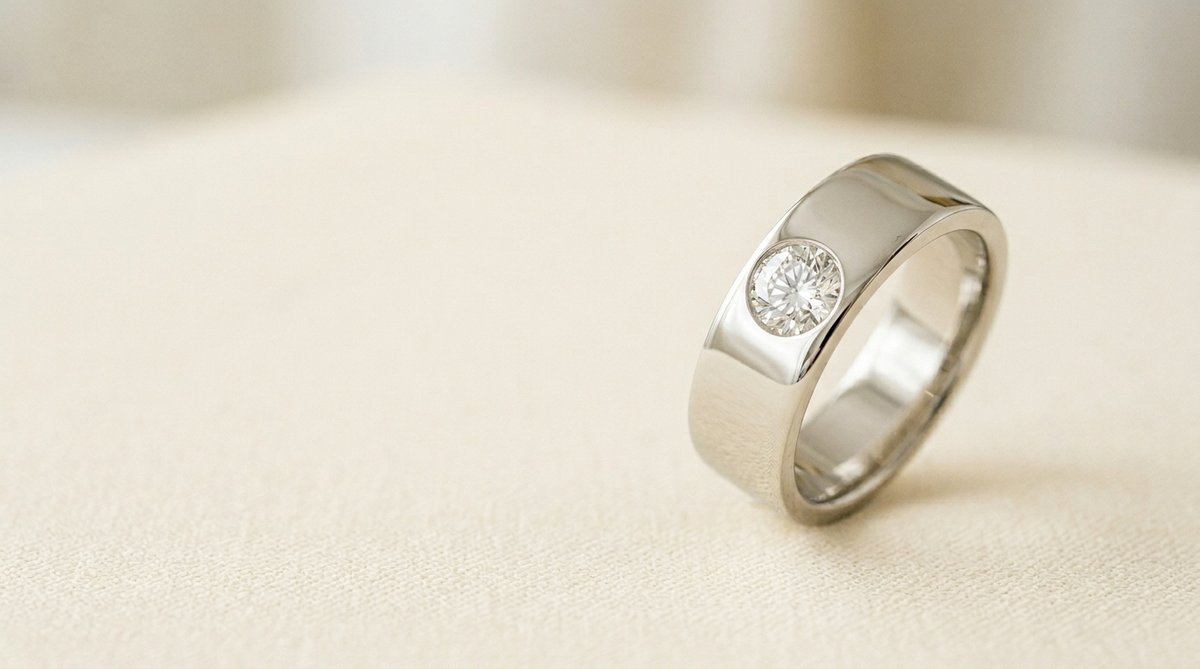
Most engagement rings hold the diamond above the band. The flush setting does the opposite — it sets the diamond directly into the metal so the top of the stone sits level with the surface. There are no prongs, no bezel rim, nothing sticking out.
The flush setting, also called a gypsy setting, is the most protective ring style available. It is also one of the oldest. The concept is simple: drill a hole into the band, place the diamond inside, and press the metal around it until the stone is locked in place.
Here is what flush settings are, why people choose them, and what you need to know before buying one.
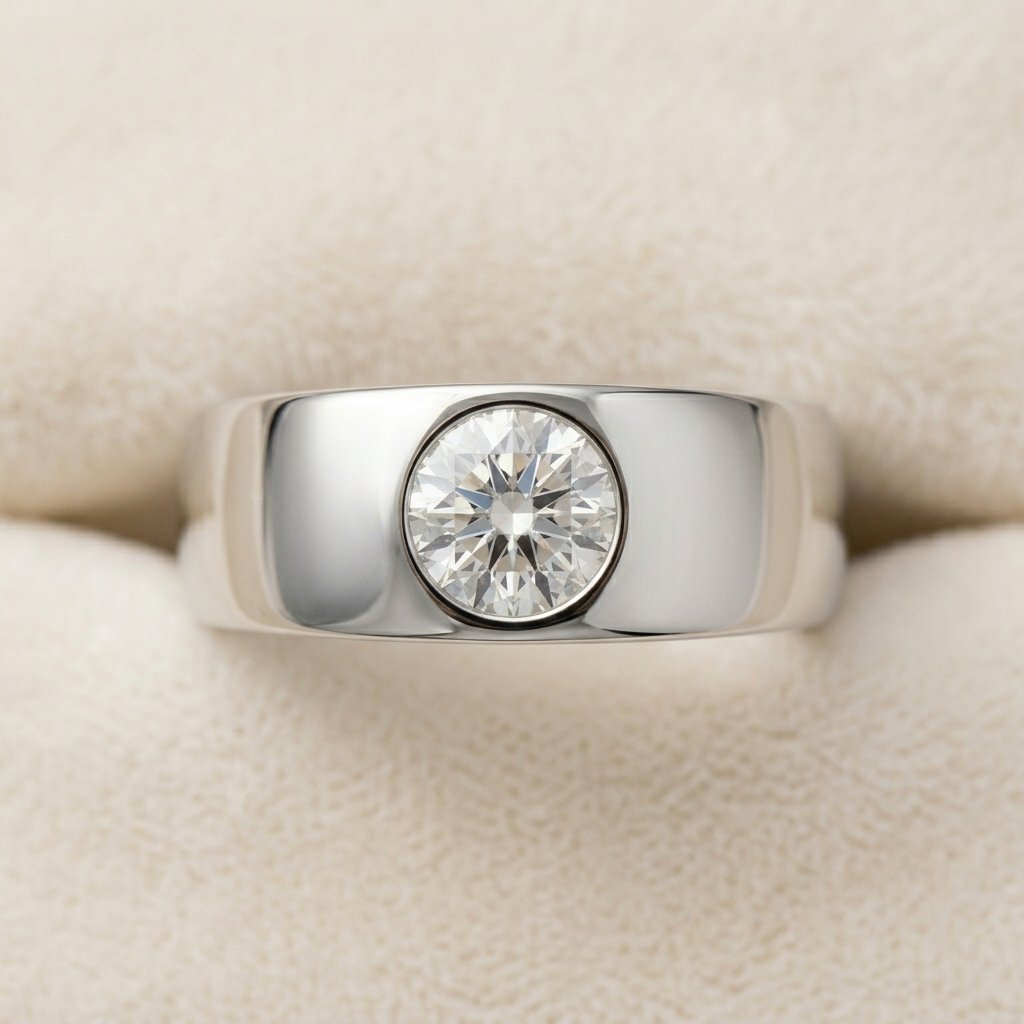
A flush setting embeds the diamond directly into a metal band with the diamond surface level with the metal. There are no prongs, bezels, or raised edges. This makes it the most secure and low-profile setting available. Flush settings are ideal for active lifestyles, wedding bands, and people who want a ring that does not snag on anything.
How a Flush Setting Works
A flush setting starts with a solid metal band. A precisely measured hole is drilled into the band at the desired location. The diamond is placed into the hole, and the jeweler uses a hammer or burnishing tool to push the surrounding metal over the edge of the diamond. Once set, the diamond is held in place by the compressed metal walls around it.
The diamond’s table (top flat surface) ends up level with or slightly below the band surface. This makes the ring completely smooth to the touch — nothing catches on clothing, gloves, or hair.
Most flush settings are used with round brilliant diamonds because the circular shape creates an even fit in the drilled hole. Princess cuts and other square shapes require more skill to set flush because the corners need extra care.
Flush Setting vs Bezel Setting
Flush and bezel settings are often confused because both protect the diamond with metal. The key difference is position.
A bezel setting wraps a metal rim around the diamond above the band surface. The rim is visible from the side and top. A flush setting drops the diamond into the band itself — the metal that holds the diamond is the band, not an added rim.
| Aspect | Flush Setting | Bezel Setting |
|---|---|---|
| Diamond position | Inside the band | Above the band |
| Surface feel | Completely smooth | Raised rim |
| Security | Maximum | High |
| Visibility | Low profile | Moderate |
| Best for | Wedding bands, active wear | Engagement rings, daily wear |
| Snagging risk | Zero | Very low |
| Diamond size limit | Smaller stones (under 0.5ct) | Any size |
Common Uses for Flush Settings
Flush settings are not as common for large center diamonds in engagement rings, but they are widely used in other jewelry:
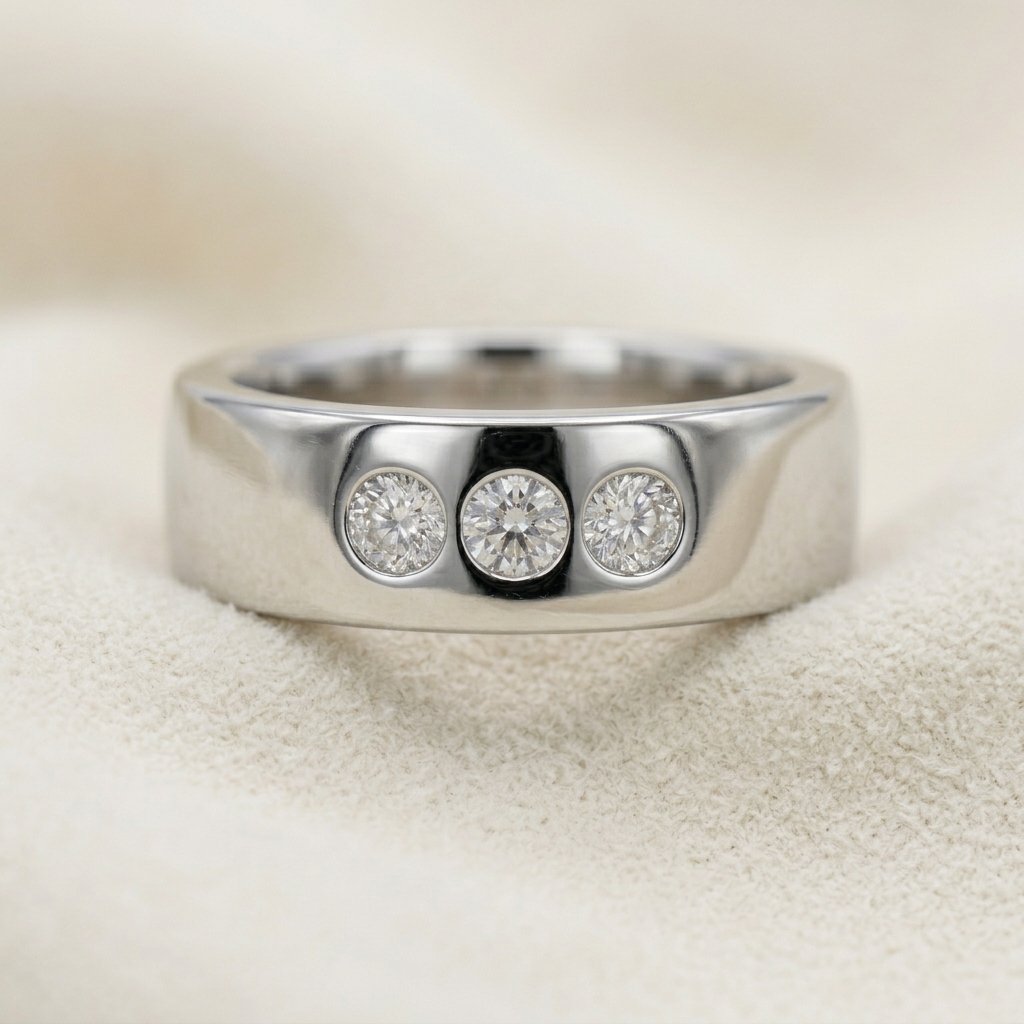
- Wedding bands: A row of flush-set diamonds along a band creates a comfortable, snag-free ring that stacks easily with engagement rings.
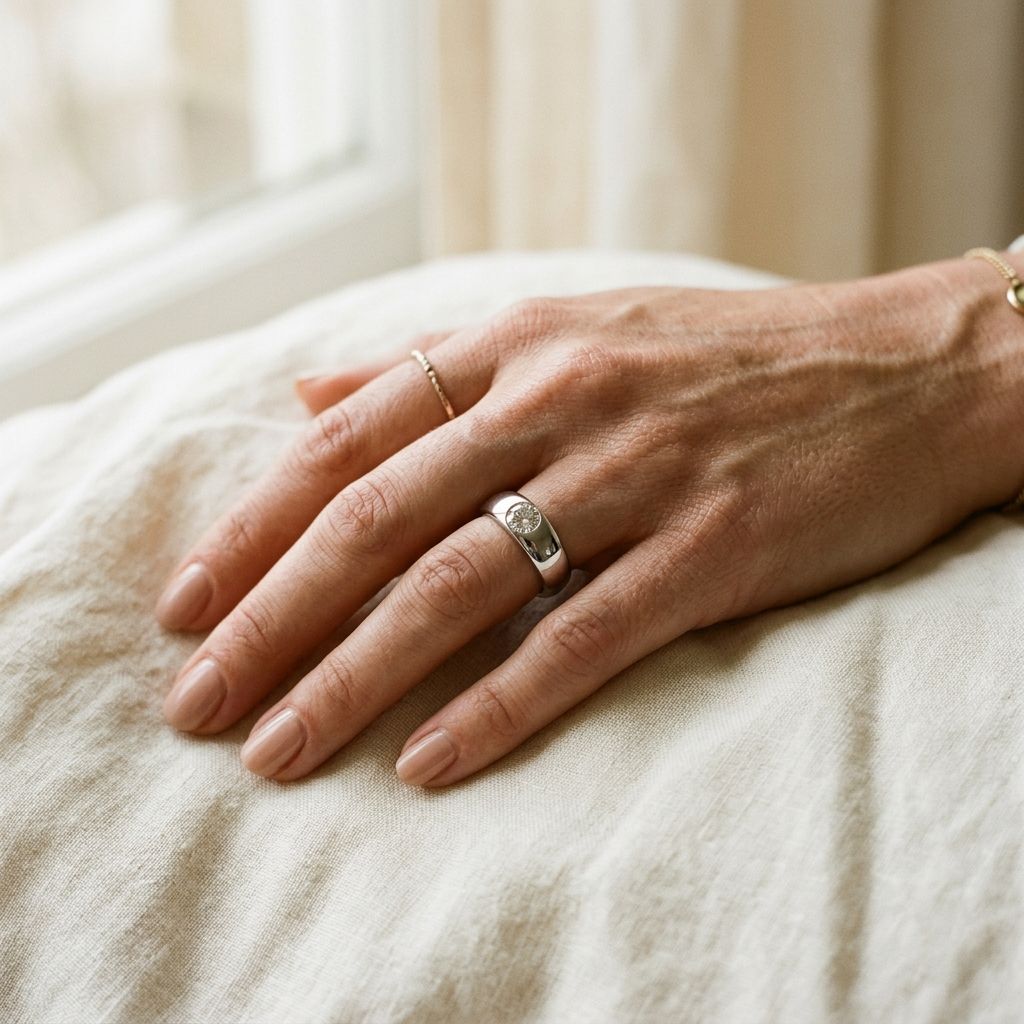
- Men’s rings: The low profile and durability make flush settings a popular choice for men’s wedding bands and signet rings.
- Stacking rings: Multiple flush-set bands can be worn together without diamonds scratching each other.
- Everyday jewelry: Rings meant for daily wear, travel rings, and rings for people who work with their hands.
Pros and Cons
Cons: Limited to smaller diamonds (typically under 0.5 carats). Only round shapes are practical. Less diamond sparkle (the sides are hidden). The diamond cannot be easily replaced. Harder to find skilled flush-setting jewelers.
Flush Setting vs Prong Setting
| Aspect | Flush Setting | Prong Setting |
|---|---|---|
| Diamond exposure | Only the top is visible | Most of the diamond is visible |
| Sparkle | Less (sides are hidden) | Maximum |
| Protection | Best possible | Moderate |
| Cleaning ease | Very easy (smooth surface) | Easy |
| Resizability | Possible with care | Easy |
| Diamond replacement | Difficult | Easy |
Buyer Decision Box: Is a Flush Setting Right for You?
Choose a flush setting if: you want maximum protection. You need a ring that will not snag. You prefer low-profile jewelry. You want a band that stacks flush with other rings. You want a low-maintenance ring for daily wear.
Choose a prong or bezel setting if: you want a larger center diamond (over 0.5 carats). You want maximum diamond sparkle. You may want to replace the diamond later. You prefer a more traditional engagement ring look.
Browse lab grown diamond rings or compare lab grown diamonds.
Myth vs Fact
| Myth | Fact |
|---|---|
| Flush settings are only for men. | Flush settings work for anyone who wants a low-profile, durable ring. |
| Flush-set diamonds look smaller. | The diamond is the same size — it just sits deeper in the band. |
| Flush settings are outdated. | They are a classic style that has been popular for over a century. |
| You cannot see the diamond at all. | The top of the diamond is fully visible and catches light normally. |
よくある質問
Can you feel the diamond in a flush setting?
No. The diamond sits level with the metal surface, so the ring feels completely smooth to the touch. This is one of the main advantages of flush settings.
What is the maximum diamond size for a flush setting?
Most flush settings work best with diamonds under 0.5 carats. Larger diamonds require a wider band to accommodate them, which may not look proportional on smaller fingers.
Can a flush set diamond fall out?
It is extremely rare. The metal is compressed around the diamond edge during setting, creating a secure mechanical lock. Flush settings are widely considered the most secure setting type.
Are flush settings comfortable for daily wear?
Yes. The completely smooth surface means nothing catches on clothing, gloves, or other rings. Many people forget they are wearing a flush set ring.
Can a flush setting be resized?
Yes, but it requires more care than resizing a plain band. The diamond setting must not be disturbed during the resizing process. A skilled jeweler can resize most flush set rings safely.
Final Buying Note
The flush setting is not the most glamorous ring style, and it is not designed to be. It is built for people who need a ring that can handle real life — work, sports, travel, and everything in between — without constant maintenance. If you want a diamond ring that stays out of the way and never snags on anything, a flush setting is your best option.
Browse our lab grown diamond rings, compare lab grown diamonds, or read our tension setting guide for more modern setting comparisons.
© VANTYRE Jewelry Guide