
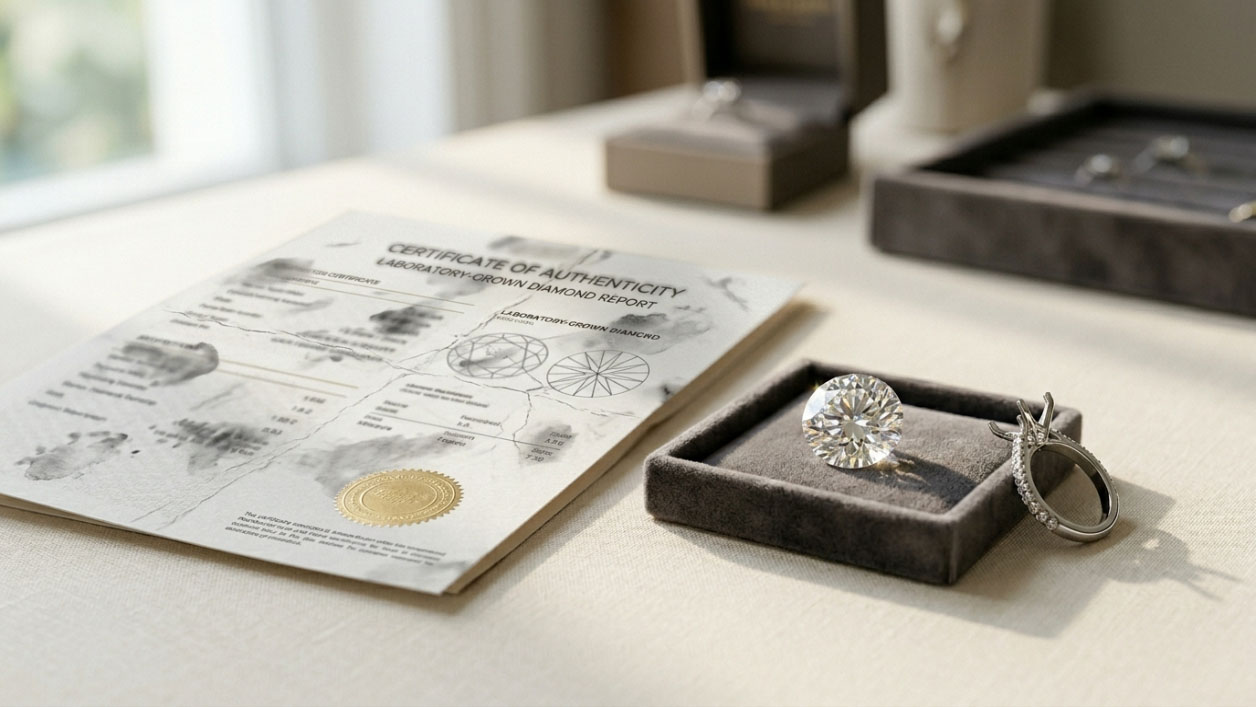
An IGI certificate helps buyers understand the identity and quality details of a lab grown diamond. It records important grading information such as report number, carat weight, color, clarity, cut, measurements, polish, symmetry, fluorescence, and whether the diamond is laboratory grown.
An IGI certificate is a diamond grading report that records a diamond’s key details, including report number, carat weight, color, clarity, cut, measurements, polish, symmetry, fluorescence, and whether the diamond is lab grown. The most important parts to check are the report number, 4C grades, measurements, growth method, and online verification result.
What Is an IGI Certificate?
An IGI certificate is a diamond grading report issued by the International Gemological Institute. For lab grown diamonds, the report helps identify the diamond and records its main grading information.
It is important to understand what a certificate does and does not mean. An IGI certificate is not a brand certificate, not a purchase receipt, and not a promise of resale value. It is a grading report that helps buyers compare diamond quality and confirm key details before purchase.
For online diamond shopping, the report is especially useful because it allows buyers to check whether the listed diamond details match the grading information.
Where Is the IGI Report Number?
The IGI report number is usually shown near the top of the certificate. This number is one of the most important parts of the report because it allows you to verify the diamond information online.
Some diamonds also have a laser inscription on the girdle. This tiny inscription may match the report number, helping connect the physical diamond with its grading report.
On our lab grown diamond inventory, the certificate number is shown so buyers can compare the listed diamond details with the report information.
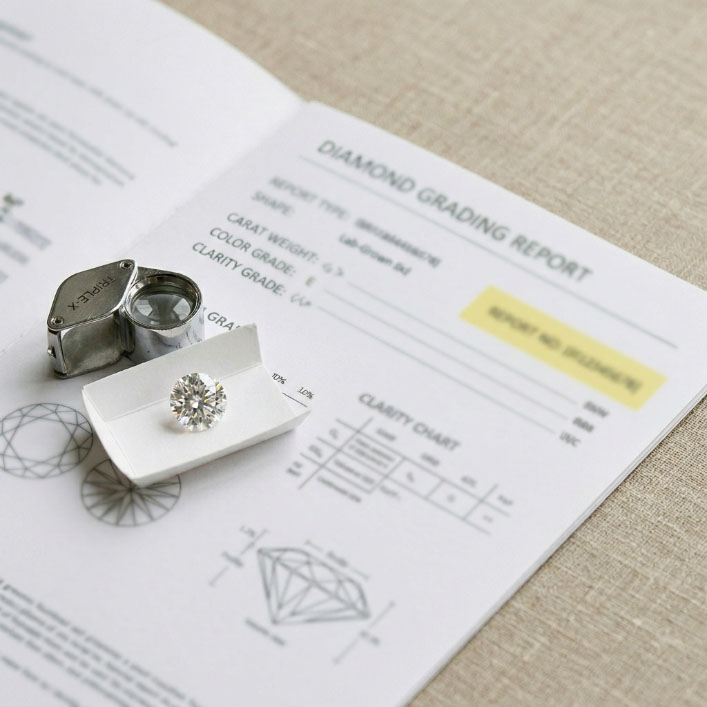
The report number helps connect a diamond listing with its grading report. If you are comparing available stones, you can start from our lab grown diamond inventory.
How to Verify an IGI Certificate Online
To verify an IGI certificate, use the official IGI report verification page and enter the report number shown on the certificate. After that, compare the online result with the diamond listing and the certificate image.
When checking the result, pay attention to the carat weight, color grade, clarity grade, measurements, shape, and whether the report says the diamond is laboratory grown. If the details do not match, you should ask for clarification before buying.
Do not check only the report number. Always compare the report number together with carat weight, shape, measurements, color, and clarity. A correct report number is useful only when the diamond details also match.
How to Read the 4Cs on an IGI Report
The 4Cs are carat weight, color, clarity, and cut. These are the most common grading details buyers use when comparing diamonds.
Carat Weight
Carat weight tells you how much the diamond weighs. It does not always tell you exactly how large the diamond looks. Two diamonds with the same carat weight can look different depending on shape and measurements.
Color Grade
Color grade describes how colorless or warm a diamond appears. D, E, and F are considered colorless grades, while G and near-colorless grades can still look bright in many jewelry settings.
Clarity Grade
Clarity grade describes internal inclusions and external blemishes. IF, VVS, VS, and SI grades can all look different depending on where the inclusions are located and how visible they are.
Cut Grade
Cut grade is especially important for round diamonds because it affects brightness, fire, and sparkle. For fancy shapes such as oval, emerald, pear, marquise, radiant, and cushion, buyers should also consider measurements, proportions, and the actual visual appearance.
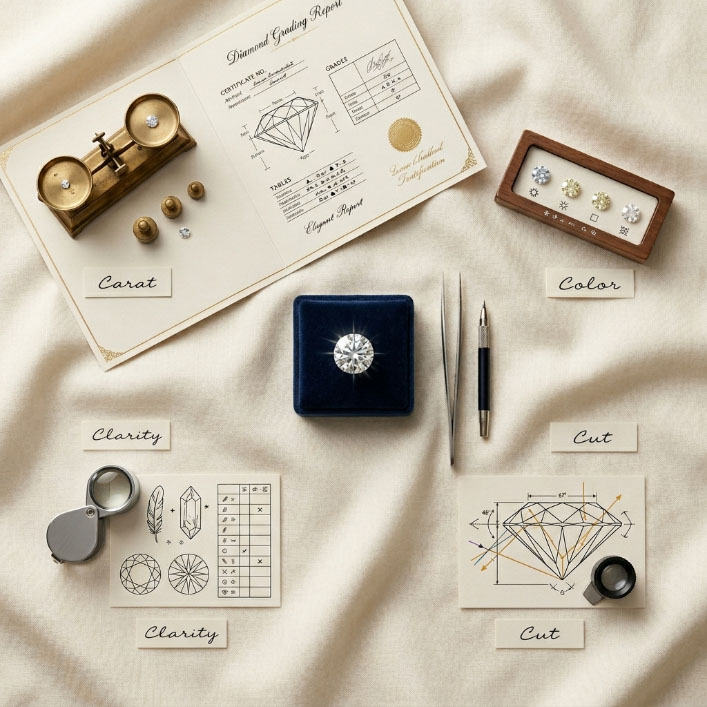
The 4Cs are useful for comparison, but they should not be the only decision factor. Shape, measurements, and how the diamond looks in a setting also matter.
Why Diamond Measurements Matter
Measurements are more important than many buyers realize. The measurements section shows the diamond’s length, width, and depth in millimeters.
This is helpful because two diamonds with the same carat weight can look different in size. For example, an oval, pear, emerald, or marquise diamond may appear larger or longer than a round diamond of similar carat weight because the shape spreads weight differently.
Measurements also help when matching a diamond with a ring setting. If a setting is designed for a certain shape and size range, the diamond’s measurements should be checked carefully before production.
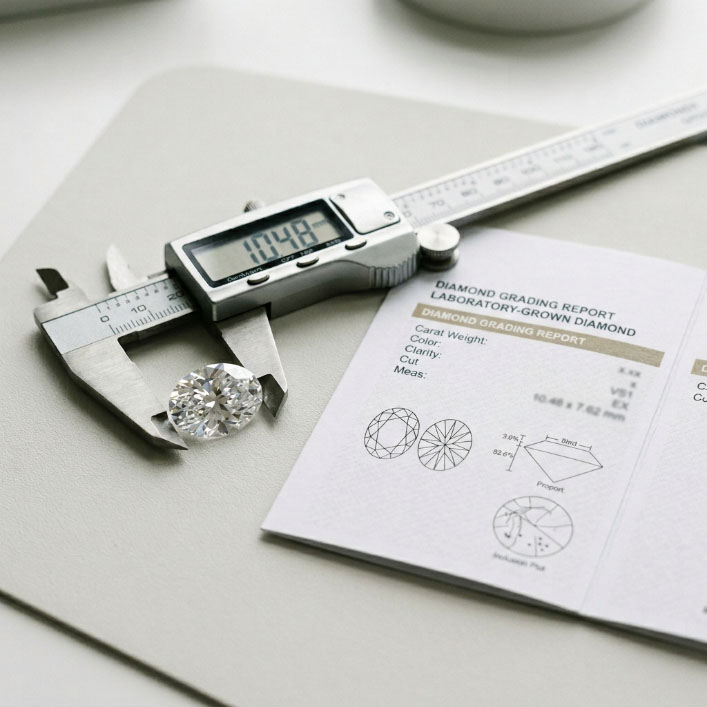
Measurements can help you compare visual size and setting fit. If you plan to pair a loose stone with a ring, browse our lab grown diamond ring styles for setting inspiration.
What Does Lab Grown Mean on the Report?
For a lab grown diamond, the report should clearly identify the diamond as laboratory grown. This means the diamond was created in a controlled growth environment rather than mined from the earth.
A lab grown diamond is still a diamond, but its origin is different from a natural diamond. The report helps buyers avoid confusion by clearly recording the diamond’s laboratory grown identity.
When shopping, do not treat a lab grown diamond report as a natural diamond report. Always check the report wording and make sure the listing matches the certificate.
Common Mistakes When Reading an IGI Certificate
- Only looking at carat weight and ignoring measurements.
- Checking color grade but not considering the jewelry setting color.
- Checking clarity grade but not looking at inclusion position.
- Not verifying the report number before buying.
- Treating a certificate as a resale value guarantee.
- Ignoring the laboratory grown description on the report.
- Relying only on the certificate without looking at real photos or videos.
Buyer Decision Box: What to Check Before Choosing a Lab Grown Diamond
- Check the IGI report number and verify it online.
- Compare the 4Cs: carat, color, clarity, and cut.
- Review the measurements, especially for fancy shapes.
- Confirm the diamond is lab grown if that is what you want to buy.
- Match the diamond with the setting before production.
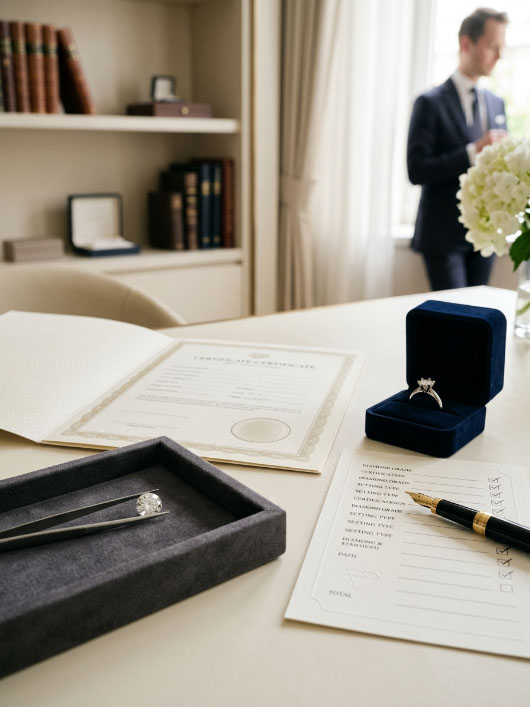
Before choosing a lab grown diamond, compare the report details with the actual stone and the setting you plan to use. For made-to-order designs, our custom jewelry service can help match the diamond and setting.
Myth vs Fact
| Myth | Fact |
|---|---|
| An IGI certificate is the same as a receipt. | It is a grading report, not a purchase receipt. |
| Carat weight tells you exactly how big a diamond looks. | Measurements and shape also affect visual size. |
| A certificate alone guarantees the best diamond. | The report is important, but visual appearance and setting fit also matter. |
| All diamonds with the same grade look the same. | Two diamonds with similar grades can look different in real life. |
| Lab grown wording can be ignored. | The report should clearly identify whether the diamond is laboratory grown. |
よくある質問
What is an IGI certificate?
An IGI certificate is a diamond grading report that records key information such as report number, carat weight, color, clarity, cut, measurements, and whether the diamond is lab grown.
Is IGI good for lab grown diamonds?
IGI is commonly used for lab grown diamond grading. Buyers should still check the report number, diamond details, measurements, and the actual appearance of the stone before purchasing.
How do I verify an IGI report number?
Use the official IGI report verification page and enter the report number shown on the certificate. Then compare the online result with the diamond listing and certificate details.
Does every lab grown diamond need a certificate?
For larger or higher-value lab grown diamonds, a certificate is strongly recommended because it helps confirm the diamond’s grading details and identity.
What does LG mean on an IGI report?
LG usually refers to laboratory grown. The report should clearly identify the diamond as lab grown when that is the diamond’s origin.
Can an IGI certificate prove a diamond is real?
An IGI certificate records the diamond’s grading information and identity details. Buyers should also verify the report number and make sure the diamond details match the listing.
What should I check before buying a lab grown diamond?
Check the report number, carat weight, color, clarity, cut, measurements, lab grown description, and whether the diamond fits the jewelry setting you want.
Final Buying Note
An IGI certificate is a useful guide, but it should not be the only thing you check. Report number, 4C grades, measurements, shape, and real visual appearance all matter when choosing a lab grown diamond.
If you are comparing stones, start with our lab grown diamond inventory. If you want to pair a diamond with a setting, you can also explore ring styles or request a custom jewelry design.
© VANTYRE Jewelry Guide